By Muhannad Jaduo
RAMALLAH, March 8, 2026 (WAFA) -- As usual, the Israeli occupation exploits regional tensions and growing international distraction—despite being a party to them—by escalating its violations against the Palestinian people in the West Bank, including Jerusalem. This is done through intensified attacks by the army and settlers and tightened military restrictions, as part of clear plans aimed at forced displacement and imposing new facts on the ground.
During the first week of the war, between 28 February and March 8, 2026, the West Bank witnessed a notable escalation in settler violations. Estimates indicate an increase of nearly 25% compared to the period before the outbreak of the Israeli–American military confrontation with Iran.
During this period, eight Palestinians were killed; five were killed by settlers’ gunfire: Thaer Farouq Hamayel, 24, and Farea Jawdat Hamayel, 57, from Abu Falah village northeast of Ramallah; brothers Mohammad Taha Abdul Majid Ma'ammar, 52, and Faheem Abdul Majid Ma'ammar, 47, from Qaryout village south of Nablus; and Amir Mohammad Shnaran, 27, from Yatta town south of Hebron.
Two young men, Mohammad Jihad Masalmeh from Dura and Tamer Ismail Qaisi from Al-Dhahiriya, were killed by Israeli army gunfire in Hebron. Additionally, citizen Mohammad Hussein Murra, 55, from Abu Falah village died from inhaling tear gas fired by occupation forces while providing protection during a settler attack on the village.
Although direct military operations are taking place outside Palestinian lands, the occupation authorities imposed unprecedented, strict military measures under the pretext of security.
These measures included closing many main roads and iron gates connecting Palestinian cities and towns, as well as tightening control over existing military checkpoints.
The measures severely impacted citizens’ daily lives, completely restricting movement, preventing employees from reaching work, and causing economic stagnation as Eid al-Fitr approaches.
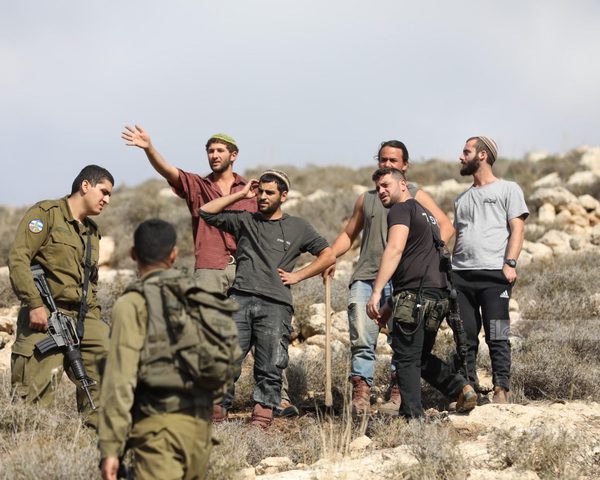
In the meantime, several areas witnessed brutal settler attacks. In Beit Anan, northwest of Jerusalem, a Palestinian was moderately injured when settlers attacked him in his farmland in front of his family.
In the Bedouin community of Ma'azi Jaba', north of Jerusalem, a child was injured during a settler attack that involved property destruction and the killing of livestock.
In the northern Jordan Valley, eight citizens were injured in Ras Al-Ahmar south of Tubas due to settler beatings.
In a worrying development reflecting a displacement policy, six Palestinian families in Aqaba village east of Tubas dismantled their homes and tents in preparation to leave after escalated attacks, during which 12 citizens were shot by the Israeli army while trying to fend off a settler attack.
During the same period, Israeli forces intensified their military measures across the West Bank, including Jerusalem, launching widespread detention campaigns affecting hundreds, including women and children. The campaigns involved field interrogations, home invasions, and property destruction.
According to local institutions, over 225 citizens were arrested during the past week. Court sessions for Palestinian prisoners were postponed for the second consecutive week, appeals for administrative detainees were delayed indefinitely, and West Bank lawyers were barred from entering Israeli courts due to imposed closures.
Occupation forces and settlers further uprooted hundreds of olive trees in various areas, including over 130 trees in Idhna west of Hebron belonging to the Salimia family, as well as dozens of trees in Biddo and Beit Iksa northwest of Jerusalem, Jourat al-Shamaa south of Bethlehem, and Turmus Ayya northeast of Ramallah. Notices were also issued to uproot olive trees in Ni'lin over an area exceeding 100 dunums.
New military gates were installed at village entrances in the Jordan Valley and northern Jericho to restrict citizens' movement. Several homes in Bethlehem, Salfit, and Jenin were seized and converted into military and sniper posts after detaining their residents inside.
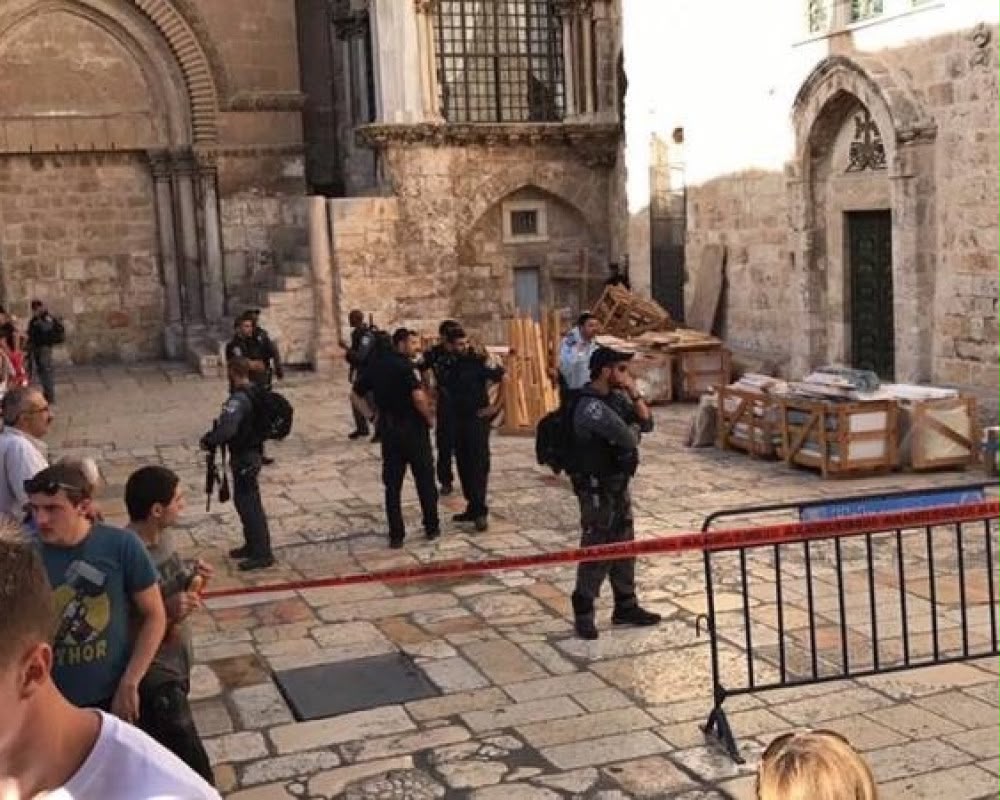
In occupied Jerusalem, the occupation exploited regional tension to tighten restrictions, closing Al-Aqsa Mosque and preventing prayer, including Friday and Tarawih prayers. Palestinians from the West Bank and 1948 lands were barred from entering, while the Old City was closed except for its residents.
These measures coincided with Ramadan, causing severe losses for approximately 1,400 traders in Jerusalem’s Old City dependent on the season. Excavations under Al-Aqsa continue amid the absence of worshippers due to restrictions, raising fears of exploiting the situation to impose new facts on the ground, in line with policies of temporal and spatial division of holy sites.
UN experts warned that Jerusalem is facing irreparable harm due to the acceleration of Israeli measures aimed at changing its demographic composition, religious character, and legal status as part of reshaping the city’s reality and imposing exclusive dominance.
In Hebron, the Ibrahimi Mosque was completely closed, Waqf employees barred from entering, and the Old City and surrounding neighborhoods militarized—a move observers see as part of the broader effort to assert control over holy sites.
In the Gaza Strip, Israeli forces continued bombing various areas in the region and imposed strict restrictions on crossings, limiting civilian movement, humanitarian aid, and essential supplies, worsening the suffering of patients despite the announced ceasefire since October.
According to the Ministry of Health, since the start of the ceasefire agreement, there have been 641 fatalities and 1,711 injuries, with 755 bodies recovered. Since the Israeli aggression on the Gaza Strip on October 7, 2023, totals have reached 72,126 fatalities and 171,809 injured.
International bodies warned that regional escalation directly impacts Gaza's humanitarian conditions, especially as medicine stocks decline and medical supply access remains limited.
The WHO noted that without steady aid delivery—including safe medical supply transport and resumed medical evacuations—patients will face life-threatening delays in receiving care.
The UN Office for the Coordination of Humanitarian Affairs (OCHA) reported postponed UN staff rotations, suspending medical evacuations and returns of residents. Despite efforts to maintain flow of supplies, the continuation of the full blockade threatens a full halt to the entry of humanitarian aid.
M.N