By Huda Habayeb
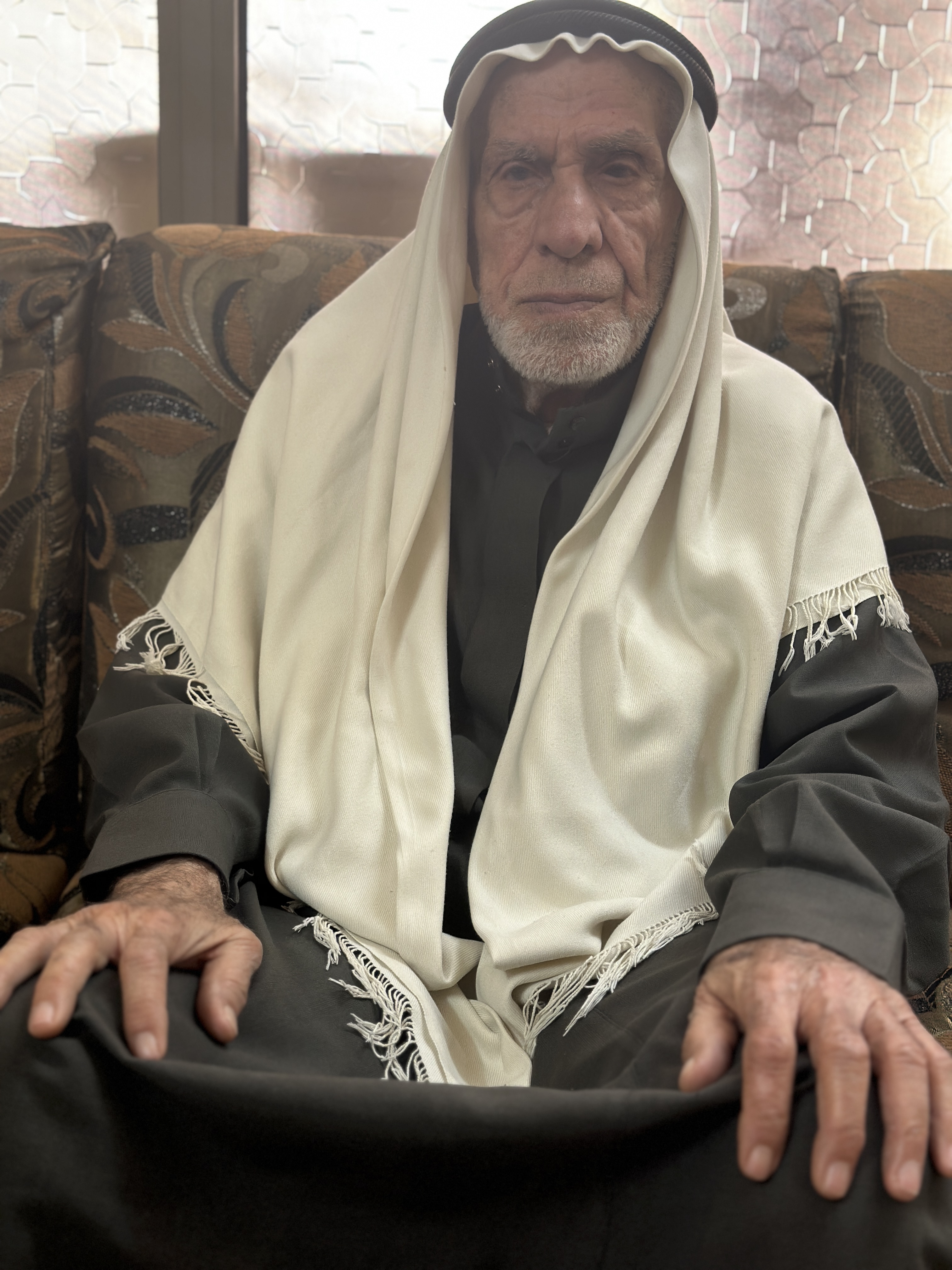
TULKARM, May 15, 2026 (WAFA) – At 91 years old, Palestinian refugee Mustafa Mohammad Abu Dayya sits surrounded by memories that refuse to fade. Born in 1934 in the now-destroyed village of Qaqun, northwest of Tulkarm, Abu Dayya carries within him the story of two displacements — one that began during the 1948 Nakba, and another unfolding today amid the ongoing Israeli military assault on the refugee camps of northern occupied West Bank.
For Abu Dayya, the past is not distant history. It is a wound repeatedly reopened.
As Palestinians mark the 78th anniversary of the Nakba, his story mirrors the experience of hundreds of thousands who were uprooted from their homes in historic Palestine in 1948 and who continue, generations later, to face repeated displacement, destruction, and exile.
Nearly 750,000 Palestinians were forcibly displaced from their towns and villages during the Nakba, one of the largest and most devastating episodes of ethnic cleansing in modern history. Families fled under bombardment and armed attacks, leaving behind homes they locked with keys many still preserve today, along with documents proving ownership of lands they have never stopped dreaming of returning to.
Abu Dayya was only 14 years old when his family was forced to flee Qaqun in 1948.
Recalling the final moments before their departure, he says Israeli attacks from a nearby settlement known as HaMa’apil struck the village, killing many residents and spreading fear among the population.
“They fired a shell from a nearby settlement, and many people were killed,” Abu Dayya recalls. “Those who survived had no choice but to leave the village and head toward Tulkarm and the suburb of Shuweika, hoping we would return soon.”
Like thousands of Palestinian families at the time, they left with almost nothing.
“We locked the door and left,” he says quietly. “We thought we would come back after a few days. But then they bombed the village and erased its landmarks.”
His voice carries both grief and longing as he speaks of Qaqun — a once-thriving agricultural village known as the “Protector of the Coast.” The village was famous for its fertile lands and crops, including wheat, barley, watermelon, cantaloupe, and vegetables. Farming was the backbone of life there, connecting families to the land through generations.
Abu Dayya also remembers the village school, Qaqun Al-Amiriya School, which he describes as one of the finest schools among surrounding villages. Surrounded by trees and equipped with a large courtyard and a water motor, the school employed seven teachers in addition to its principal, who came from Tulkarm and nearby towns.
“It was a beautiful village,” he says. “Everything was there — the land, the school, the people.”
After the displacement, Abu Dayya’s life became a journey of constant movement and survival. He moved between Shuweika, Beit Wazan, and the Jordan Valley, working in agriculture to support himself and his family.
In 1954, like many Palestinians searching for stability and opportunity, he traveled to Kuwait. There, he worked first in public health and later in public works before eventually joining the aviation sector as a ground aviation equipment technician. He remained in Kuwait until 1987.
When he finally returned to Palestine, Abu Dayya settled in Tulkarm refugee camp, where he sought to rebuild the life that displacement had stolen decades earlier.
He built a three-story home intended to shelter his growing family — his children and grandchildren — after originally purchasing the house for his parents. For decades, the building stood as a symbol of stability and reunion after years of exile.
But that refuge, too, would not survive untouched.
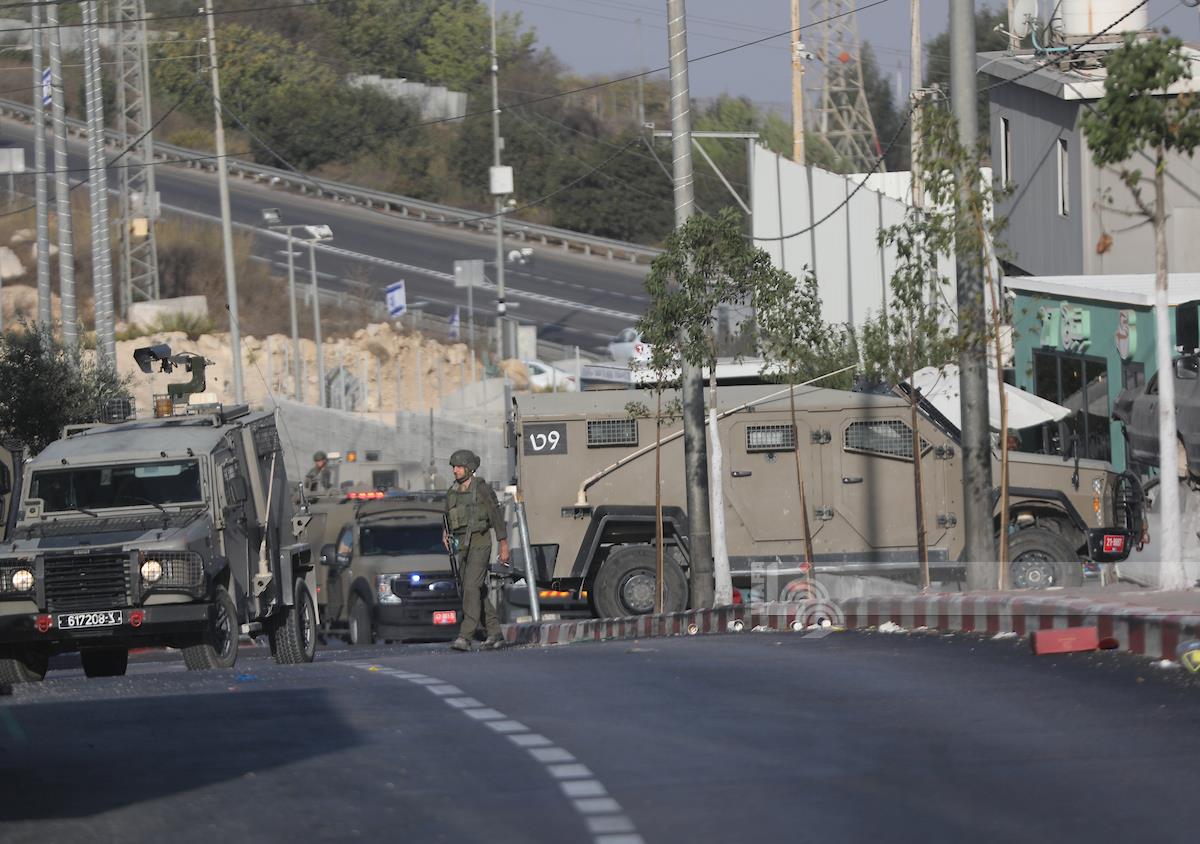
Today, as Israeli raids escalate across the northern West Bank refugee camps of Tulkarm, Nur Shams, and Jenin, Palestinians are once again confronting scenes reminiscent of the Nakba: forced evacuations, widespread destruction, bulldozed neighborhoods, and shattered communities.
On January 27, 2025, Israeli forces stormed Tulkarm refugee camp. Abu Dayya and his family were forced to flee their home in the Hammam neighborhood, reliving the same terror that drove them from Qaqun nearly eight decades earlier.
“We received news that Israeli military vehicles were heading toward the camp,” he says. “So I left with my family without taking anything, hoping we would return. We went to my son Ahmad’s house outside the camp, but unfortunately, we still haven’t returned.”
The family home was not simply a residence. It was a gathering place that housed his married sons and grandchildren — a center of family life built after years of hardship and migration.
During the ongoing military offensive, large parts of the home were destroyed. The main staircase was demolished, and extensive structural damage rendered the building uninhabitable and difficult even to enter.
Abu Dayya’s suffering reflects the wider tragedy experienced by more than 5,000 families displaced from Tulkarm and Nur Shams refugee camps during the ongoing military campaign. Residents were forced from their homes under threat, leaving behind possessions, livelihoods, and memories. Homes, shops, and vital infrastructure were bulldozed, burned, or heavily damaged, dramatically altering the geography and social fabric of the camps.
Before the assault, Abu Dayya says life inside Tulkarm camp was defined by solidarity and closeness.
“The people of the camp were like one hand,” he says. “We shared our lives and whatever good we had.”
Now, he says, displacement has scattered residents across different areas, separating neighbors and relatives who once lived side by side.
“We hardly see each other anymore except by coincidence,” he says with sorrow, adding that residents have been prevented from returning to their homes or even retrieving basic necessities.
Despite his age, Abu Dayya remains deeply attached to the symbols of his heritage. He continues to wear the traditional Palestinian hatta, agal, and dishdasha — not merely as clothing, but as expressions of an identity he fears could disappear with time.
In his memory remain the names of Qaqun’s families, its lands, and the people who were scattered across refugee camps and distant countries after 1948.
Yet amid loss and displacement, he continues to hold onto hope.
In a message to younger generations, Abu Dayya says unity remains essential for achieving freedom and the long-awaited return.
“We hope conditions will change for the better,” he says. “And that we will return to the homeland from which we were displaced.”
Abu Dayya’s story is more than the testimony of an elderly refugee. It is a living chronicle of an ongoing Nakba — one that began in Qaqun in 1948 and continues today in the refugee camps of Tulkarm and Nur Shams.
For decades, Palestinians like him have carried the same house keys, preserved the same memories, and waited for the same return, no matter how long the years pass.
--
M.N