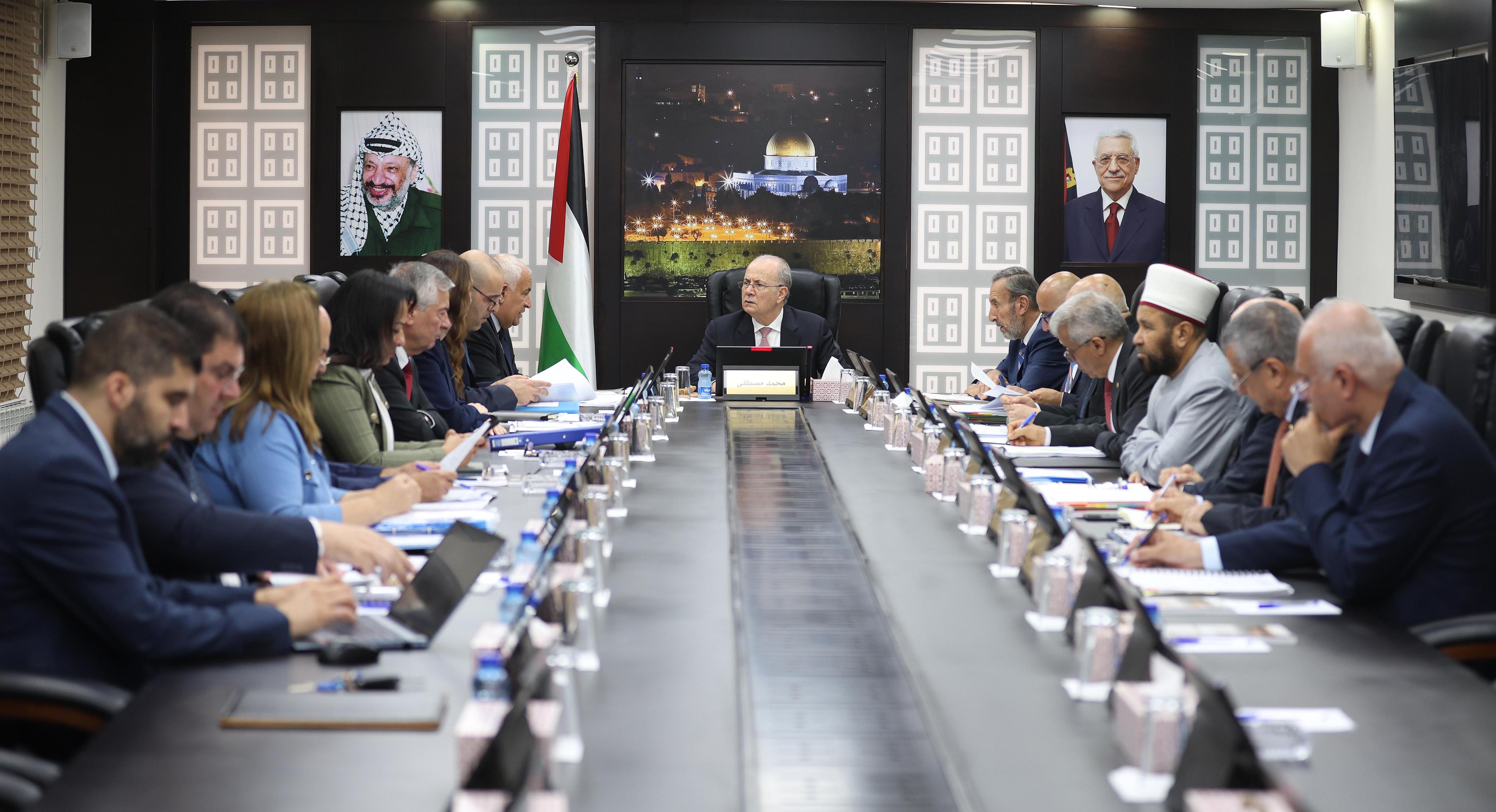
RAMALLAH, July 7, 2026 (WAFA) -- Prime Minister Mohammad Mustafa directed, at the onset the weekly Cabinet session on Tuesday, all government institutions to intensify field visits and interventions across Palestinian towns and villages, particularly those targeted by Israeli occupation and colonial settler attacks, while mobilizing every possible resource to strengthen citizens’ steadfastness, expand government support, and help alleviate their hardships.
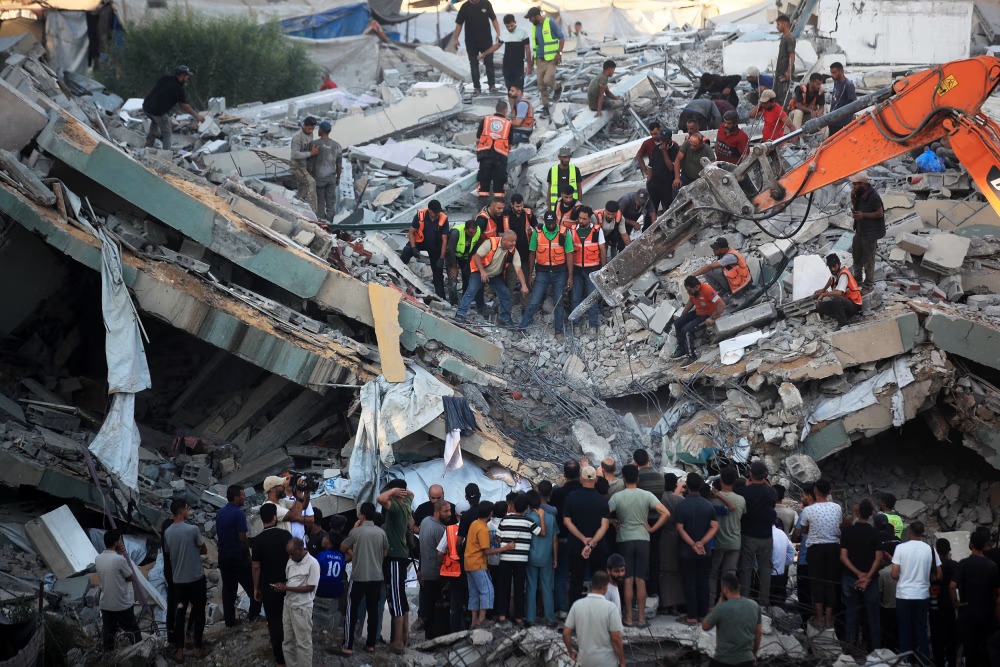
During the session held in Ramallah, the Cabinet warned of the continued deterioration of the humanitarian situation and the deepening suffering of the Palestinian people in the Gaza Strip amid the prolonged suspension of reconstruction efforts, severe shortages of food, fuel, and cooking gas, and the continued Israeli blockade. These conditions persist more than 1,000 days into Israel's genocidal aggression on Gaza and more than eight months after the ceasefire agreement entered into force.
The Cabinet stressed that the continuation of these conditions threatens to further aggravate the humanitarian catastrophe. It called on the United Nations, international humanitarian organizations, and mediating states to exert greater and more effective pressure on Israel, the occupying Power, to reopen border crossings, ensure the immediate, adequate, sustained and unhindered flow of humanitarian assistance and essential supplies, accelerate reconstruction efforts, and protect civilians—particularly children—from the worsening crisis.
Regarding the occupied West Bank, the Cabinet noted that the past seven days witnessed more than 391 attacks carried out by Israeli occupation forces and colonial settler militias, including six shooting incidents, 51 cases of road closures and restrictions on movement, and 169 military incursions across Palestinian governorates.
The Cabinet also commended the efforts of the Ministry of Education and Higher Education in ensuring the continuity of education in the Gaza Strip. Despite more than 1,000 days of war, the Ministry has successfully administered the General Secondary Education Examination (Tawjihi) to more than 100,000 students over the past three years in Gaza. These efforts were complemented by the operation of virtual schools and educational learning points serving hundreds of thousands of students, alongside the successful implementation of electronic Tawjihi examinations—an important milestone in expanding digital assessment methods and advancing the digital transformation of the education sector.
In another context, the Cabinet reviewed the updated 2026 Development Projects Priorities Document, which serves as the national framework for guiding development efforts throughout the West Bank. The document identifies and prioritizes dozens of strategic development projects, many of which have already been prepared in anticipation of securing the necessary financing for implementation.
The Cabinet further approved the formation of the Board of Directors of the National Cybersecurity Authority, which will oversee the establishment of an effective national cybersecurity system aimed at protecting digital assets and critical digital infrastructure. It will also be responsible for preparing the National Cybersecurity Strategy and supervising national cyber incident response teams, among other responsibilities.
The Cabinet adopted, in its third reading, the Draft Decree-Law on Quotas and Commodity Lists and referred it to the President for issuance in accordance with the applicable legal procedures. The legislation aims to strengthen the governance of quota allocation mechanisms by ensuring transparency, equal opportunity, and anti-monopoly safeguards. It also provides for the establishment of a committee responsible for allocating commodity quotas based on clearly defined criteria and procedures.
The Cabinet also discussed, in its first reading, the Draft Regulation on the Governance of Health Services Professions, which seeks to regulate professional practices in the health sector, provide appropriate protection for beneficiaries—including children, women, older persons, and others—guarantee access to services based on respect for human dignity, and establish complaint and grievance mechanisms for service recipients, among other objectives.
M.N