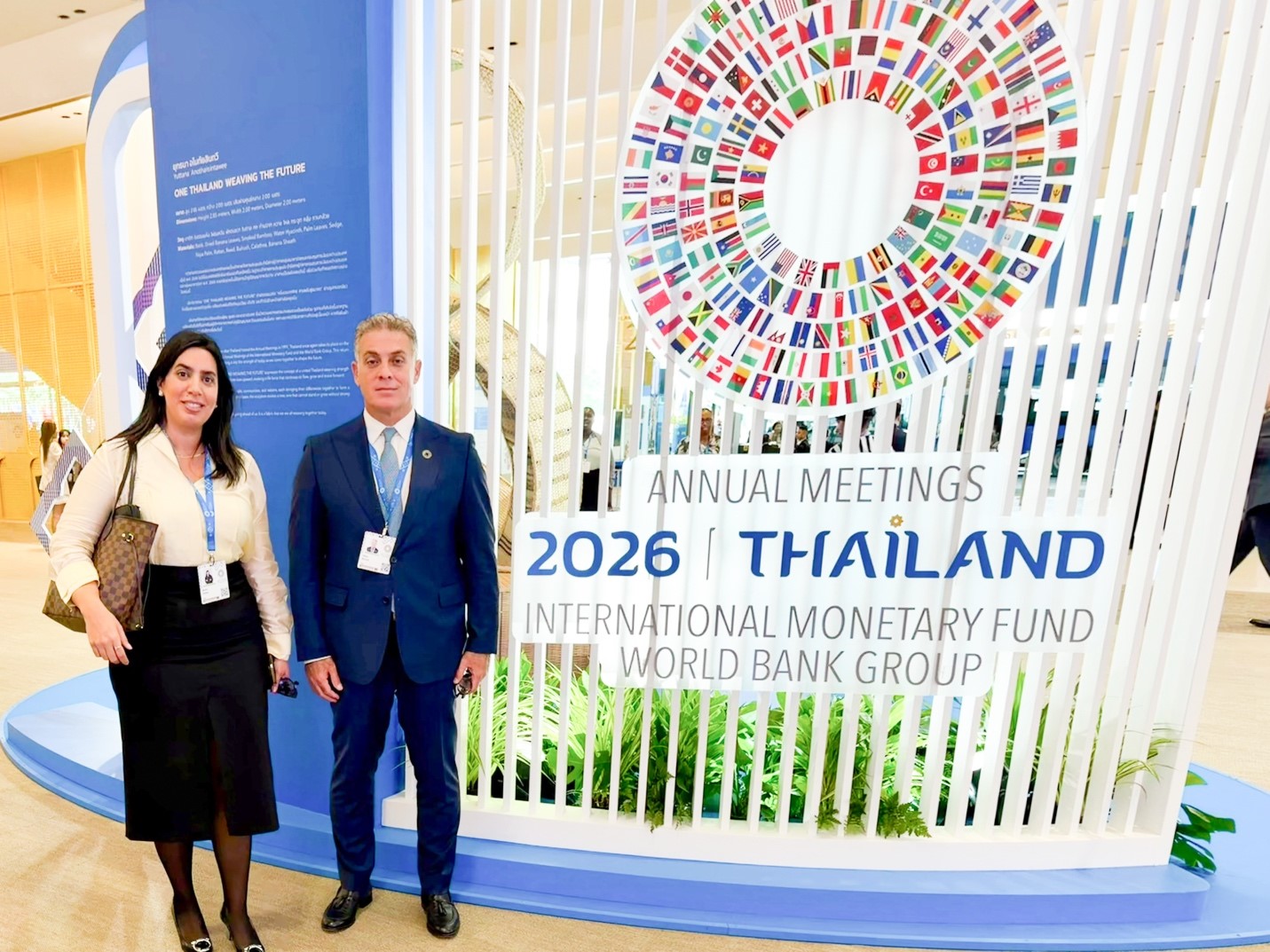
BANGKOK, October 12, 2026 (WAFA) – Palestine Monetary Authority (PMA) Governor Yahya Shunnar warned on Monday that the Palestinian economy is facing a politically motivated financial and banking crisis linked to Israeli measures, extending beyond conventional economic shocks.
Shunnar made this warning during a series of meetings held on the sidelines of the 2026 Annual Meetings of the International Monetary Fund (IMF) and the World Bank Group in Bangkok, Thailand.
The meetings included discussions with World Bank Vice President for the Middle East and North Africa Ousmane Dione; European Bank for Reconstruction and Development (EBRD) Managing Director for Financial Institutions Francis Malige; World Bank Group Executive Director Abdulaziz Al-Mulla; IMF Deputy Managing Director Kenji Okamura; IMF Deputy Director of the Middle East and Central Asia Department Subir Lall; and Atlantic Council Vice President and Director of International Economics Josh Lipsky.
Shunnar also warned of the threats facing Correspondent Banking Relationships (CBRs) with Israeli banks, the withholding of clearance revenues, and the accumulation of more than NIS 15 billion in excess shekel cash that cannot be returned to Israel. He cautioned that these challenges could affect trade and payment flows and undermine the economy’s ability to meet its needs.
He stressed the need to establish clear and sustainable banking arrangements that safeguard CBRs from political pressures and enable excess shekel cash to be returned in line with the actual size of economic activity. He called on international financial institutions to support efforts to ensure the continuity of official financial channels and address the challenges hindering the movement of funds.
He explained that the Palestinian banking sector continues to perform its functions despite exceptional circumstances, supported by sound financial and supervisory indicators, with the capital adequacy ratio exceeding 17%.
Shunnar reaffirmed the PMA’s commitment to implementing international banking standards and best practices, strengthening supervision, and ensuring compliance with requirements for combating money laundering and terrorism financing. These efforts, he noted, help safeguard the soundness of banking operations and strengthen the confidence of international financial institutions in the Palestinian banking sector.
The PMA Governor is scheduled to continue meeting with officials from international financial institutions on the sidelines of the Annual Meetings to discuss ways to safeguard the Palestinian national economy and banking system and mobilize international support to address the challenges threatening the foundations of economic and financial resilience.
K.F.