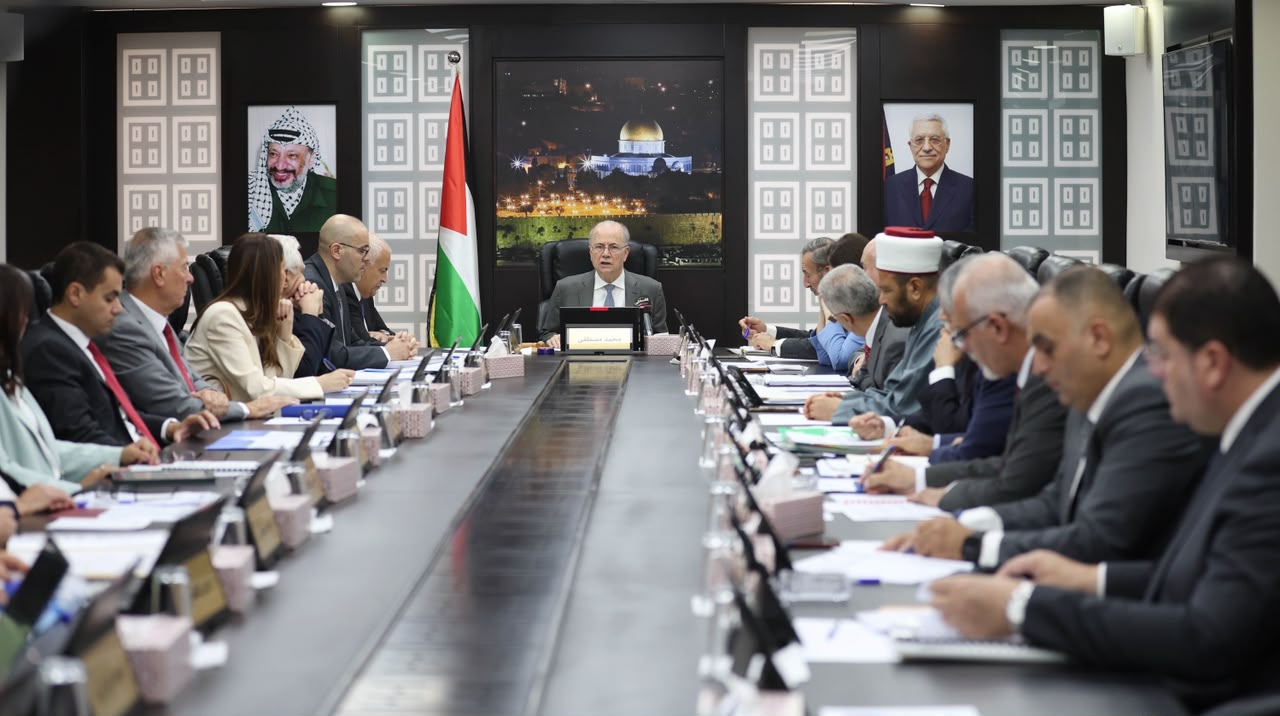
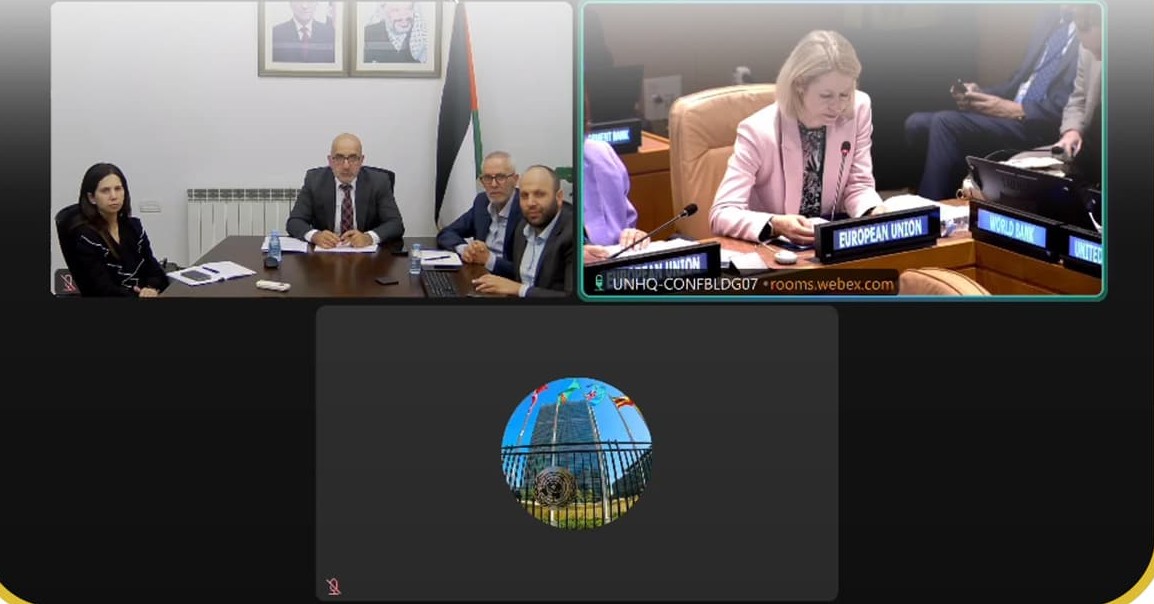
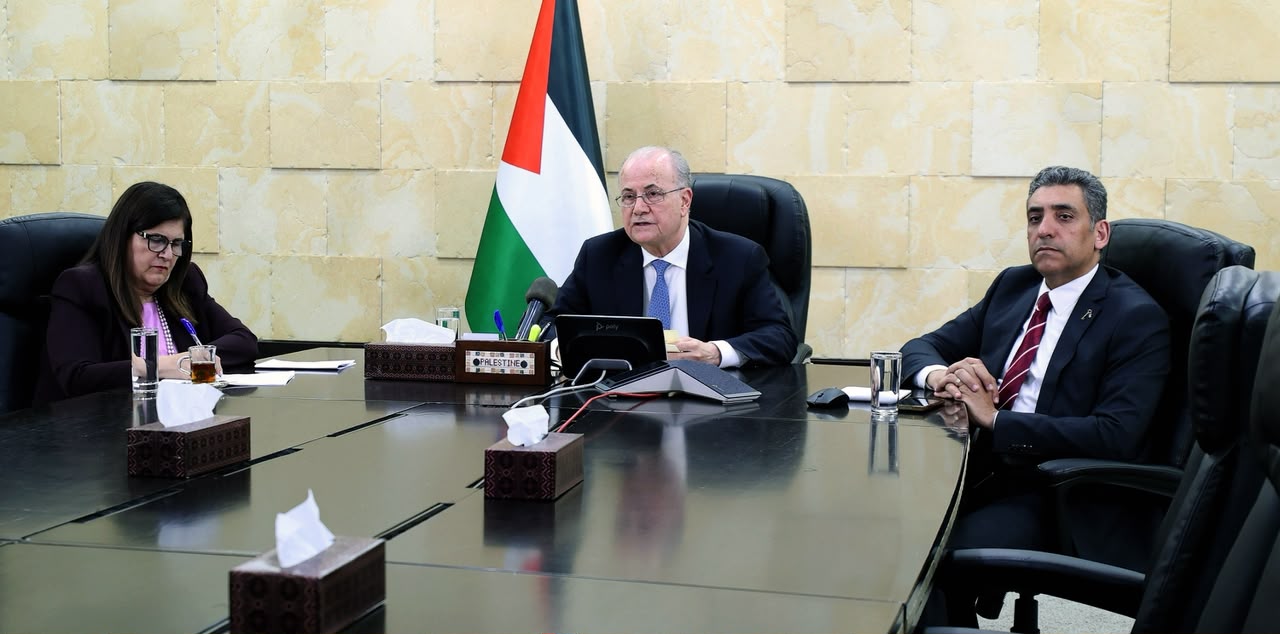
RAMALLAH, December 8, 2025 (WAFA) –The Government Operations Room for Emergency Interventions in the Gaza Strip reviewed today, Monday, the early relief and recovery plan of the Ministry of National Economy in the Gaza Strip. The plan is part of preliminary sectoral frameworks that are continuously updated in cooperation with local and international partners and experts. The meeting discussed the extensive damage to the economic sector, the ministry’s priorities for the current phase, strategies for restarting facilities, supporting supply chains, enhancing food security, and enabling the private sector.
Samah Hamad, Chair of the Operations Room, emphasized that the Ministry of National Economy is a key pillar in relief and early recovery efforts. She underscored the importance of close coordination between government entities, the private sector, and international partners to ensure the implementation of urgent interventions that restore a minimum level of economic activity and provide job opportunities for affected families.
She added that the Operations Room continues to mobilize efforts to support Gaza’s population, secure essential supplies, and restore key services. She noted that the focus remains on the critical relief phase, which must be successfully navigated to allow for a smooth transition to early recovery and, later, reconstruction.
Minister of National Economy Eng. Mohammad Al-Amoor stated that the war has caused catastrophic damage to Gaza’s economic infrastructure. Thousands of industrial and commercial facilities were destroyed, productive activities halted, and hundreds of thousands of families lost their income sources. He explained that the ministry is implementing urgent interventions to restart vital sectors, ensure the availability of essential goods, support small enterprises, and improve the business environment so that affected facilities can gradually resume operations despite the difficult circumstances.
The ministry presented detailed damage assessments, showing that 98% of economic facilities were affected, 84% of factories suffered total or partial destruction, and total economic losses reached USD 20 billion. The unemployment rate has risen to 80%, while the local economy has contracted by 83% with a near-total collapse of supply chains.
Given the scale of destruction, the ministry explained that its plan is structured in sequential phases to ensure a gradual transition from urgent relief to recovery and ultimately reconstruction.
Phase One (6 months): Immediate Relief
Focus areas include providing initial grants to SMEs, supplying essential operational inputs, reconnecting supply chains, and strengthening food security through agricultural support and local initiatives. Additional interventions include:
- Supporting the operation of damaged facilities
- Rehabilitating selected production lines to increase the availability of essential goods
- Providing operational tools for individual projects
- Enhancing market oversight and preventing monopolistic practices
- Implementing temporary public employment programs
- Phase Two (16–18 months): Early Recovery and Economic Revitalization Priorities include:
- Supporting the restart of small and medium enterprises
- Financing projects that enhance economic stability
- Reconnecting essential supply chains
- Providing operational tools and small grants to affected businesses
- Creating temporary jobs to reintegrate displaced workers
The ministry highlighted the importance of international partnerships in financing recovery efforts, noting that successful early recovery requires wide cooperation to restart thousands of facilities and revive economic activity, especially amid severe contraction and declining purchasing power.
The presentation concluded by outlining key challenges, including difficulties in importing raw materials, reduced financial inflows, disrupted supply chains, and the absence of industrial infrastructure. Despite these challenges, the ministry affirmed that efforts continue to meet essential needs, support economic rehabilitation, and help citizens restore their livelihoods.
K.T