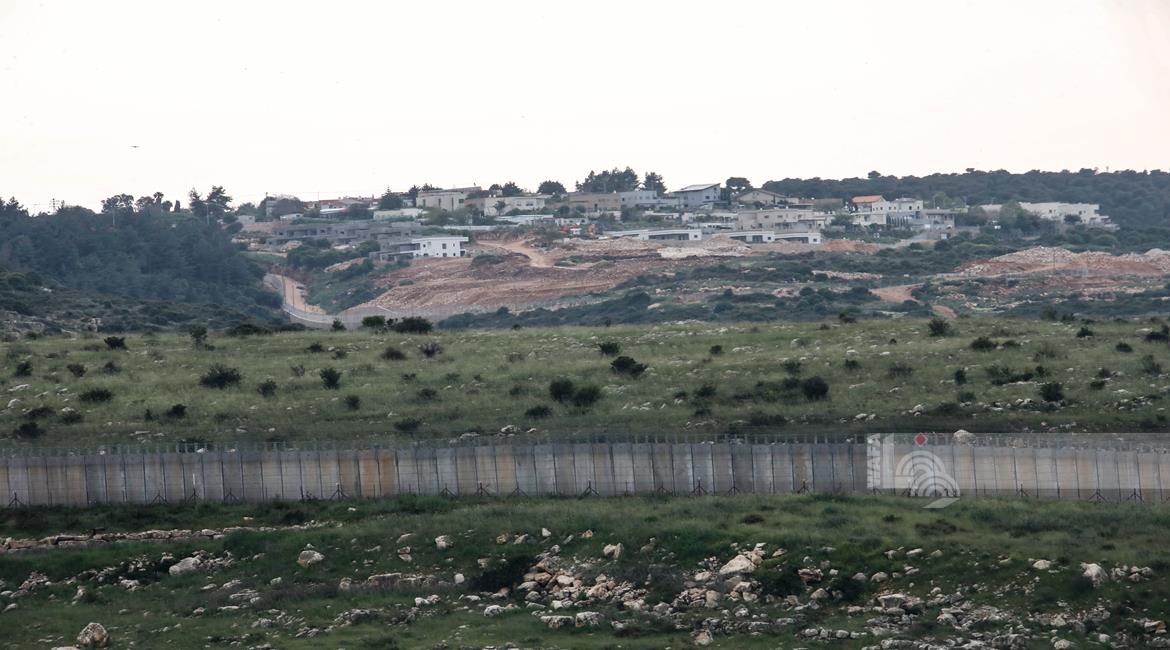
NABLUS, May 16, 2026 (WAFA) – A report by the National Bureau for Defending Land and Resisting Settlements said on Saturday that Israeli military orders have increasingly been used in recent years to accelerate the legalization of settlement outposts and expand settlements across the occupied West Bank, alongside continued policies aimed at displacing Palestinians from areas designated as “firing zones” under the pretext of military use.
The bureau’s weekly settlement report said these areas are also being used as a “vital space” for settlement activity, citing a report by the Israeli newspaper Haaretz which stated that the Israeli army has reduced parts of closed military training zones to legalize outposts built there illegally and to enable the expansion of existing settlements.
The report added that the Israeli army continues to petition the Israeli Supreme Court to remove Palestinian communities from these areas, claiming they obstruct military training.
It said settlers, with support from the Israeli army and state institutions, have significantly altered the geographic landscape of the West Bank in recent years through the use of military infrastructure and land seizure orders to pave roads, link outposts with larger settlements, and convert abandoned military bases into civilian settlements.
According to the report, Israeli forces have demolished entire Palestinian communities in the Jordan Valley and Masafer Yatta in the southern West Bank, forcing residents to leave, while new outposts have been established in the same areas, some in coordination with the Israeli political leadership.
The report also said Israeli military orders intended for “temporary security needs” have become a central tool in service of settlement expansion, including the construction of bypass and security roads that restrict Palestinian access to agricultural lands.
Between 2023 and 2025, the bureau documented 140 military seizure orders issued under “security needs,” 81 percent of which, it said, served settlements and outposts through road construction and connectivity projects.
It added that Israel’s Settlement Directorate under Finance Minister Bezalel Smotrich has transferred wide planning and infrastructure powers to civilian settlement bodies, including linking outposts to electricity and roads, while the army has resumed converting abandoned military bases into civilian settlements.
The report further said the Israeli army recently decided to seize seven dunams on the outskirts of Jenin under the pretext of military use, in order to establish a base to protect the Ganim and Kadim settlements. It noted that the decision was signed by the Israeli Central Command chief Avi Bluth, and that the planned base lies near the Jenin refugee camp.
The report also highlighted renewed work on the so-called “life fabric” project, including the demolition of dozens of commercial and industrial structures in al-Eizariya, part of a broader plan linked to the E1 settlement project aimed at linking Ma’ale Adumim with occupied Jerusalem and further isolating Palestinian areas.
It said the project would effectively divide the northern and southern West Bank and deepen the isolation of Jerusalem, involving road restrictions and the redirection of Palestinian traffic through tunnels, while reserving surface roads for settlers.
The report referenced new EU sanctions targeting four settlement organizations and three settler leaders accused of involvement in violence and displacement of Palestinians, including groups such as Amana, Hashomer Yosh, Regavim, and Nahala.
M.N