By Aseel Al-Akhras
RAMALLAH, March 30, 2026 (WAFA) – As global attention remains largely focused on the ongoing regional war involving Israel, the United States, and Iran, Israel is moving forward with controversial legislation that would allow courts to impose the death penalty on Palestinian prisoners convicted of killing Israelis.
The proposed legislation, currently progressing through Israel's parliament, the Knesset, would enable Israeli courts to impose capital punishment on individuals convicted of carrying out deadly attacks against Israelis classified by authorities as acts of terrorism.
The legislative push comes at a time when Israel has intensified its punitive measures across Palestinian territories. Military attacks in the Gaza Strip continue while Israeli forces have increased raids across cities and villages in the occupied West Bank. Palestinian communities have also reported a rise in attacks by Israeli settlers, alongside continued military incursions by Israeli forces.
Against this backdrop, Israeli authorities have revived legislative initiatives that had previously stalled, including the death penalty bill targeting Palestinian prisoners. The proposed law is intended to undermine the legitimacy of the Palestinian national movement and criminalize the broader Palestinian struggle for self-determination by framing it exclusively within the context of terrorism.
Efforts to introduce capital punishment for Palestinian prisoners have been debated in Israel for years, largely promoted by right-wing political factions. In 2018, Israel’s security cabinet approved advancing a similar proposal after it passed a preliminary reading in the Knesset.
The initiative received support from Prime Minister Benjamin Netanyahu, who authorized relevant authorities to continue pursuing the bill’s final approval, though the legislation ultimately stalled before completing the three readings required to become law.
The legislation regained momentum after being reintroduced by Israel’s far-right National Security Minister Itamar Ben-Gvir, who has long advocated harsher punitive measures against Palestinians.
In March 2023, the Knesset approved the bill in a preliminary reading with backing from Netanyahu’s governing coalition. In November 2025, the proposal passed its first official reading with 39 lawmakers voting in favor and 16 opposing.
Most recently, the Knesset’s National Security Committee approved the bill after introducing amendments, paving the way for votes in the second and third readings that could transform the proposal into binding legislation.
According to the draft law, courts would be authorized to impose the death penalty on individuals convicted of intentionally causing the death of an Israeli citizen as part of an act categorized as terrorism.
Earlier versions of the legislation stipulated that capital punishment would be mandatory upon conviction, allowing the sentence to be issued by a majority of two out of three judges without requiring unanimous agreement. The law also proposed that the sentence could not be commuted or replaced with a lesser punishment once issued, and that executions would be carried out by Israel’s prison authorities within a limited timeframe following the ruling.
Recent revisions appear to have softened some of these provisions. According to Israeli media reports, the updated draft allows judges discretion to impose either the death penalty or life imprisonment rather than making capital punishment mandatory.
Israeli intelligence agencies, including the domestic security service Shin Bet and the external intelligence agency Mossad, have expressed support for the legislation while recommending that the final sentencing decision remain within judicial discretion.
The bill focuses on prisoners accused of killing Israelis for nationalist or ideological motives but does not apply to Israeli citizens, including settlers, who have committed lethal attacks against Palestinians.
Several European governments have expressed concern about the proposed legislation. The governments of the United Kingdom, Germany, France, and Italy have called on Israel to abandon the bill, warning that the death penalty is widely considered an inhumane and degrading form of punishment that does not provide effective deterrence.
Human rights organization Amnesty International has warned that the legislation could reinforce an apartheid-like legal system and place Israel at odds with the growing global trend toward abolishing capital punishment. The organization has also cautioned that implementing executions in the context of the Israeli-Palestinian conflict could raise serious concerns under international humanitarian law.
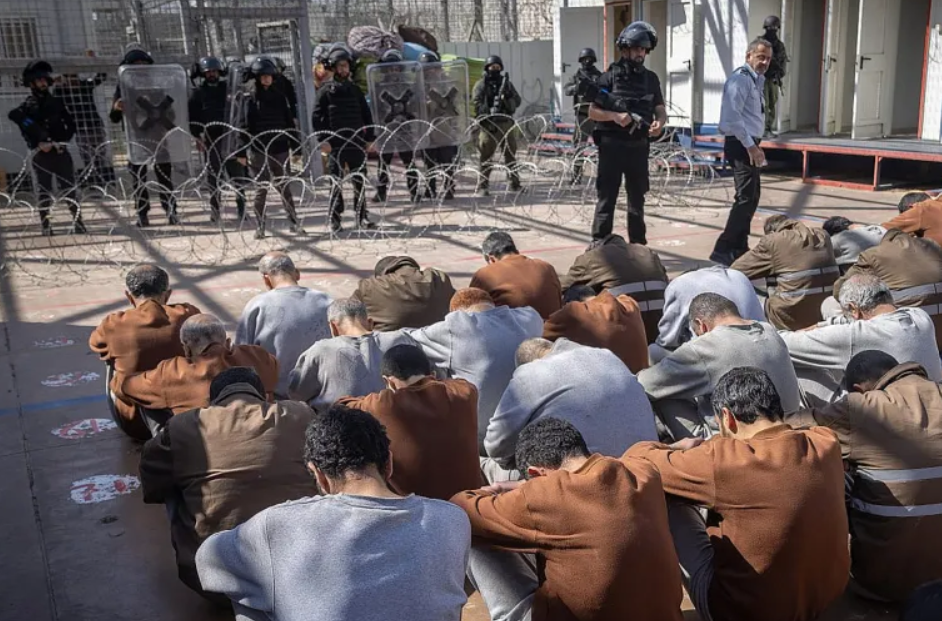
According to the Palestinian Prisoners' Society, approximately 9,500 Palestinians and Arab detainees are currently held in Israeli prisons. The organization reports that the bodies of 97 Palestinian detainees who died in Israeli custody remain withheld, including 86 who have died since the outbreak of the war in Gaza.
Since 1967, at least 326 Palestinian prisoners have died while in Israeli detention under circumstances frequently linked to torture or alleged medical neglect.
Capital punishment remains extremely rare in Israel’s judicial history. It has been carried out only once, in 1962, when Israel executed Nazi official Adolf Eichmann after his conviction for crimes committed during the Holocaust.
If enacted, the new legislation would mark a significant shift in Israel's penal policy and could further deepen the legal and political ramifications surrounding the treatment of Palestinian prisoners.
M.N