By Reem Sweisi
GAZA, January 30, 2026 (WAFA) - For nine relentless hours, 44-year-old Moataz Aziz searched for a single pill to ease the pain of his chronic illness. He moved from pharmacy to pharmacy, from one medical point to another, across Khan Younis in the southern Gaza Strip.
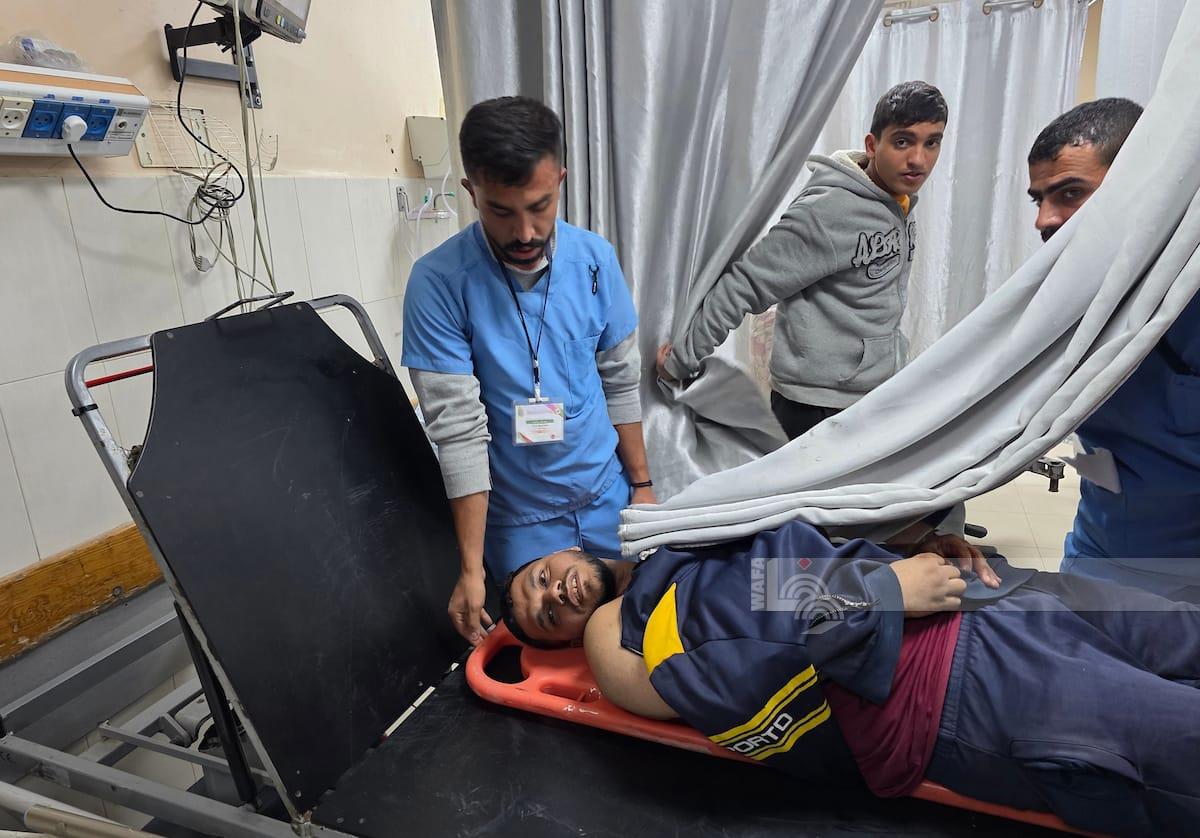
By the time his strength gave out and his condition sharply deteriorated, he had no choice but to head to Al-Amal Hospital, where doctors eventually secured the medication for him—taken from the intensive care unit.
Moataz's ordeal is no longer an exception. It has become a daily reality for thousands of patients with chronic illnesses in Gaza, where the deliberate restriction on the entry of essential medicines has created what specialists describe as a new kind of war—one waged quietly against patients, exposing them to severe and sometimes fatal complications.
Moataz suffers from myasthenia, a chronic condition characterized by muscle deterioration. Each day, he says, is a struggle marked by the absence of medication. Hours are spent searching for a dose that might dull the pain, often without success. After his health worsened, doctors advised him to seek hospital care.
Speaking in a voice drained by exhaustion, he explains that the real danger of his illness lies in interrupted treatment. “If the medicine stops,” he says, “my life could end at any moment.”
Pharmacist Dr. Khaled Odeh confirms that shortages of chronic disease medications have reached alarming levels, particularly drugs for heart disease, diabetes, hypertension, and thyroid disorders. Medical teams, he explains, are often forced to change treatment plans based on what is available. But the tragedy deepens when patients discover that even the prescribed alternatives are nowhere to be found.
According to Dr. Odeh, thyroid medication has been completely unavailable for nearly three months, with no substitutes—neither in pharmacies nor in hospitals and medical points.
This absence, he warns, poses a direct and immediate threat to patients' lives. He also points to a systematic pattern in which certain types of blood pressure medications are allowed into Gaza while others are barred, calling it a calculated manipulation of patients' health and an unjust form of collective punishment.
Changing a patient's medication, Dr. Odeh notes, is not a simple switch. It requires a full medical reassessment, careful recalculation of dosages, and new laboratory tests—essentially restarting the entire treatment protocol from scratch. Even hospitals and foreign medical institutions operating in Gaza, he adds, are affected by the shortages.
The consequences are severe. Continued lack of medication can lead to life-threatening complications, including blood clots, enlargement of the heart muscle, and dangerous irregular heart rhythms among hypertension patients. For those with diabetes, the risks extend to serious kidney and liver damage.
All of this unfolds within a fragile health system already battered by ongoing attacks, closed crossings, and strict control over the entry of medical supplies. Medical sources estimate that shortages in chronic disease medications have reached approximately 52 percent—an alarming figure that places the lives of thousands of patients in Gaza at constant risk.
In Gaza, the absence of medicine has become a silent emergency, one that unfolds behind closed doors and in hospital corridors, threatening lives not with sudden force, but with slow deprivation.
M.N