By: Yasmeen Al-Saqa
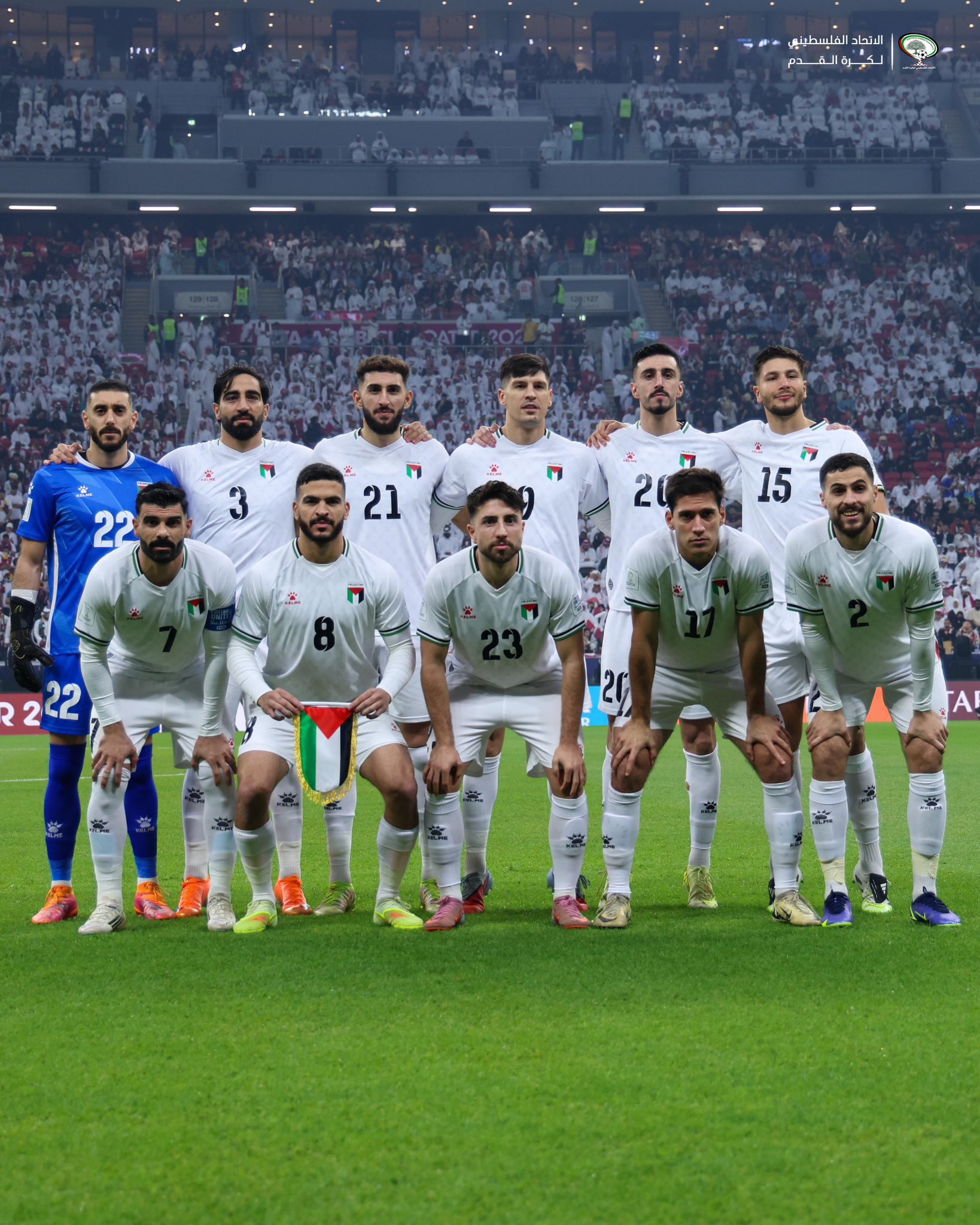
RAMALLAH, December 11, 2025 (WAFA) –Beyond the pitch and its fleeting results, the Palestinian national team emerged in the Arab Cup as something far greater than a football squad, but rather became a symbol of hope and resilience.
Sealing the top spot in Group A with a well-earned five points, level with Syria but leading on goal difference, the story behind Palestine’s rise is far richer than statistics.
The achievement came on the back of strong performances under national team coach Ihab Abu Jazar, whose leadership delivered some of the tournament’s most compelling results: a 1–0 victory over Qatar, the reigning Asian Cup champions and one of the teams already qualified for the upcoming World Cup, a 2–2 draw with Tunisia, another confirmed qualifier for the 2026 tournament. A composed 0–0 result against Syria sealed their unprecedented rise to the top of the group.
The Palestinian national team’s impressive journey didn’t happen by accident.
Behind the scenes, the Palestinian Football Association played a crucial role, bringing together talent from across the diaspora, players shaped by different cultures, leagues, and life stories, and brought them together under one flag.
The federation did not stop there, but arranged to hold a series of friendly matches in order to assess the team’s readiness, by holding two matches in Algeria, followed by another pair in Spain against teams from the Basque Country and Catalonia.
In Spain, the matches transformed into something larger than sport. They became powerful moments of solidarity, where sport opened a window onto the suffering of the Palestinian people, who have endured two years of devastating Israeli aggression that has destroyed infrastructure and claimed tens of thousands of lives, the majority of whom are civilians, including children and women.
In the Basque Country and Catalonia, the Palestinian flag flew high in the stands. Fans chanted for freedom and independence, condemning Israeli's ongoing violations. The stadiums became more than just venues for football, they turned into stages for solidarity and a shared call for justice.
The national team's journey in Spain was a success by every measures – sporting, political, and in terms of solidarity. One of the key benefits was how the players gained and absorbed the experience and talent of the European teams and players, which positively reflected in their performance at the 11th Arab Cup, currently taking place in Doha, Qatar.
The team began the tournament by defying expectations, opening with a 1-0 victory over Qatar. Their heroic comeback against Tunisia. After falling behind 2-0, the Palestinian players refused to give up, with determination and courage, they fought back to level the score 2–2, thanks to goals from Hamed Hamdan and Zaid Al-Qanbar.
That match became one of the most thrilling and memorable of the tournament, celebrated for its technical, tactical, strategic value, and for the resilience, spirit, and heart of the Palestinian team.
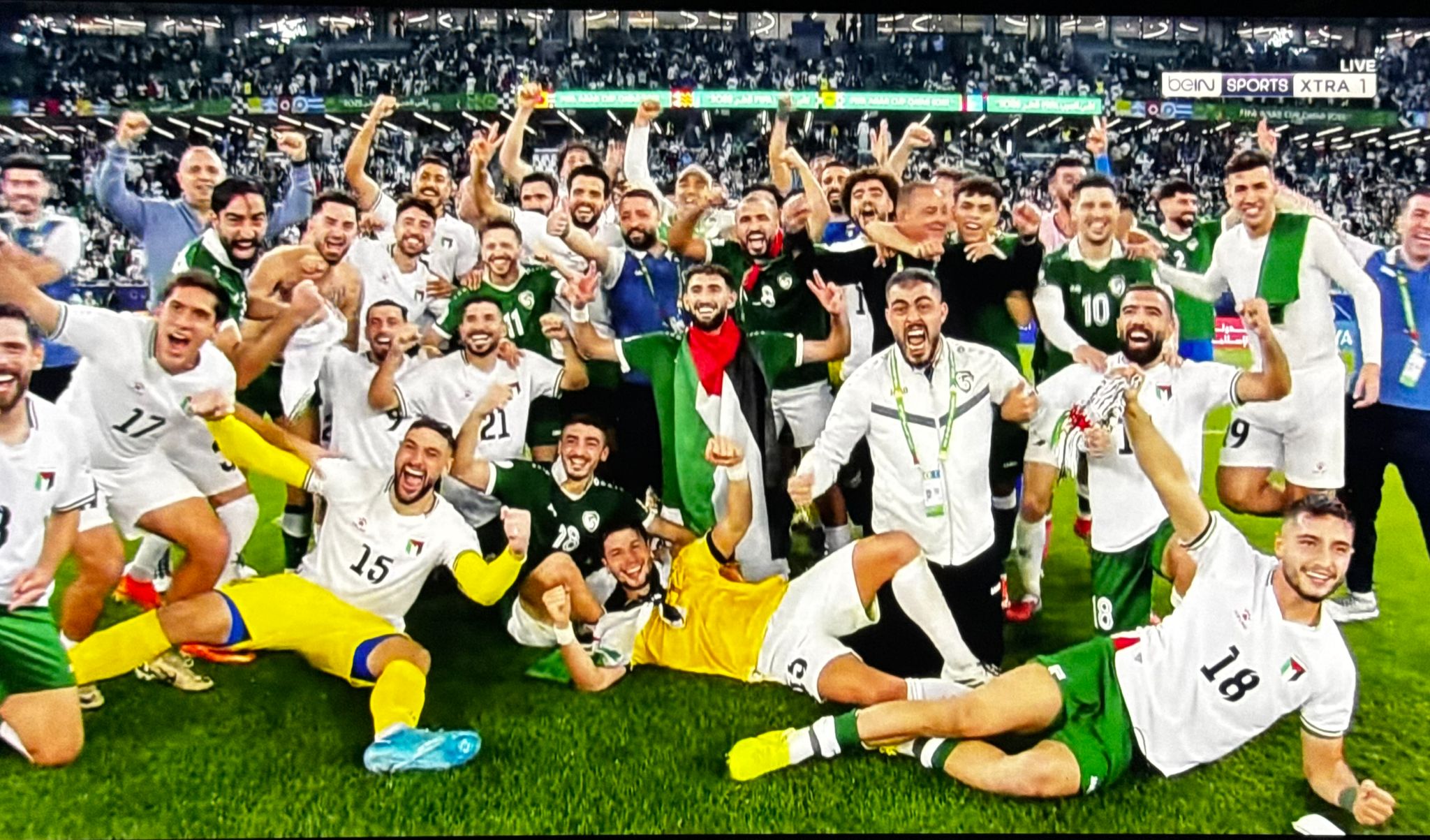
The momentum continued with a goalless draw against Syria, securing an unprecedented qualification. Both teams advanced with five points, but Palestine claimed first place on goals scored. Meanwhile, Tunisia and Qatar, despite having already qualified for the 2026 World Cup, were eliminated from the tournament.
After qualifying for the quarter-finals, Palestine’s national team coach, Ihab Abu Jazar, shared his joy with heartfelt words, "This qualification brings joy to our Palestinian people, something we haven’t felt in a long time." He added, "We dedicate this victory to every Palestinian, wherever they are, especially those living in Gaza’s tents, and our steadfast families in occupied Jerusalem and the West Bank."
He recalled the historic scenes of celebration between the Syrian and Palestinian teams. As players exchanged shirts and raised both flags, the moment embodied solidarity and unity. “This is the true purpose of the tournament, the coming together of Arabs in support of one another,” Abu Jazar said.
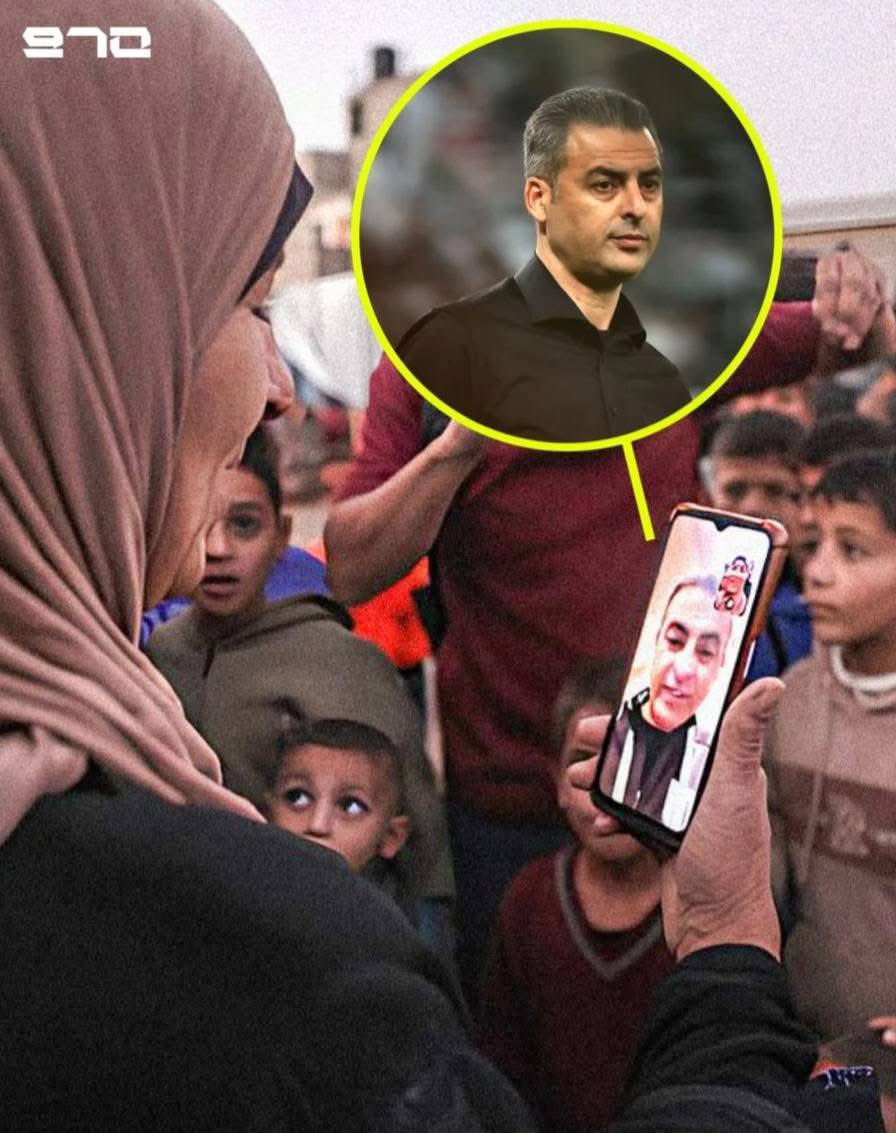
The 45-year-old coach also highlighted the role of his mother in his journey. Following the team closely from Gaza, she keeps in constant contact, asking only about football. “She never talks to me about anything else,” he said. “She wants me fully focused on the tournament.”
From Doha, he sent her an emotional message after the team’s victory, "I’m very happy to have brought joy to your face, my dear mother. You’ve endured so much with me."
Abu Jazar did not shy away from speaking about the hardships his family has endured. "My house was destroyed, and so were the homes of my relatives. The place we built, brick by brick, was reduced to rubble, it was the home of a lifetime," he recalled.
Today, his mother and siblings live in a tent, struggling to watch the matches as electricity and internet are repeatedly cut off due to the ongoing Israeli aggression. “All of this drives us to fight on the field with every last breath,” he said. “It gives us the determination to bring joy to our people in Gaza.”
From inside the tents, Abu Jazar's mother said, "I am so proud of Ihab, because he carries the Palestinian cause," she said. "We rejoiced, and so did all the people who are suffering in the camps."
Speaking to WAFA, Ghassan Taha, director of the Palestine Sports News Agency (WAFAR), described the celebrations across Palestinian streets:
"At a time when the Palestinian people were in dire need of joy after years of ongoing hardship, the streets erupted in celebration. Even those who usually pay little attention to sports watched the matches with great enthusiasm, especially in the grief-stricken Gaza Strip," he said.
Taha added, "We saw footage across media platforms showing Palestinians rejoicing, even amid tents and difficult living conditions."
"The national team became more than just a football squad — it became a bridge uniting Palestinians through hope and pride," he said.
Palestine’s Arab Cup journey was never just about football. It was about a people refusing to give up.
Y.S/M.N