CAIRO, October 13, 2026 (WAFA) – The Arab League Council convened today, Tuesday, for an extraordinary session at the level of permanent delegates. Chaired by Tunisia—the president of the 165th session—the meeting was held at the request of the State of Palestine and with the support of member states. It was attended by Ambassador Fayed Mustafa, Assistant Secretary-General for Palestine and Occupied Arab Territories, and Ambassador Sherif Kamel, Assistant Secretary-General and Head of the Secretary-General’s Office.
The Palestinian delegation was led by the State of Palestine’s Permanent Representative to the Arab League, Ambassador Muhannad Al-Aklouk, accompanied by First Counselor Tamer Al-Tayeb, Third Secretary Maher Masoud, Third Secretary Ola Amer, and Secretary Alaa Al-Sharbati.
The meeting aims to discuss mechanisms for providing international protection to the Palestinian people and ensuring respect for international law and relevant international legitimacy resolutions regarding the international legal status of Jerusalem. These discussions take place amidst escalating attacks by occupation forces and armed colonists' gangs against the Palestinian people and their property, and in light of violations targeting Jerusalem and its international legal status, as well as the opening of embassies in the city by certain countries.
Ambassador Mustafa stated that the situation facing the Palestinian people today cannot be treated as isolated incidents or sporadic transgressions; rather, it is part of a systematic policy targeting Palestinians—their land and their very existence. He noted that this policy seeks to displace Palestinian communities, expand colonization, alter the demographic and geographic reality of the occupied Palestinian territory, undermine prospects for a two-state solution, and destroy the foundations upon which any just and lasting peace in the region could be built. In his address, the Assistant Secretary-General added that the attacks carried out by armed colonists—under the direct protection and support of the occupation authorities—constitute a grave violation of the rights of the Palestinian people. He noted that these actions reveal a clear overlap between colonists' practices and Israeli government policies, making it imperative for the international community to shoulder its responsibilities and refuse to allow such practices to continue without accountability. He emphasized that there can be no credible talk of a desire for peace while land seizures persist, colonial activity expands, and Palestinians are forcibly displaced from their homes and lands. Peace cannot be built by imposing a *fait accompli* or by denying rights; nor can it serve as a cover for the continuation of the occupation or a means to liquidate the Palestinian cause.
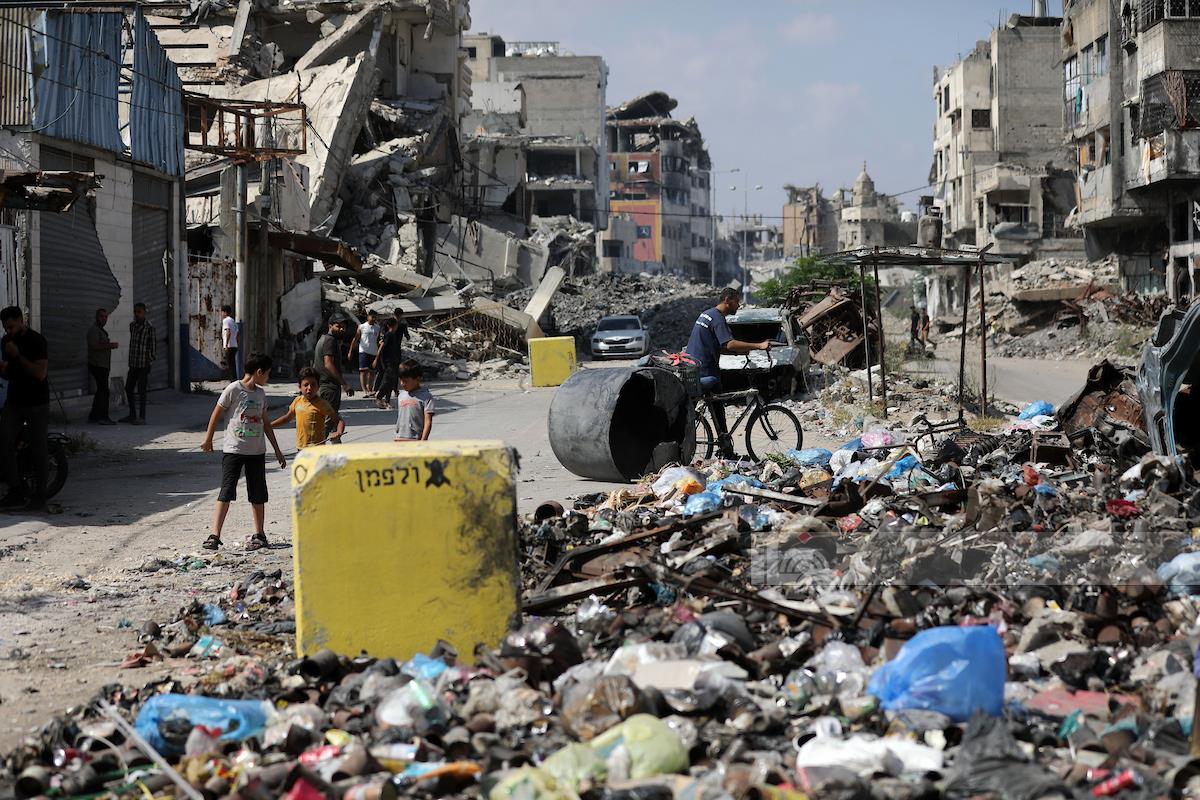
Mustafa underscored the necessity of ending this suffering, ensuring the unhindered delivery of humanitarian and relief aid, and providing protection for civilians. He rejected any attempts to displace the people of the Gaza Strip or to excise any part of its territory, affirming that the Gaza Strip is an integral part of the occupied Palestinian territory. Its future, he stressed, is inseparable from the unity of the Palestinian land and people, and from the national goal of ending the occupation and establishing an independent, sovereign Palestinian state based on the June 4, 1967 lines, with East Jerusalem as its capital. He stated that the city of Jerusalem lies at the heart of these challenges. Any measures aimed at altering the city's status or undermining its legal standing—including the opening of embassies there by certain states—represent a highly dangerous development. Such actions necessitate a clear and firm Arab stance affirming the imperative to respect international law and relevant international legitimacy resolutions, and to refrain from steps that would entrench a reality contrary to these resolutions or infringe upon the legitimate national rights of the Palestinian people.
He added that our shared Arab responsibility requires us to rise to the occasion and translate our steadfast positions into coordinated political and diplomatic action. This action must convey a clear, unequivocal message: the rights of the Palestinian people are not up for bargaining; colonial expansion and displacement will not yield peace; and Jerusalem will remain central to any serious effort to achieve a just and lasting peace.
For his part, Ambassador Al-Aklouk called upon the international community—including the United Nations and the Security Council—to provide international protection for the Palestinian people. This protection must be in accordance with international law, UN resolutions, International Court of Justice advisory opinions, and the Fourth Geneva Convention regarding the protection of civilians in times of war and under occupation.
Ambassador Al-Aklouk also urged Arab states to implement Arab Summit resolutions concerning countries that relocate their embassies to Jerusalem. Arab nations have affirmed their determination to take deterrent political, diplomatic, economic, and legal measures to halt the spread of this unlawful "contagion." He emphasized that we will continue to work with peace-loving peoples and nations committed to international law to end the Israeli occupation, eliminate its consequences, and lift the injustice inflicted upon our people. Furthermore, we will exert every effort to hold Israel accountable for its long record of crimes against our people. He addressed the ongoing genocide in the Gaza Strip and the continuous aggression against the occupied West Bank—including Jerusalem—stressing the need for the international community to shoulder its responsibilities regarding these events.
He also highlighted the escalating colonists' terrorism against olive harvesters across various West Bank governorates and the theft of the harvest under the protection of occupation forces, in addition to the burning and destruction of trees and the bulldozing of land.
K.T