By Israa Ghourani
JORDAN VALLEY, July 19, 2026 (WAFA) — For generations, the spring of Al-Auja served as the lifeline of Palestinian communities living in the heart of the Jordan Valley. Its waters sustained families, irrigated farmland, and supported the livestock that formed the backbone of the local economy.
Today, the spring stands as a symbol of a different reality: the use of water access as a tool of displacement.
Six months after the forced expulsion of the Ras Ein Al-Auja community from its historic location near the spring, around 120 families — more than 600 people — remain scattered across displacement sites lacking basic necessities. Their removal followed years of escalating attacks by Israeli settlers, beginning with the establishment of a pastoral outpost near the spring, the seizure of its water sources, the destruction of surrounding grazing lands, and a campaign of daily harassment that ultimately pushed the entire community to leave.
Ras Ein Al-Auja was one of the largest Palestinian Bedouin and pastoral communities forcibly displaced in recent years.
For resident Haitham Rashaida, the loss was not only of a home but of a way of life built over generations.
“We lived in Ras Ein Al-Auja from one generation to the next, but we had never witnessed what happened in recent years,” he said. “They cut off our lifeline.”
Rashaida recalls three years of mounting losses after the establishment of the settlement outpost and the restrictions imposed on the community’s access to water.
The settlers did not only prevent Palestinians from using the spring; they also diverted its channels, cutting off water supplies that had reached the community and agricultural lands in the nearby village of Al-Auja.
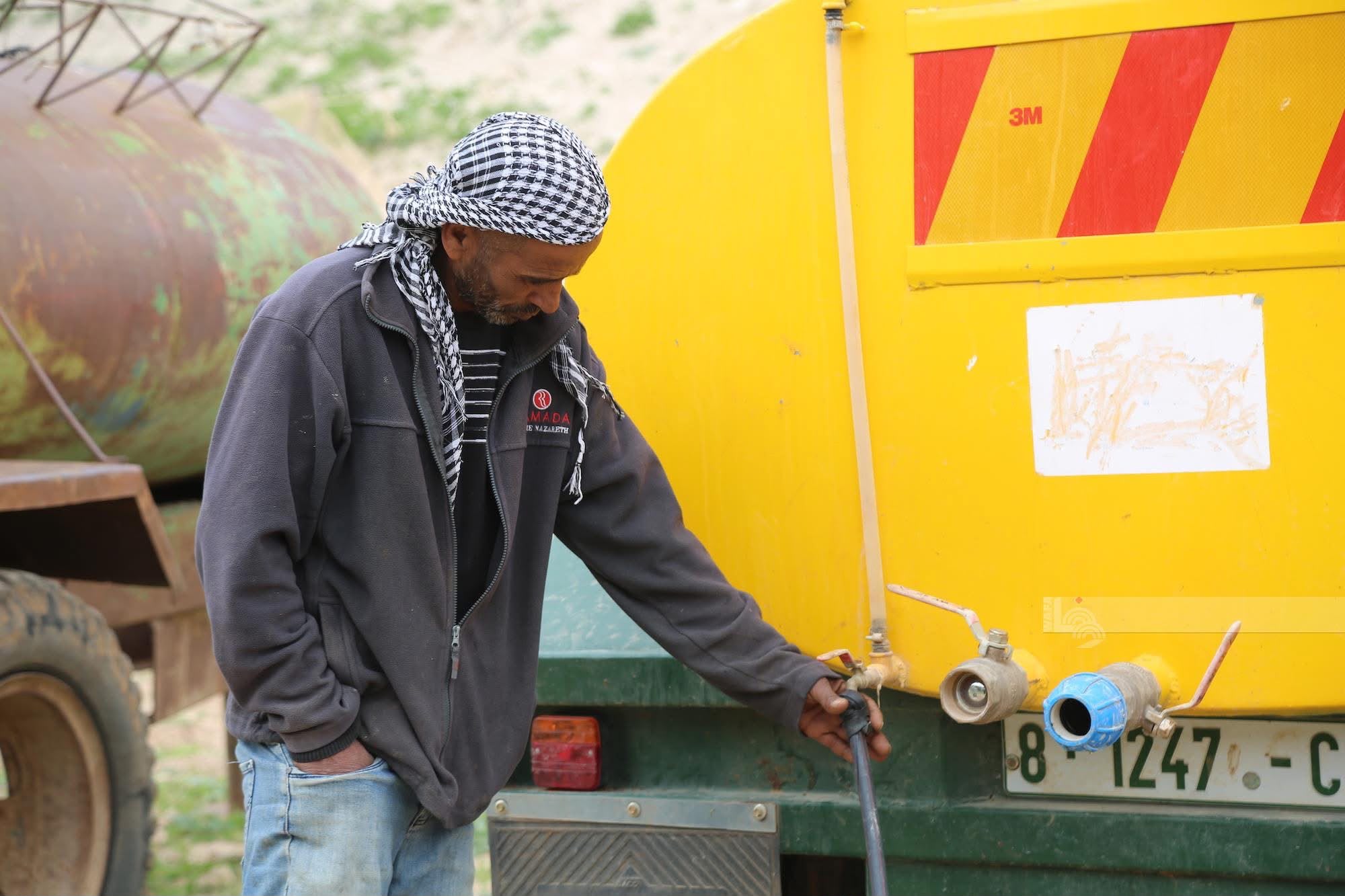
Families were forced to buy water transported by tankers at enormous financial cost.
Rashaida, who once owned 400 sheep, said he had to purchase a 10-cubic-meter water tanker every two days, while also buying animal feed after losing access to grazing areas seized by settlers.
The economic pressure intensified as attacks escalated. Before the community’s final displacement, Rashaida lost his entire herd after a violent settler attack in which around 1,500 livestock belonging to him and his neighbors were stolen.
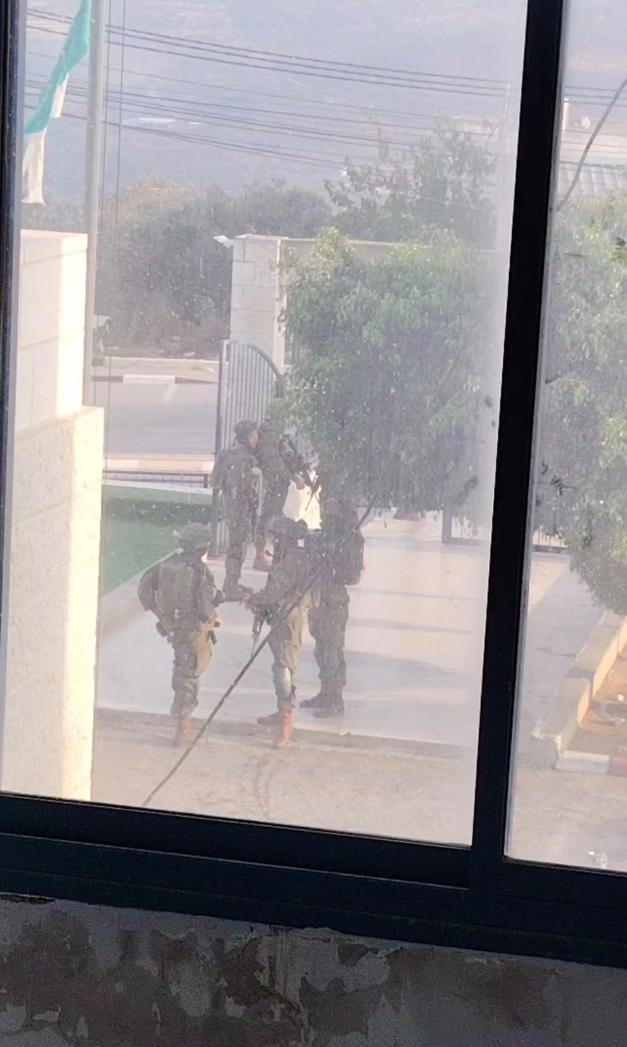
Daily raids, intimidation, and attacks on homes eventually forced families to abandon their land.
Across the northern Jordan Valley, Palestinian communities describe a similar pattern: the establishment of pastoral settlement outposts near water sources, the fencing off of springs, restrictions on access to grazing areas, and escalating attacks that leave residents with few options but displacement.
The community of Khallet Khader was among the first to experience this process. In 2022, settlers fenced off the spring that bears the community’s name and prevented residents from accessing it.
Resident Hamed Daraghmeh, who raises around 100 livestock, described a sequence of events similar to what happened in Ras Ein Al-Auja.
“It started with the establishment of a nearby outpost, then fencing off the spring, taking over the grazing lands, and eventually attacking homes,” he said.
“We tried to adapt by transporting water through tankers and buying feed, but the attacks continued, under the protection of the occupation army, which intervened in favor of the settlers, arrested residents, and imposed fines.”
Daraghmeh said he was eventually forced to leave after the arrest of his married sons nearly two years ago.
The campaign has also extended to those attempting to bring alternative water supplies.
Ayed Zawahreh, displaced from the Al-Maita community earlier this year, said transporting water became a daily risk.
“Moving a water tanker to the community became like a daily adventure,” he said, explaining that residents faced harassment by settlers and Israeli forces along the way.
According to figures from the Palestinian Wall and Settlement Resistance Commission, there are approximately 270 Israeli pastoral outposts among around 370 different types of settlement outposts across the occupied West Bank. The commission documented the establishment of 89 new pastoral outposts in 2025 alone.
These outposts have become a central mechanism for expanding control over land and natural resources, particularly in Area C of the West Bank.
For displaced residents, the seizure of water sources has become one of the most effective methods of making life unsustainable.
In the Al-Burj community, which was forcibly displaced in February, Naif Al-Faqir described what he called a “war of thirst.”
“Even on our final night, while we were packing our belongings, settlers attacked us at night and poured out the remaining water we had in our tanks and containers,” he said.
Such incidents, residents say, have become increasingly common in communities facing pressure to leave.
In Khirbet Al-Himma in the northern Jordan Valley, 20 families dependent on livestock farming now face similar pressures after settlers took control of the area’s spring and completely fenced it off.
Resident Mahyoub Fuqha said he is forced to buy water and transport it daily from the nearby villages of Bardala and Ein Al-Beida.
The cost has become a heavy burden. A three-cubic-meter tanker costs 70 shekels, an amount that is only enough for his livestock for one day.
As access to water and grazing areas declines, livestock numbers in Al-Himma have fallen from around 2,500 animals years ago to approximately 1,700 today.
Faqha, who owns 120 sheep, says the combination of water costs, feed expenses, and settler attacks threatens the community’s continued presence.
The struggle over water in the Jordan Valley is not new.
Since 1967, Israeli authorities have imposed control over Palestinian water resources, including surface and underground water sources, while limiting Palestinian development of water infrastructure.
The Jordan Valley sits above the Eastern Aquifer, one of the largest groundwater reserves in the occupied West Bank. Historically, Palestinian communities relied on the Jordan River, wells, and natural springs. Over time, access to these sources was restricted, while Israeli settlements expanded their consumption.
Water researcher Walid Abu Mohsen said Israeli policies have systematically reduced Palestinian control over water resources.
“After controlling the sources of water, the occupation began controlling the quantities supplied, imposing high bills, and using water cuts as a punitive measure,” he said.
He warned that new water pipelines developed by Israeli authorities through the national water company Mekorot to directly supply settlements could further deepen restrictions on Palestinian communities.
The impact extends beyond pastoral communities.
In agricultural areas such as Bardala, Kardala, Ein Al-Beida, and the Al-Baqi’a Plain, farmers say water restrictions have damaged one of Palestine’s most important agricultural regions.
Since 1967, residents have lost access to the Jordan River, while wells and springs have declined and new drilling has been restricted.
Recent land leveling operations in Atouf and the Al-Baqi’a Plain, carried out as part of the “Crimson Line” project for military roads and separation infrastructure, have damaged major water pipelines, according to local officials.
Abdullah Basharat, head of the Atouf village council, said the destruction cut water supplies to around 30,000 dunums of agricultural land — nearly one-third of the plain’s total area.
“This threatens the agricultural identity of the region, which is considered Palestine’s food basket,” he said.
Omar Sawaftah, director of the Northern Jordan Valley Agriculture Department, said water restrictions have already pushed large agricultural areas out of production.
He pointed to the Qaoun Plain in Bardala, covering more than 2,000 dunams, which has not been cultivated for two years after a nearby settlement outpost was established and water lines supplying the area were cut.
A 2024 study by the Applied Research Institute–Jerusalem (ARIJ) titled “Water Resources Under Settler Control in the Northern Jordan Valley” found that water access has become a major tool of pressure against Palestinian communities.
The study documented the takeover of dozens of springs in the occupied West Bank and highlighted restrictions preventing Palestinians from developing wells and water infrastructure.
Human rights organizations have also warned that restrictions on water access, combined with settlement expansion and settler attacks, contribute to creating conditions that push Palestinian communities to leave.
The United Nations Office for the Coordination of Humanitarian Affairs (OCHA) reported that around 600 Palestinians from Ras Ein Al-Auja were displaced in January 2026, describing it as the largest displacement of a single community resulting from settler attacks and access restrictions in recent years.
OCHA data released in July 2026 indicated that between January 2023 and July 6, 2026, 121 Palestinian communities experienced full or partial displacement, including 46 communities that were completely evacuated. Around 6,200 Palestinians, including more than 3,000 children, were displaced during this period.
Months after the displacement of Ras Ein Al-Auja, Khillet Khader, Al-Maita, Al-Burj, and other communities, residents remain separated from their lands, springs, and traditional sources of livelihood.
Meanwhile, the pattern continues elsewhere: pastoral outposts established near water sources, springs fenced off, grazing lands seized, and attacks intensified until daily life becomes increasingly impossible.
The evidence, testimonies, and data gathered from across the Jordan Valley reveal a broader pattern in which water is no longer only a natural resource under dispute, but a central element in a process of territorial control and forced displacement.
As Palestinian communities struggle to remain on their land amid rising water costs, shrinking grazing areas, and continued attacks, the question remains: how many more communities will face the same fate, and how far will the struggle over water reshape the future of Palestinian presence in the Jordan Valley?
M.N