By Zahran Maali
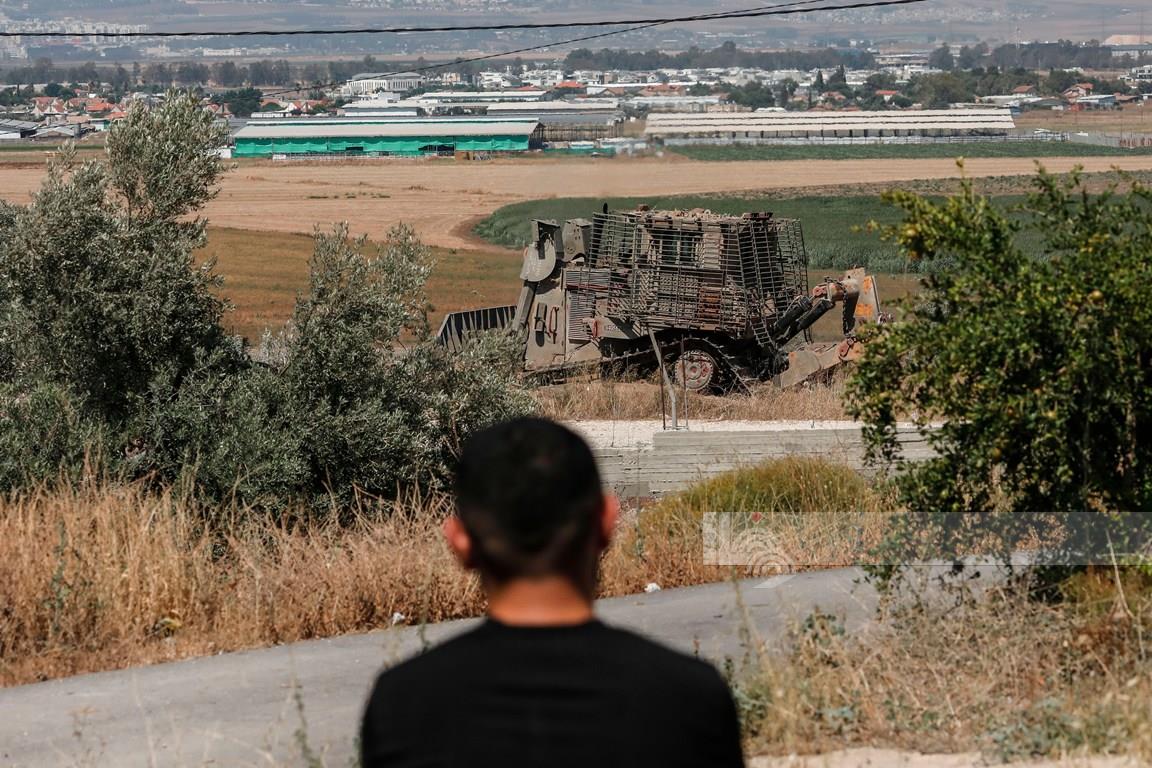
JENIN, July 2, 2026 (WAFA) – For three consecutive days, families in the Palestinian village of Zububa, west of Jenin, watched helplessly as Israeli bulldozers uprooted olive trees that had stood for more than half a century, stripping away not only a vital source of income but also generations of family history rooted in the land.
The latest wave of destruction comes after months of escalating Israeli measures against the village, including repeated closures of its entrances, military raids, and expanding land-clearing works targeting agricultural areas near the separation barrier.
According to Zububa Village Council head Zaki Jaradat, the village has endured nearly eight months of increasing restrictions that have isolated residents and gradually shifted from limiting movement to directly targeting farmland.
Israeli authorities initially issued notices covering five dunums of olive groves before expanding them to 60 dunums and later to 126 dunums across three locations in the village's northeastern area. Yet, Jaradat says, the actual destruction has gone far beyond those notices.
More than 120 dunums of agricultural land have already been bulldozed, with around 1,200 olive trees uprooted, despite the first phase of work officially covering only about 40 dunums.
He warns that if the bulldozing continues, nearly 500 dunums of farmland could eventually be destroyed, effectively wiping out most of Zububa's remaining olive groves. Land stretching between residents' homes and the separation barrier has already been transformed into barren ground.
For many families, the loss comes at a particularly difficult time. Since Palestinians from the village lost access to jobs inside Israel following the outbreak of the Gaza war in 2023, agriculture became the primary source of income for dozens of households.
Jaradat believes the campaign forms part of a broader effort to seize more of the village's land and incorporate it into areas lying beyond the separation barrier. He notes that Zububa's land has shrunk dramatically—from approximately 48,000 dunums before 1948 to only about 1,200 dunums today.
For local farmer Munir Jaradat, the destruction is deeply personal.
The olive trees uprooted from his family's land were more than 60 years old. They had been planted and nurtured by his mother, who carried water containers on her head across hundreds of meters to irrigate the young saplings until they matured.
"What happened was not just the loss of trees," he says. "It was the uprooting of our family's memories."
Recalling his late mother, he adds, "If my mother were still alive, she would never have accepted seeing this scene. She would have died beneath those olive trees before allowing then to be uprooted."
Another farmer, Samer Maqaldeh, describes the destruction as devastating for his family's livelihood.
His first farm, which included a greenhouse, three water wells, a reservoir, and dozens of mature olive trees, was destroyed. He has also received an order to remove a second 15-dunum farm and another greenhouse, while a neighboring farmer has been ordered to demolish agriculturalists structures.
Five adjoining plots belonging to Maqaldeh and his brothers, covering about 15 dunums, were completely destroyed despite containing olive trees more than 50 years old.
Forced to dismantle one greenhouse himself after receiving demolition orders, he lost an entire zucchini crop worth more than 30,000 shekels. Overall, he estimates his family's losses at over 300,000 shekels.
Since 2023, farming had become the sole source of income for five households within his extended family after they could no longer work inside Israel.
Rejecting Israeli claims that the measures are driven by security considerations, Maqaldeh says the area is already under constant military surveillance and argues that the operations have removed every tree standing between villagers' homes and the security fence, leaving the landscape completely bare.
Alongside the destruction of farmland, movement restrictions continue to affect daily life. Most of Zububa's entrances remain blocked, while the al-Wa'r neighborhood, home to around 16 families, has been cut off by earth mounds, forcing residents to walk long distances over rough terrain to reach their homes and essential services.
In Zububa, the loss of olive trees represents far more than the destruction of another harvest. For many residents, each uprooted tree carries decades of family history, while every bulldozed field erases a piece of the village's economic future. As the village's land continues to shrink, its olive groves—long symbols of resilience, belonging, and survival—are disappearing along with the memories they have sheltered for generations.
M.N