By Hussein Nadhir Senwar
GAZA, April 13, 2026 (WAFA) – Palestinians in the Gaza Strip are facing a severe shortage of vehicle tires, engine oils, spare parts and generators, worsening the humanitarian crisis and disrupting essential services across the territory.
The acute and unprecedented shortage has led to a sharp rise in maintenance and transportation costs, as well as the price of electricity generated through private generators. The crisis has not been limited to transportation, but has also affected ambulances and electricity generators in hospitals, which are already struggling with maintenance challenges due to the lack of spare parts and fuel.
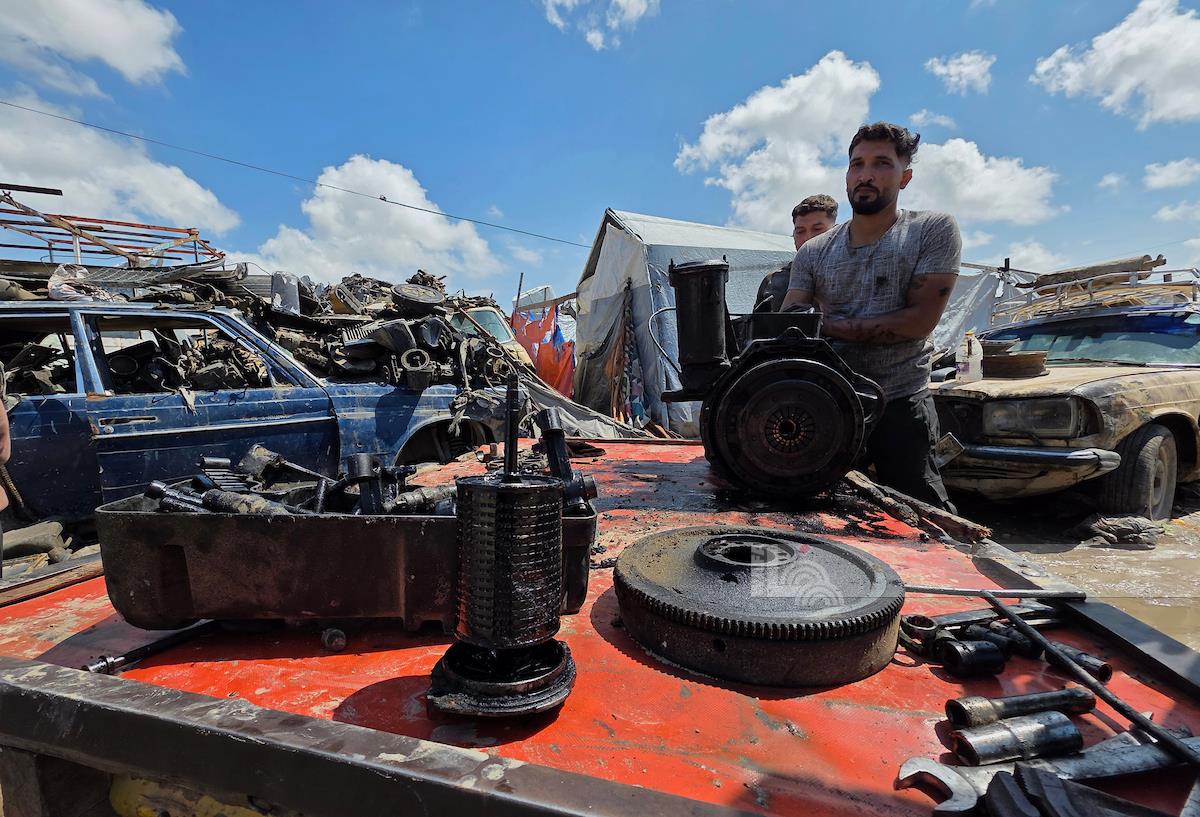
Abdulrahman Al-Zaqzouq, a worker at a car repair workshop, said markets in Gaza are witnessing an almost complete disappearance of tires, spare parts and oils, and when such items are available, they are sold at prices far beyond the reach of most residents.
He explained that mechanics are now working with extremely limited resources and are sometimes forced to dismantle old vehicles or cars that were crushed by Israeli tanks during the war to reuse their parts due to the absence of new supplies. Even these salvaged parts, he said, are sold at high prices that many residents cannot afford, forcing many to leave their damaged vehicles unused and exposed to weather conditions.
Al-Zaqzouq added that even used tires have become extremely difficult to obtain and are sold at very high prices. Engine oil prices have also surged dramatically, with a single liter now costing more than 700 shekels if it can be found, compared to about 10 to 15 shekels before the war.
Driver Khaled Afana said the shortage of tires and engine oils has caused a severe transportation crisis affecting both drivers and residents. Many drivers can no longer operate or repair their vehicles, further reducing already limited transportation options after thousands of cars were destroyed during the war.
He noted that residents have resorted to temporary and risky alternatives, such as repairing damaged tires using rudimentary methods including stitching or patching them with rubber pieces. Some drivers have also begun reusing burnt or previously used engine oil despite the risks such practices pose to vehicles, generators, drivers and passengers.
Another driver, Maher Al-Astal, called on international organizations to intervene and allow the entry of tires, spare parts and oils into Gaza, stressing that they have become essential supplies for maintaining daily life.
Medical sources in Gaza warned that Israeli authorities continue to prevent the entry of oils and spare parts needed to maintain and operate electricity generators, posing a serious threat to the already strained healthcare system.
According to the sources, hospitals require approximately 2,500 liters of oil each month to keep generators running and ensure the continuation of medical services. The remaining generators in hospitals and primary healthcare centers have been operating for more than two years and are increasingly deteriorating due to constant use and lack of maintenance.
Several critical hospital departments, including intensive care units, surgical wards, neonatal incubators, emergency departments, dialysis units and diagnostic imaging services, face the risk of shutting down as the shortage of oils and spare parts deepens.
Engineering and technical teams are working with extremely limited resources to keep the generators running, the sources added.
Local sources also warned that the continued shortage could lead to the shutdown of water desalination plants and sewage pumps, raising the risk of a major environmental and health disaster. Bakeries are also struggling to continue operating as their equipment requires regular maintenance and lubricants.
Meanwhile, UNICEF warned that the severe shortage of tires, engine oils and spare parts in Gaza is becoming a direct threat to the continuation of essential services, particularly in the water, sanitation and humanitarian sectors.
The organization said the shortage has directly affected water distribution operations, as water trucks are facing growing difficulties in movement and maintenance, leading to a decline in the amount of water available to residents. It added that the lack of proper maintenance increases the likelihood of equipment breakdowns, especially amid heavy use and limited alternatives.
UNICEF called on the international community to urgently facilitate the entry of essential supplies into the Gaza Strip, warning that continued restrictions could lead to the collapse of more vital services and further deepen the humanitarian crisis.
Israeli restrictions on the entry of tires, spare parts and oils have depleted local stock without replacement, causing major disruptions in transportation, emergency and ambulance services, water supply and the operation of bakeries.
M.N