RAMALLAH, April 7, 2026 (WAFA) — The Palestinian Cabinet called on Tuesday for stronger international deterrent measures to curb the escalating terrorist attacks by Israeli colonial settles, most recently the assaults carried out early Monday morning across several locations, particularly in the villages of Al-Lubban Al-Sharqiya and Qusra, south of Nablus. These attacks resulted in injuries and the burning of citizens’ homes and property.
The Cabinet stressed that such attacks are state-enabled organized crimes carried out under the protection of the occupying authorities, aimed at creating a coercive environment that forces Palestinians out and facilitates the expansion of settlements.
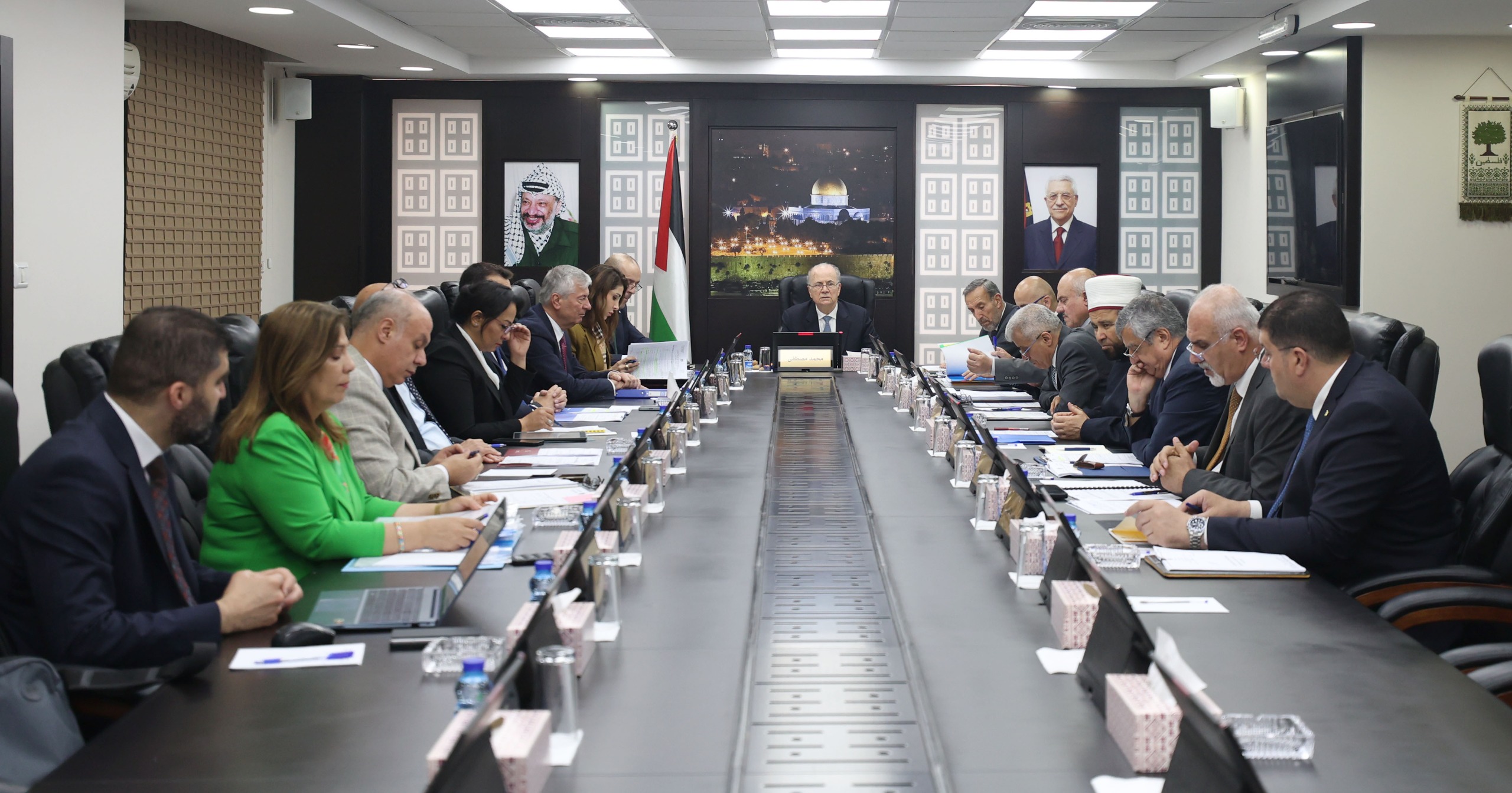
During its weekly session held in Ramallah, the Cabinet also condemned the continued closure of Al-Aqsa Mosque to worshippers, while allowing Israeli extremists to storm its courtyards, in a blatant violation of freedom of worship and a flagrant infringement on the sanctity of holy sites.
It further denounced the massacre carried out by Israeli occupation forces on Monday in central Gaza, calling on mediators, guarantors, and international institutions to exert maximum pressure to halt the massacres, protect civilians, and compel Israel to implement the second phase of the ceasefire, withdraw from the Strip, and lift longstanding restrictions on the entry of essential goods and food supplies.
The Cabinet urged the international community and the World Health Organization to respond urgently to the Palestinian Ministry of Health’s appeal by facilitating the immediate entry of rodent control materials to prevent the outbreak of epidemics in Gaza and to help safeguard nearly one million people living under extremely dire humanitarian conditions.
On the economic front, Prime Minister Mohammad Mustafa directed all relevant authorities to intensify market oversight to control prices, ensure the availability of essential goods, and maintain a strategic reserve of 16 key commodities.
He also instructed the activation of complaint channels, strengthening communication with the public, and combating manipulation, smuggling, and exploitation of current conditions, in a way that protects consumers and enhances public resilience amid global economic challenges. This follows a series of meetings held with chambers of commerce and industry, the Food Traders Union, the Palestinian Society for Consumer Protection, and other relevant bodies, which expressed their commitment to maintaining price stability and supporting citizens.
In another context, and as part of the implementation of the “Education for Development” initiative under the National Program for Development and Reform, the Cabinet discussed the main features of reform programs being implemented by the Ministry of Education and Higher Education across three key tracks: expanding interactive learning, increasing the share of vocational and technical education, and reforming the general secondary education system into specialized tracks that open new opportunities for students and better prepare them for higher education and labor market needs. The Cabinet instructed the Ministry to ensure broad public participation in reviewing the proposed reforms and to benefit from international experiences.
K.T