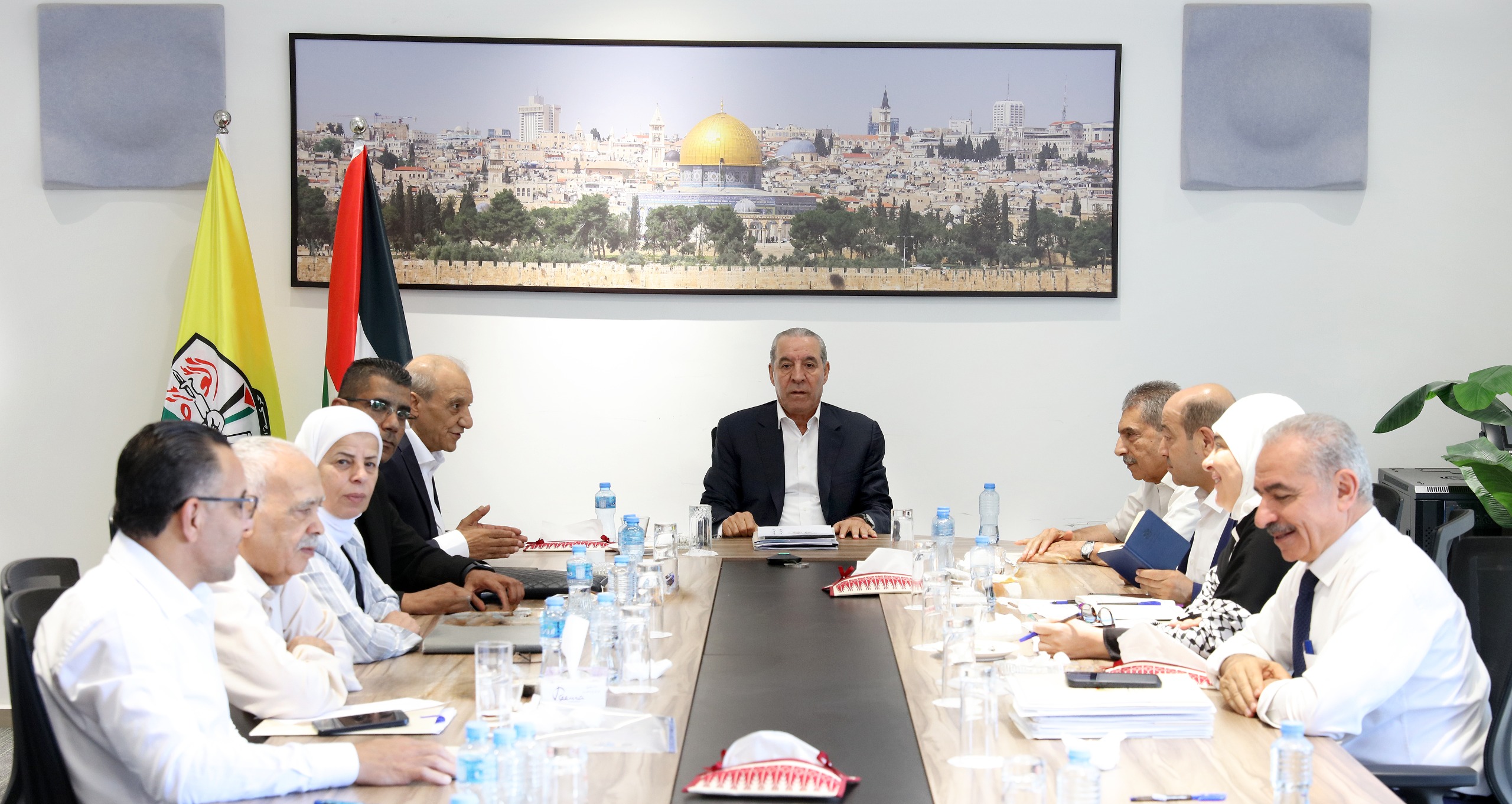
RAMALLAH, January 14, 2026 (WAFA) –Today, the Government Operations Room for Emergency Interventions in the Gaza Strip reviewed the Ministry of Culture’s relief and early recovery plan for the Gaza Strip, in the presence of Minister of Culture Emad Hamdan and representatives of cultural associations and institutions. The review forms part of ongoing government efforts to present sectoral response plans, strengthen coordination between government entities and partners, and direct available resources toward national priorities that protect cultural identity and reinforce community resilience.
During the presentation, Minister of Culture Emad Hamdan stressed that the situation in Gaza constitutes a systematic cultural genocide, as the Israeli occupation seeks to erase Palestinian identity in all its forms. This includes the deliberate targeting of intellectuals, cultural institutions, and facilities, as well as the widespread destruction of cultural infrastructure.
The plan aims to address the deep impacts of the aggression on the cultural and media sectors through a six-month intervention framework that combines emergency response with early cultural recovery. It seeks to preserve national memory, protect the Palestinian narrative, and promote culture as a key tool for psychological and social resilience.
Minister Hamdan explained that the plan is structured around four main pillars: emergency interventions; relief and livelihood support for cultural and media actors; documentation and protection of Palestinian memory and narrative; and capacity building and digital transformation. Together, these pillars aim to ensure the continuity of cultural work under exceptional circumstances.
He further noted that the Israeli aggression has caused severe human losses within the cultural and media sectors, including the killing of 20 writers, 30 artists, 10 musicians, and 8 theatre practitioners, in addition to 256 journalists. Many others have been injured, representing a profound loss to Palestinian cultural capital and a direct assault on cultural identity and the national narrative.
Minister Hamdan also stated that material losses to the cultural and media sectors are estimated at approximately USD 174.8 million, following the destruction of cultural centers, publishing houses, libraries, theatres, and media institutions. Cultural heritage assets and content were also targeted, underscoring the urgent need to protect what remains of Gaza’s cultural infrastructure.
The plan includes direct relief measures to support artists and cultural and media workers through emergency assistance and livelihood support programs. It also features cultural and community initiatives designed to ease the psychological impact of displacement and aggression, while ensuring the continuity of cultural production in displacement settings. Minister Hamdan emphasized the importance of partnerships with national and international institutions, as well as independent cultural organizations, to ensure effective implementation and sustainable impact.
In addition, the plan incorporates digital documentation initiatives aimed at monitoring and recording violations against tangible and intangible cultural heritage, safeguarding the national cultural archive, and strengthening the presence of the Palestinian narrative on digital platforms. These efforts are essential to counter attempts at erasure and distortion and to amplify the Palestinian narrative globally.
For her part, Samah Hamad, Chair of Government Operations Room for Emergency Interventions in the Southern Governorates, affirmed that the Ministry of Culture’s plan is a core component of the broader humanitarian response and early recovery framework, given the central role of culture in protecting national identity, strengthening social cohesion, and supporting mental health during crises.
Hamad underscored the importance of coordinated efforts among ministries, international partners, and cultural institutions to ensure that limited resources are directed toward clear national priorities, laying the groundwork for sustainable cultural recovery in the Gaza Strip.
K.T