▪︎ Cabinet approves the purchase of additional quantities of medicines for Ministry of Health facilities.
▪︎ Cabinet adopts the final decision issued by the international arbitration company on the Ooredoo case.
▪︎ Cabinet discusses, in first reading, draft decree-laws on the right of access to information and reducing cash usage.
▪︎ Cabinet approves regulations determining the number of members of local authority councils.
▪︎ Cabinet stresses compliance with regulations governing the participation of public employees on boards of public and private institutions.
▪︎ Cabinet instructs the Ministers of Interior and Awqaf, and the Head of the General Administration of Borders and Crossings, to address the travelers and Umrah performers crisis in coordination with neighboring countries.
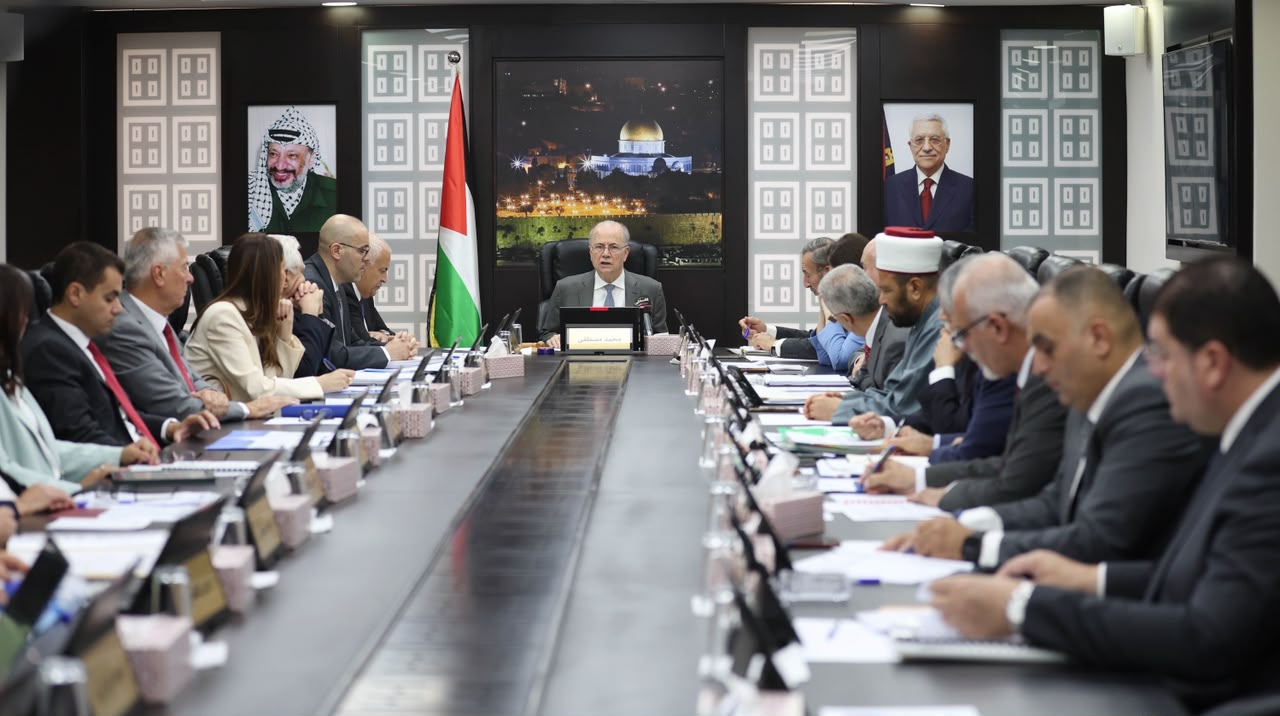
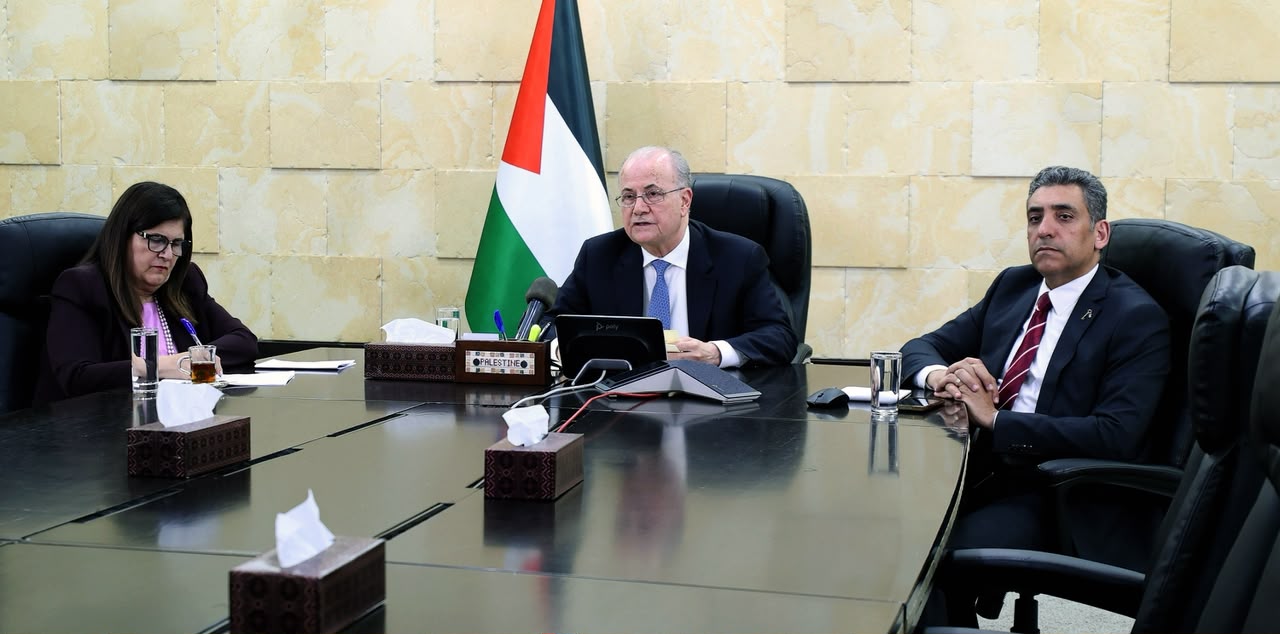
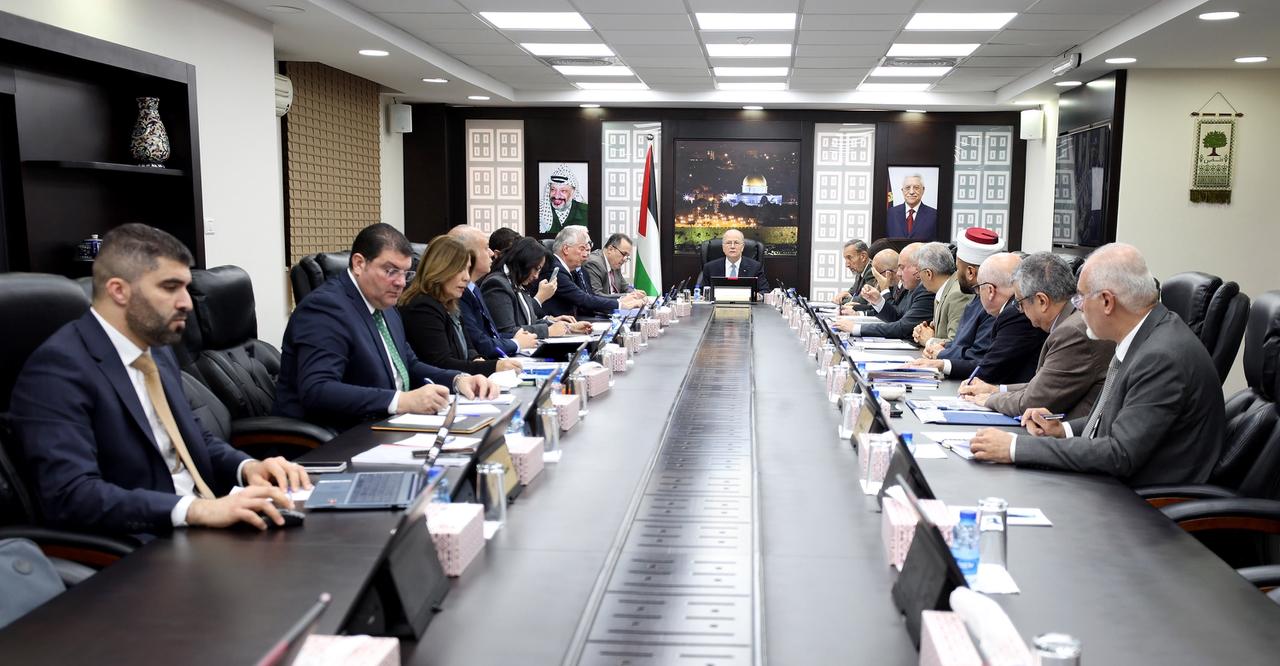
RAMALLAH, January 6, 2026 (WAFA) Center — Prime Minister Dr. Mohammad Mustafa reaffirmed on Tuesday the Government’s commitment to implementing the President’s directives to strengthen and improve the governance of national institutions, noting that 2026 will witness a series of additional reform steps.
“We are determined to unify our national institutions in the West Bank and the Gaza Strip and to take all necessary measures to realize the Palestinian state, the state that our people deserve after all these great sacrifices,” Prime Minister Mustafa said at the onset of the Cabinet session held today in Ramallah.
The Prime Minister expressed, on behalf of the Cabinet, appreciation and gratitude to our people for enduring these unprecedented circumstances, with special recognition of public servants who have continued delivering services across various sectors—particularly health, education, security, and the judiciary.
He also thanked private sector institutions and called on both public and private sectors to continue serving the Palestinian people in pursuit of national objectives.
The Prime Minister noted that since the Government was mandated by President Mahmoud Abbas nearly 20 months ago, Palestine has faced exceptionally difficult conditions—most notably the continued withholding of Palestinian clearance revenues, the primary source of Ministry of Finance income, by the Israeli occupation. This comes alongside the continued prevention of Palestinian workers from reaching their workplaces, and a range of other unilateral Israeli measures against our people, including military checkpoints, iron gates, and disruptions to institutional operations, as well as our ability to operate in a stable and normal manner.
"Despite all this," Mustafa added, "the Government has continued to fulfill its duties, both in maintaining reasonable levels of service delivery and in providing relief to our people in the Gaza Strip and in refugee camps in the northern West Bank."
Mustafa highlighted the implementation of several financial, administrative, and governance reforms, alongside expenditure controls and the mobilization of available financial resources. He noted the Government’s success in increasing international political and financial support under these difficult conditions, stabilizing national institutions, and sustaining vital services with limited resources.
Among key reform measures, he cited Cabinet approval of the National Anti-Corruption Strategy and the adoption of several laws and legislations to empower the judiciary and law enforcement institutions—considered top priorities for the Government.
The Prime Minister stressed that there will be zero tolerance for any attempts to exploit public office or public funds, emphasizing that recent experiences have demonstrated the Government’s seriousness in enforcing this principle.
Meanwhile, the Cabinet condemned the Israeli occupation’s withdrawal of the Hebron Municipality’s authorities at the Ibrahimi Mosque, describing it as a dangerous escalation, a violation of international law and the historical status quo, and a threat to Palestinian identity. The Cabinet affirmed the illegitimacy of the measure and underscored the continuation of legal and international action to confront Judaization projects.
The Cabinet further strongly denounced the continued demolition of Palestinian homes and the forced displacement of the Palestinian people in Nur Shams refugee camp, stressing that these practices constitute crimes and flagrant violations of international law. It noted that these violations occur within a broader context of systematic attacks, exceeding 23,000 incidents carried out by the occupying forces and settler mobs during 2025—the highest annual total ever documented.
The Cabinet called on the international community to take urgent action to halt these violations, ensure the protection of civilians, and hold those responsible within the Israeli government accountable.
It further condemned the Israeli occupation forces’ incursion into Birzeit University, including the destruction of the main gate and the use of live ammunition, tear gas, and stun grenades against students, resulting in injuries, stressing that such actions violate all international norms and conventions.
In another context, the Cabinet instructed the Ministers of Interior and Awqaf, and the Head of the General Administration of Borders and Crossings, to work on organizing and resolving the crisis facing travelers and Umrah performers in coordination with neighboring countries. It also approved the purchase of additional quantities of medicines for the Ministry of Health facilities.
Additionally, the Cabinet approved regulations determining the number of members of local authority councils, with the aim of regulating the electoral process based on clear standards according to a four-tier classification: Category (A) municipalities with 15 members, Category (B) municipalities with 13 members, Category (C) municipalities with 11 members, and village councils with 9 members.
The Cabinet also discussed, in first reading, the draft Law on the Right of Access to Information, prepared under the supervision of the Ministry of Justice and the Anti-Corruption Commission, with the participation of various governmental and civil society institutions through more than 45 consultative sessions, in addition to public feedback submitted via the Ministry of Justice’s Legislation Platform.
It further discussed, in first reading, a draft decree-law on reducing cash usage, aimed at addressing the accumulation of excess shekels in Palestinian banks and institutions, mitigating risks associated with cash accumulation, aligning with international developments related to regulating and reducing cash transactions, and promoting the use of electronic payment methods.
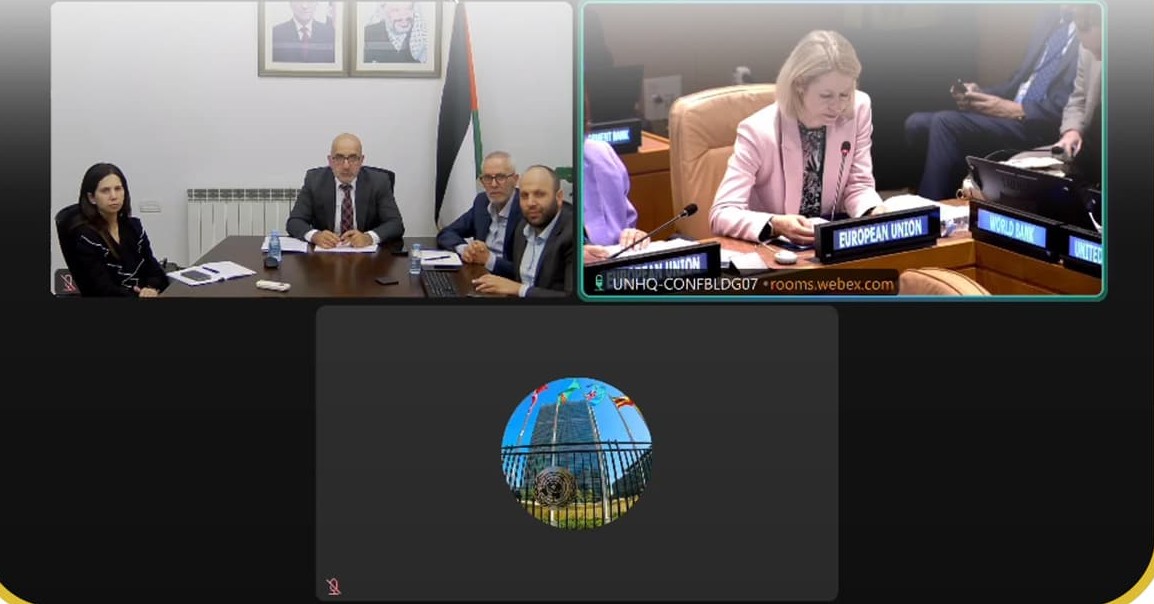
As part of the Government’s reform program to resolve long-standing outstanding financial settlements—beginning with water and electricity companies and local authorities—and pursuant to Cabinet directives issued at its session No. 81 on October 14, 2025, which called for completing arbitration in the financial dispute between the Government and Ooredoo Telecommunications, led by a specialized international arbitration company mutually agreed upon by both parties, and based on recommendations from the Ministry of Finance and Planning and the Ministry of Telecommunications and Digital Economy, the Cabinet adopted the final decision issued by the international arbitration company.
The decision obliges the company to pay a cash amount to the state treasury, in addition to allocating another financial amount to be used for developing and rehabilitating telecommunications infrastructure in Palestine, particularly in the Gaza Strip.
It is worth noting that the dispute arose from Israel’s failure to provide the necessary frequency spectrum for operation and service delivery, delaying services for years in the West Bank, and fully blocking them in the Gaza Strip, which has prevented the company from launching third-generation services there to date.
In another context, the Cabinet stressed the need to adhere to the regulations governing the participation of public employees on the boards of public and private institutions, ensuring expertise and specialization, and limiting membership to no more than two boards at any given time.
T.R.