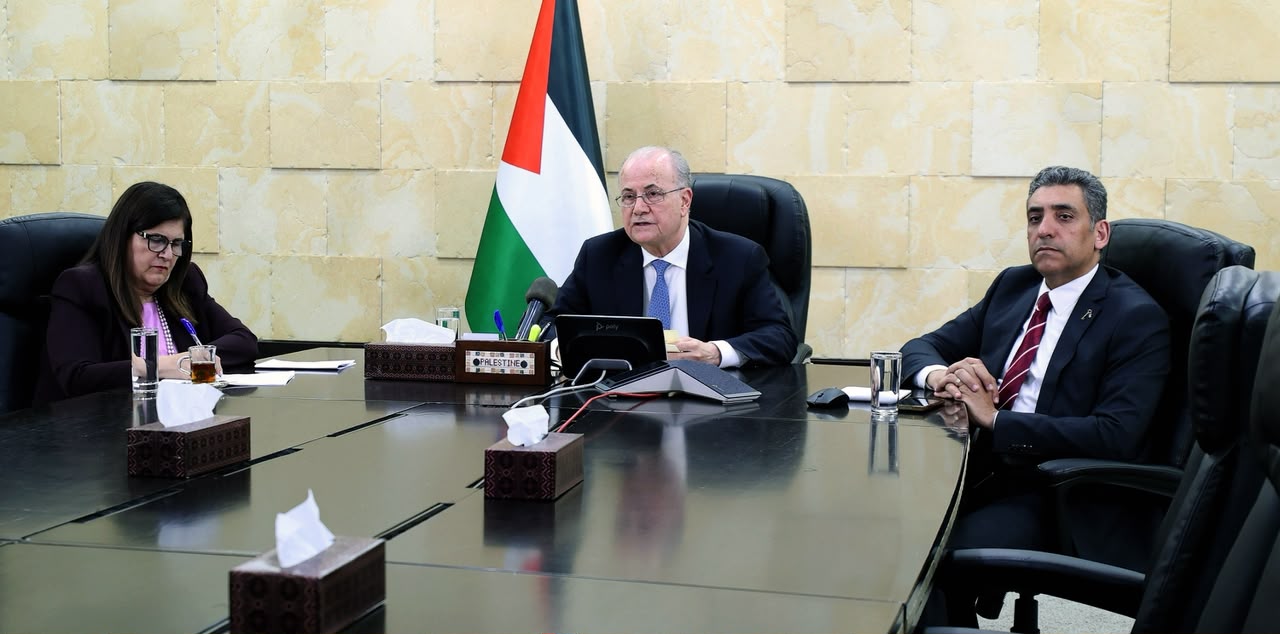
RAMALLAH, December 23, 2025 (WAFA) – Prime Minister Mohammad Mustafa on Tuesday directed all government institutions to mobilize their full relief capacities to support our people in the Gaza Strip and to provide all possible assistance through the Government Operations Room and international partners, despite the restrictions and obstacles imposed by the Israeli occupation on the entry of relief and recovery-related supplies.
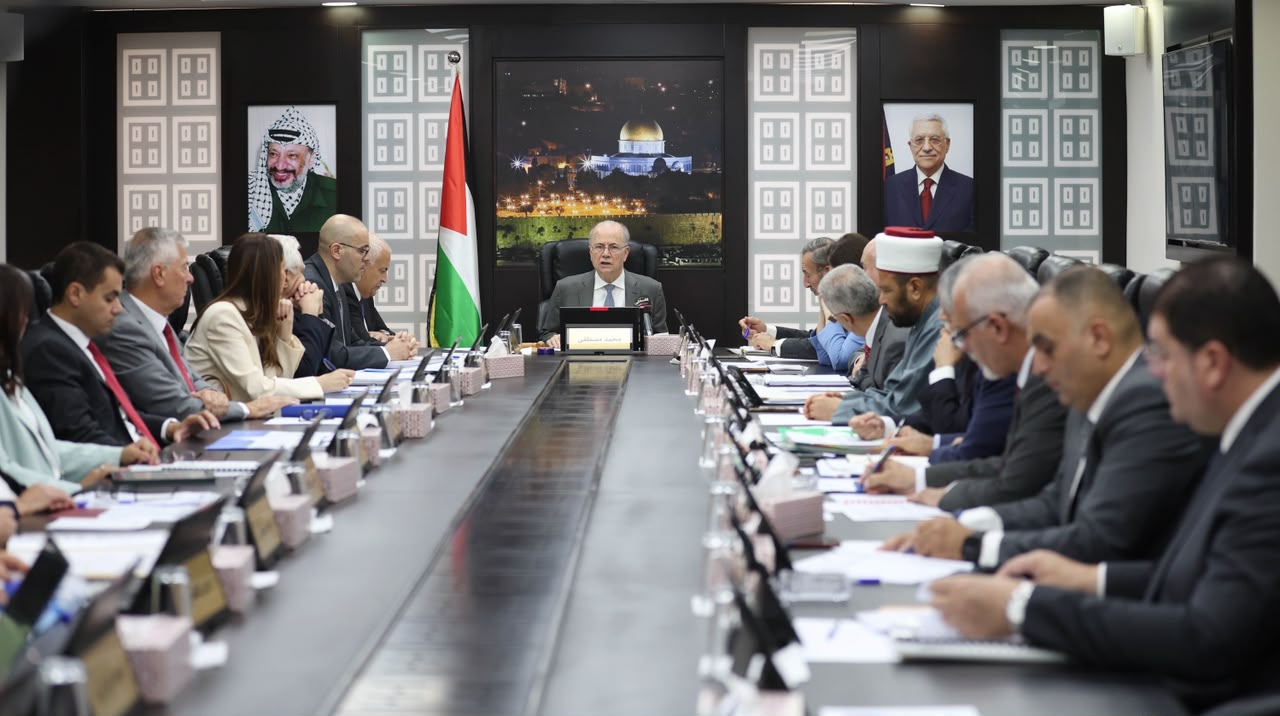
During its weekly session held in Ramallah, the Cabinet warned of attempts by influential actors inside the Gaza Strip to tamper with private and public land records or to illegally transfer property ownership, stressing that such actions will entail full legal accountability.
The Cabinet underscored that the Land Authority of the State of Palestine retains the official copies of all Gaza land records at its headquarters in Ramallah, and will review any documents, papers, or transactions related to property ownership in Gaza once it is able to resume its work there. Any illegal ownership transfers or transactions will be deemed null and void, carry no legal effect, and will be subject to legal prosecution.
Accordingly, the Cabinet instructed the Land Authority and all official Palestinian institutions, including embassies, to intensify scrutiny and verification of any ownership transfer documents or transactions to safeguard citizens’ rights and prevent exploitation.
The Cabinet also warned of the escalating spread of illegal trade practices that exploit peoples’ suffering, particularly amid Israel’s control over the entry of goods through a limited number of traders. It stressed the need to compel Israel, the occupying Power, to adhere to signed agreements, and called on the international community to exert real and effective pressure to lift restrictions on the entry of humanitarian aid and goods into the Gaza Strip. The continuation of these restrictions exposes civilians—especially women and children—to grave humanitarian risks and further deepens the ongoing humanitarian catastrophe.
It stressed the need to compel Israel, the occupying Power, to adhere to signed international agreements and called on the international community to exert real and effective pressure to lift restrictions on the entry of humanitarian aid and goods into the Gaza Strip. The continuation of these restrictions exposes civilians—especially women and children—to sever and grave humanitarian risks and deepens the ongoing humanitarian catastrophe.
The Cabinet further urged the international community not to be content with only statements of condemnation, but to urgently take practical steps to enforce international law and relevant international legitimacy resolutions, and to put an end to settlement policies. This comes amid the escalation of demolition decisions in the occupied West Bank and Jerusalem, ongoing settler crimes, and the Israeli occupation authorities’ approval of the establishment of 19 new settlements in the West Bank, raising the number of settlements approved over the past three years to 69—an alarming escalation that undermines prospects for peace and directly targets the two-State solution.
The Cabinet also reviewed the Ministry of Agriculture’s preparedness in light of reports by the World Organisation for Animal Health regarding the widespread spread of a new, mutated strain of foot-and-mouth disease in some neighboring countries, and its serious impacts on cattle and livestock. The Ministry’s efforts to secure vaccines amid rising global demand and limited availability were discussed, along with its plans to monitor the epidemiological situation and regularly disseminate guidance to livestock breeders.
In addition, the Cabinet approved the National Energy Efficiency Plan, which includes numerous steps and measures to improve energy efficiency in homes, buildings, and institutions through energy efficiency solutions such as control systems, smart meters, energy-efficient lighting, insulation, solar water heaters, and improved legislation. The plan aims to reduce electricity consumption by 7.9% by 2030, leading to annual savings estimated at USD 120 million upon full implementation.
The Cabinet also reviewed the Government Data Classification Policy, which contributes to data protection and strengthens the digital security of government institutions. Data classification is a key requirement for enacting the Right of Access to Information Law, whose final draft is currently being prepared prior to submission to the Cabinet.
Furthermore, the Cabinet discussed, in first reading, a draft decree-law amending the Decree-Law No. (37) of 2021 on Telecommunications and Information Technology and its amendments, aligning legislation with the government’s plans to complete the implementation of the digital transformation initiative.
It also discussed, in first reading, the regulation on the Electronic Trade Registry in Palestine, which aims to establish and regulate the registry, manage the registration of e-commerce platforms, and set mechanisms for receiving complaints.
Finally, the Cabinet approved the assignment of the Minister of Transport to chair the Standing Ministerial Committee on Reform.
Y.S