RAMALLAH, April 19, 2009 (WAFA)- Although the devastating Israeli military offensive against the Gaza Strip came to an end three months ago, life for Gazans remains extremely difficult, UN Under-Secretary-General for Humanitarian Affairs, John Holmes stressed.
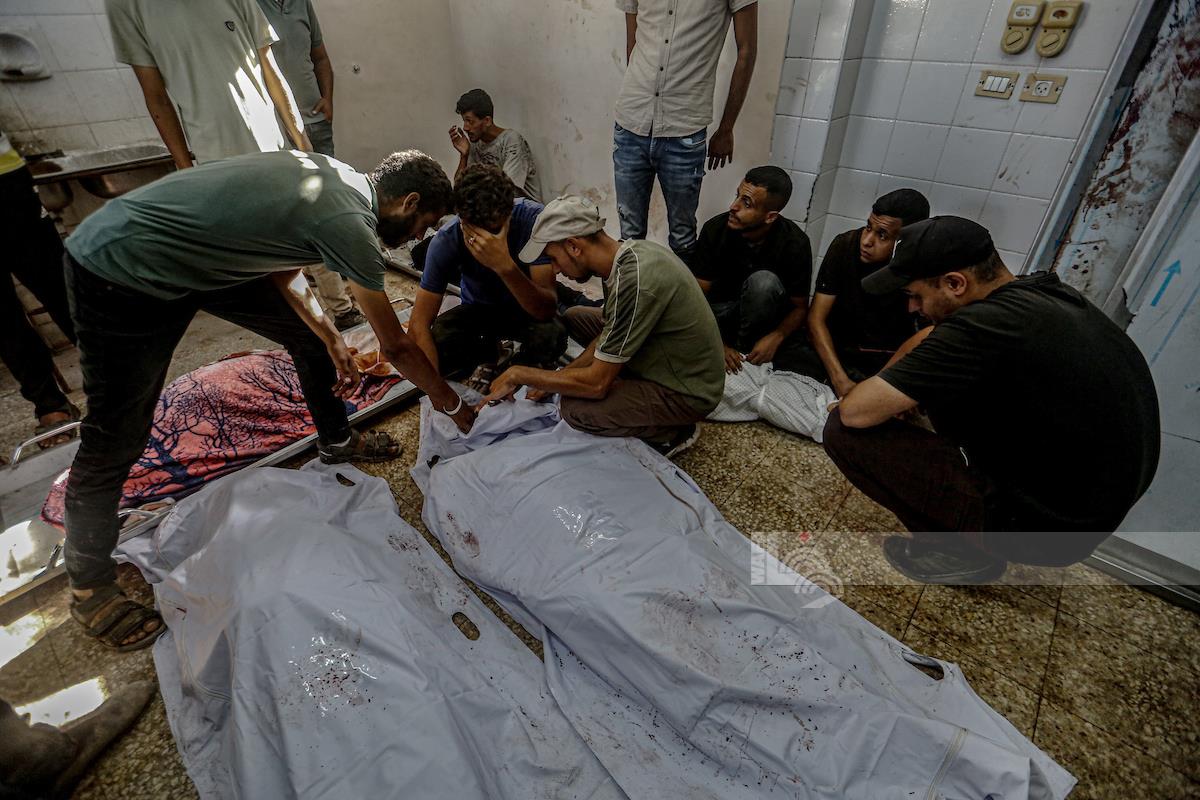
The three-week offensive Israel launched late last December killed at least 1,300 Palestinians and injured some 5,000 others. The heavy bombardment and fighting also reduced homes, schools, hospitals and marketplaces to rubble.
'For the humanitarian situation in the Gaza Strip to improve, lifesaving assistance must be decoupled from the security and political agendas,' said Holmes.
“The Gaza Strip risks being dependent on handouts for years to come,' he warned, appealing for the reopening of all land borders to allow urgently-needed humanitarian and reconstruction supplies into Gaza.
Last month in Egypt, over $5 billion was pledged for reconstruction efforts in Gaza, 'possibly the most significant show of donor support for Gaza in the history of the Occupied Palestinian Territory,' Holmes, who also serves as UN Relief Coordinator, said.
However, 'for once, money is not the main problem,' he noted, adding that the funds are not 'hitting [the] mark' with three-quarters of Gazans requiring some form of aid.
The sweeping Israeli ban on the import of construction materials, spare parts for public infrastructure and the industrial sector in Gaza, along with restrictions on the entry of cash, has prevented work to start on almost all of the planned early recovery projects, according to last month's report by the UN Office for the Coordination of Humanitarian Affairs (OCHA) on the situation in Gaza.
In addition, a ban on exports, apart from a few truckloads of flowers, has exacerbated the situation by crushing Gaza's job-creation industries, said Mr. Holmes. 'The ruin of hundreds of thousands of lives and livelihoods appears to be seen by Israel as the collective price that Gaza's civilians must pay for the acts of a few among them.'
Over 20% of the population able and willing to work is unemployed and nearly half live below the poverty line, according to the latest survey of the Palestinian Central Bureau of Statistics cited in the OCHA report.