Important News
- Gaza death toll from Israel's deadly aggression surpasses 72,317
-

- Presidency slams Israel's plan to construct 34 colonial outposts in the West Bank
-
- Israeli forces raid village south of Jenin, and interrogate several young men
-
- Israeli forces uproot dozens of olive trees near Bethlehem
-
- Colonists fence off land adjacent to Palestinian tents in the northern Jordan Valley
-

PCBS: Special Report on 59th Anniversary of Nakba
RAMALLAH, May 14, 2007, (WAFA)- Palestinian Central Bureau of Statistics (PCBS) said that Palestinian People are still suffering from Severity of the Israeli policies and the absence of a Palestinian development vision.
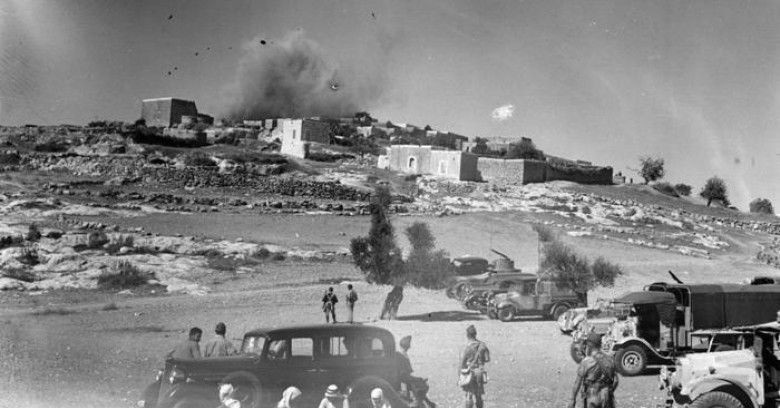
On the eve of the 59th anniversary of the Palestinian Nakba catastrophe of 1948, the PCBS president said, in a report, the Nakba is considered as the disastrous event that marks Palestinian modern history: on one hand, the Palestinians were displaced and lost their homes and lands and, on the other hand, they became homeless all over the world and suffered myriad kinds of misfortune.
The immediate results of the Nakba were the occupation of more than three quarters of Palestine land, destruction of 531 localities and displacement and expulsion of about 85% of the Palestinian population.
Population and Demographic Balance:
The estimated number of Palestinians who were expelled as a result of the Nakba is about 750,000 persons in addition to approximately 350,000 persons in 1967. The Palestinians in the Diaspora are estimated currently to be about 5.0 million. They are mainly in Jordan where about 2.8 million live, 1.6 million are distributed in other Arab countries and the rest are in Western countries including Europe, USA and Latin America.
Refugees make up about half of the Palestinians in the Diaspora and are also represented in the Palestinian Territory. Based on UNRWA records for the end of 2006, the number of Palestinian refugees in Jordan, Syria, Lebanon, West Bank and Gaza total 4.5 million, many of whom live in 59 camps, distributed as follows: 10 camps in Jordan, 10 camps in Syria, 12 camps in Lebanon, 19 camps in the West Bank and 8 camps in the Gaza Strip. The average size of the Palestinian household in Jordan is about 5.1 persons, compared to 4.3 persons in Syria and 3.9 persons in Lebanon. The illiteracy rate for Palestinians 15 years and over in the neighboring countries is 17.6% in Jordan, 19.0% in Syria and 33.9% in Lebanon.
The estimate of the number of Palestinians who remained in their homeland in the 1948 territories after the Nakba is 154,000 persons, compared to1,13 million persons on the 59th anniversary of the Nakba. The sex ratio is 103.7 males per 100 females, and the percentage of persons aged less than 15 years is 40.6% of Palestinian population in the 1948 occupied land, compared with 3.2% aged 65 years and over.
The data reveal that about 25.0% of the Palestinians in Israel were recently exposed to at least one kind of property confiscation. Even after the Nakba, 15.1% of Palestinians who are still behind the green line are considered to be displaced.
The available data indicate that the literacy rate is 94.4% among persons aged 15 years and over, the education enrolment rate for persons aged 17-15 years is 97.8% and 77.0% for persons aged 18 years and over. The labor force participation rate among Palestinians in the 1948 territories is 43.6% of total persons aged 15 years and over, and the unemployment rate is 11.4%. The average number of persons per room is about 1.3 persons.
The population of the Palestinian Territory is estimated to be 4.02 million at the mid 2007with 2.52 million in the West Bank and 1.50 million in Gaza Strip. The estimated population of the Palestinian Territory by mid 2010 is 4.4 million, with 2.7 million in the West Bank and 1.7 million in Gaza Strip. The number of Palestinian people in the Jerusalem governorate is 416,000 persons, of which about 258,000 live in those parts of Jerusalem which were annexed by Israel in 1967. The data base shows that 44.6% of the population in the Palestinian Territory are refugees. They are estimated to be 1.8 million at the mid year of 2007, of which 780,000 31.1% are in the West Bank and more than one million 67.6% are in Gaza Strip.
The fertility rate in the Palestinian Territory is high compared to other countries. The total fertility rate in 2006 was 4.6 births, 4.2 births in the West Bank and 5.4 births in Gaza Strip. In mid 2007 the crude birth rate in the Palestinian Territory is 36.0 births per 1000 population, 32,8 births in the West Bank and 41.3 births in Gaza Strip. The crude death rate in the Palestinian Territory in mid 2007 is 3.9 deaths per 1000 population, 4.0 deaths in the West Bank, and 3.7 deaths in Gaza Strip. Following a decline in mortality rates, life expectancy at birth increased in the Palestinian Territory to 71.8 years for males and 73.3 for females.
Health status:
Data on secondary health care statistics for 2006 revealed that the number of hospitals in the Palestinian Territory was 75 hospitals, 53 in the West Bank and 22 in Gaza Strip. According to a supervising authority, there are 22 hospitals run by MOH, 27 hospitals run by NGOs, and 23 run by the private sector, one hospital run by UNRWA, and two hospitals run by the military establishment.
According to the Palestinian Family Health Survey, 2006, the number of people suffering chronic diseases has surged 31.1% in the last two years. Also the number of households with safe drinking water dropped by more than 8% between 2000 and 2006 to 87.8%.
On the other hand, chronic malnutrition among children under five jumped 3% between 2004 and 2006. The number of children suffering stunting jumped 3% in the two years between 2004 and 2006. Ten out of every 100 children under five are stunted. In the Gaza Strip 13.2% of children under five are stunted and in the West Bank the figure is 7.9%. Concerning reproductive health, the number of women who saw a specialist in their first six weeks dropped 12% after giving birth in 2006 compared to 2004. The number of women delivering by caesarean section has jumped 17%.
Housing Conditions:
The housing conditions data reveal that the average number of household persons per room was 2.0 persons per room in the Palestinian Territory refugee camps. The average for the West Bank refugee camps is 1.8 persons per room and for Gaza Strip refugee camps is 2.0 persons per room. Likewise, the percentage of household members living in highly crowded conditions of three persons or more per room in the Palestinian Territory refugee camps was 23.3% but varies as well: 18.0% in the West Bank refugee camps and 25.5% in Gaza Strip refugee camps. About 99.5% of households in the Palestinian Territory were connected to the public electricity network in July 2006.
Labor Force:
The labor force participation rate in the Palestinian Territory in 2006 reached 41.3%, 44.1% in the West Bank and 36.1% in Gaza Strip. The unemployment rate was 23.6%, 18.6% in West Bank and 34.8% in Gaza Strip. The median daily wage for Palestinian wage employees was NIS 69.2 in the West Bank and NIS 65.4 in Gaza Strip.
Educational Status:
The data for the scholastic year 2005/2006 indicated that the number of schools in the Palestinian Territory was 2,277 schools, distributed by supervising authority as follows: 1,726 governmental schools, 279 UNRWA schools, and 272 private schools. Of these, 1,715 schools were in the West Bank, and 562 schools were in Gaza Strip. The number of pupils in these schools was 1.067 million, of which 535,000 were males and 532,000 were females. The number of students in the West Bank was 633,000 and in Gaza Strip 434,000 and distributed according to supervising authorities as follows: 749,000 enrolled in governmental schools, 251,000 enrolled in UNRWA schools, and 66,000 enrolled in private schools. The number of school teachers was 40,953 18,638 males and 22,321 females, of which 26,094 were in the West Bank and 14,859 in the Gaza Strip. As well, the illiteracy rate among individuals aged 15 years and above was 6.5% in 2006. This rate varies between males and females: 2.9% for males and 10.2% for females. In the Palestinian Territory, there are 11 universities and 13 university colleges offering programs leading to the bachelor degree: 3 universities and 4 university colleges are in Gaza Strip, and 8 universities and 9 university colleges are in the West Bank. There are 19 intermediate community colleges, with 14 in the West Bank and 5 in Gaza Strip.
Living Situation:
66,8% of the households in the Palestinian Territory reduced expenditures on basic needs during the last 12 months. 29,4% of households received humanitarian assistance during the second quarter of 2006. On the other hand, 67.0% of households reported that they need assistance.UNRWA is rated highest at 45.6% concerning the frequency of providing assistance for households, followed by PNA institutions including Ministry of Social Affairs at 19.5%, relatives at 16.3%, labour unions at 8.1% and charity institutions and committees including Zakat at 4.6%. 77,9% of the total assistance is provided in the form of food supplies, and 17.7% in cash.
Macroeconomics:
Prices in the Palestinian Territory increased by 3.76% in 2006: 4.00% in the West Bank, and 5.09% in Gaza Strip. In March 2007, compared to September 2000, prices increased by 24.66% in the Palestinian Territory: 26,29% in the West Bank, and 16.64 % in Gaza Strip.
The main findings of the Palestinian National Accounts Report, developed by the Palestinian Central Bureau of Statistics for 2006 at constant prices, indicate that the Gross Domestic Product (GDP) in the Remaining West Bank and Gaza Strip was US $4,150.6 million. The per capita share of GDP amounted to $1,141.4.
Trade Deficit:
The results indicate that the total value of imports of goods in 2005 was US $2,440.8 million. Imports of services was US $93.0 million and the total value of exports in 2005 was US$300.7 million. The total value of export of services to Israel in 2005 was US$ 92.0 million. The results indicate that the net trade balance amounts to US$ -2.1 billion in goods with a surplus of 37.5% compared with 2004, while the net trade balance on services showed a deficit of US$ one million.
Economic Establishments:
The number of establishments in the Palestinian Territory totaled 117,060 at the end of 2004 and updated until 31-12-2006, distributed as follows: 103.37, operating establishments, 6,455 closed establishments, 1,118 establishments in process of being established and 6,450 auxiliary activity units.
Operating establishments by tenure are distributed as follows: 93,709 private establishments, 6,081 public establishments and 3,247 establishments classified under other tenures.
Tourism and Hotels:
The main findings of the hotel activity during 2006 show that the number of hotels operating in the Palestinian Territory at the end of the year were 79. There were 3,897 rooms with 8,429 beds. The total number of guests in those hotels was 151,801 and they spent 383,603 nights.
Agriculture:
The main finding of the Tree Horticulture Survey 2006 show that 95.1% of the agriculture holders in the Palestinian Territory are male, and 25.8% of the holders have a household size of 10 persons and more. The tree horticulture holdings in the Palestinian Territory are concentrated in the group of small size holdings of 1-10 dunums, representing 60.9% of holdings.
The results indicated that the number of tree horticulture holdings in the Palestinian Territory was 70,209 holdings, of which 85.8% is plant holdings and 14.2% is mixed holdings. The total area of the horticulture trees in the Palestinian Territory was 1,289.2 thousand dunums, 92.3% of which are bearing trees, and 7.7% unbearing. 91.8% of the total area planted with horticulture trees in the Palestinian Territory is rainfed.
The results show that 78.3% of employment in the tree horticulture holdings in the Palestinian Territory is temporary employment, and 69.3% of employees are male. Concerning employment, 49.6% of employment in the tree horticulture holdings in the Palestinian Territory is unpaid family members, followed by employees with 34.9%, self-employed with 7.7%, and employers with 7,8%.
The results show that 82.3% of the total tree horticulture holdings in the Palestinian Territory used pruning, 58.4% used traditional cultivation, 42,7% farmed without chemical materials, and 45.7% used pesticides.
The results show that 23.2% of the tree horticulture holdings were subjected to damage during the period 28/09/2000 - 23/08/2006 due to Israeli measures in the Palestinian Territory.
Israeli colonies in the Palestinian Territory:
The data shows that the number of formal colonies in the West Bank totaled 144 at the end of 2005. Data indicate that the number of settlers in the West Bank in 2005 reached 451,441 settlers. At the end of 2005, data show that the highest number of settlers lives in the Jerusalem Governorate where there are 246,843 settlers, with 191,575 of them living in those parts of Jerusalem which were annexed by Israel in 1967, 71,967 settlers live in Ramallah & Al-Bireh Governorate.
Expansion and Annexation Wall:
The number of governorates which are affected by the wall in the West Bank increased during 2003-2006, from 6 to 8, and the number of localities which are affected by the wall in the West Bank has increased in the same period, from76 to 159 localities. 13 localities are inside the wall and 146ocalities are outside the wall, while the population number in the localities affected by the wall in the West Bank has increased from 397 thousands in October 2003 to 654 thousands in August 2006.
Concerning the impact of the wall on socio-economic conditions of Palestinian households in the localities in which the wall passes through, as of August , 22,2,2006% of the individuals in the affected localities left their education due to the bad economic conditions.
The results show that 85.3% of Palestinian households in the localities affected by the wall that have some members attending higher education used detour roads in order to reach their universities and colleges as a method of adaptation with the difficulties they face, and 65.3% of the households were forced to be absent from university and college due to the closure.
The survey results indicated that 65.0% of the Palestinian households living in areas inside the wall indicated that separation from the health services hospitals and medical centers in the main cities were an obstacle for them to access the required health services, while this percentage was 39.4% for areas outside the wall. Also the disability of medical staff to reach the localities formed obstacles for 63.3% of the households located inside of the wall and 36.3% of the households located outside of the wall.
PCBS indicated that 30,5 %of Palestinian households or one of their individuals in the localities affected by the expansion and annexation wall have been separated from relatives, 39.4% inside of the wall and 30.3% outside of the wall.
M.H.(10:30 P)(07:30 GMT)