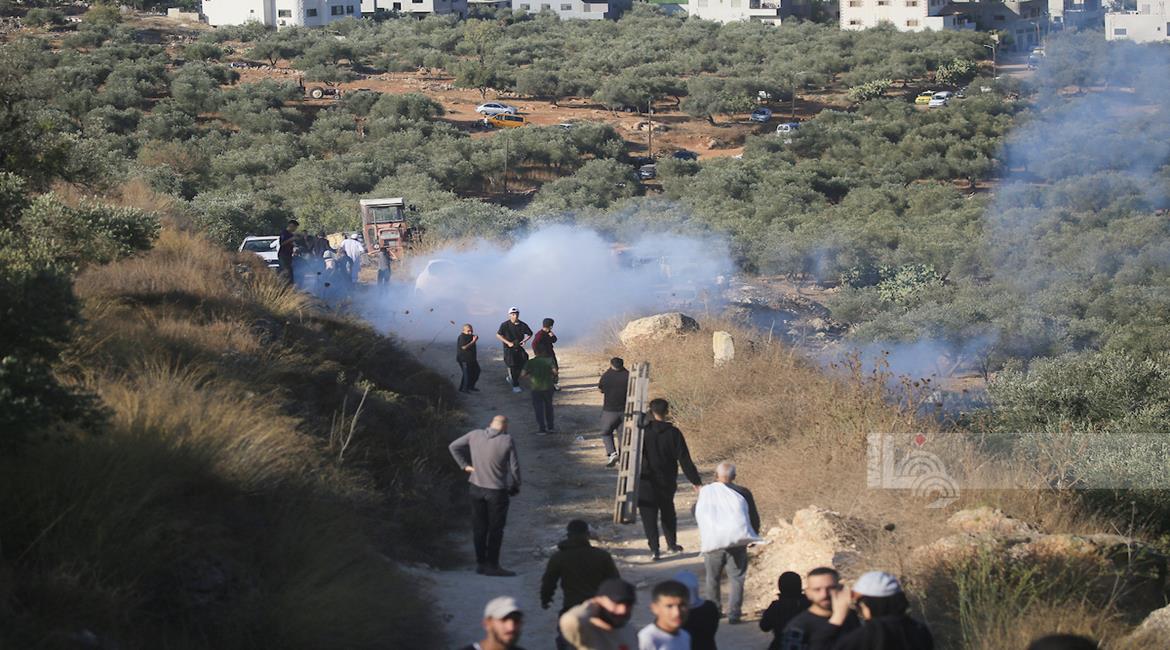
NEW YORK, October 22, 2026 (WAFA) – The UN Human Rights Office said that attacks by Israeli colonists on the olive harvest constitute yet another tool of displacement and dispossession, adding to the suffering of Palestinian communities whose rights are under attack on a daily basis. It added that colonists have also damaged Palestinian property and stolen harvested olives and farm equipment, calling on all states and donors to take urgent action to protect Palestinian communities.
The UN Office for the Coordination of Humanitarian Affairs (OCHA) reported that at least 160 colonist attacks linked to the olive harvest were recorded in the West Bank during the first two weeks of October, often under the protection of or with the participation of Israeli occupation forces.
It also noted that colonists assaulted a Washington Post photojournalist while she was covering the olive harvest and attacked European diplomats during a visit to a Palestinian village in recent days.
The UN Human Rights Office said that colonist attacks involving live ammunition and arson, along with the destruction of centuries-old olive trees, have marked the opening weeks of this year’s olive harvest in the occupied West Bank.
On Thursday, the UN human rights office (OHCHR) in the Occupied Palestinian Territory urged states and donors to go beyond condemnation and take urgent action to protect Palestinian communities as the season gets off to an “ominous start”.
The UN Human Rights Office said that thousands of Palestinian farmers are unable to reach their olive trees due to severe Israeli movement restrictions that have worsened dramatically over the past three years, while colonists are allowed to access Palestinian lands and harvest their crops.
“Palestinians often say that olive trees are symbolic of their existence as a group and their connection to the land,” said Ajith Sunghay, Head of the UN human rights office in the Occupied Palestinian Territory.
“This is yet another tool of displacement and dispossession, adding to the suffering of communities whose rights are under attack on a daily basis.”
Sunghay reiterated a call by the Protection Cluster – a network of more than 100 international and national organizations led by his office – for Member States to increase their diplomatic field presence in high-risk communities, particularly during harvest periods.
The Cluster urged national governments to press Israel to ensure Palestinians’ safe access to their agricultural land, protect farmers from violence and expulsion, strengthen accountability and end colonial expansion.
The UN Human Rights Office also called on donors to provide timely and flexible funding for protective presence, legal assistance, food security, and livelihood support.
T.R.