▪️Protecting Public Funds, Safeguarding State Assets and Resources, and Combating Fraud and Smuggling Are National Responsibilities We Will Not Abandon
▪️ Delays in Protecting Public Funds in Certain Sectors Must Never Be Interpreted as a Waiver of the Public Interest
▪️ A Comprehensive Financial Settlement Program Has Secured Nearly NIS 3 Billion in State Financial Claims
▪️ Significant Progress Has Been Made in Addressing Illegal Water Connections That Were Diverting Thousands of Cubic Meters of Water Daily
▪️ A National Land Registration Program Is Accelerating Property Settlement, with Jericho Expected to Complete the Process by the End of This Year, Other Governorates Next Year
▪️ The Government Has Advanced a National Program to Protect State Lands, Implementing 53 Measures to Address Encroachments, Remove Violations, and Review Lease Agreements
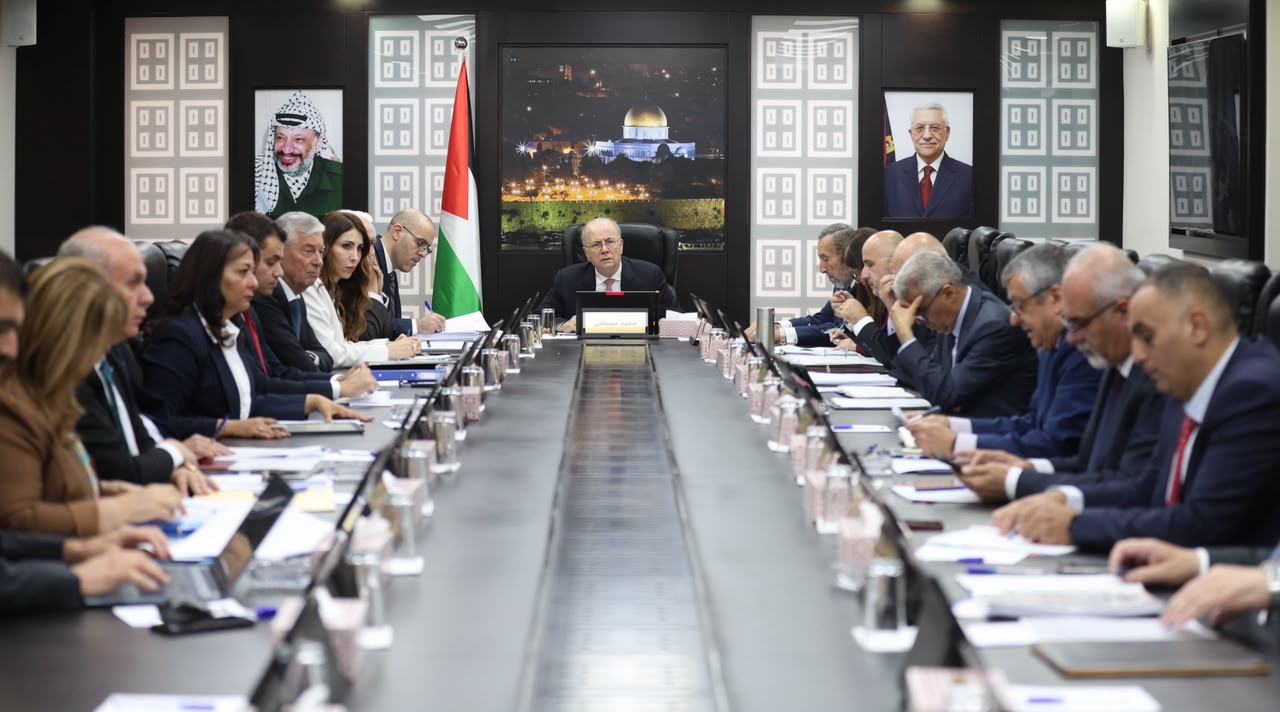
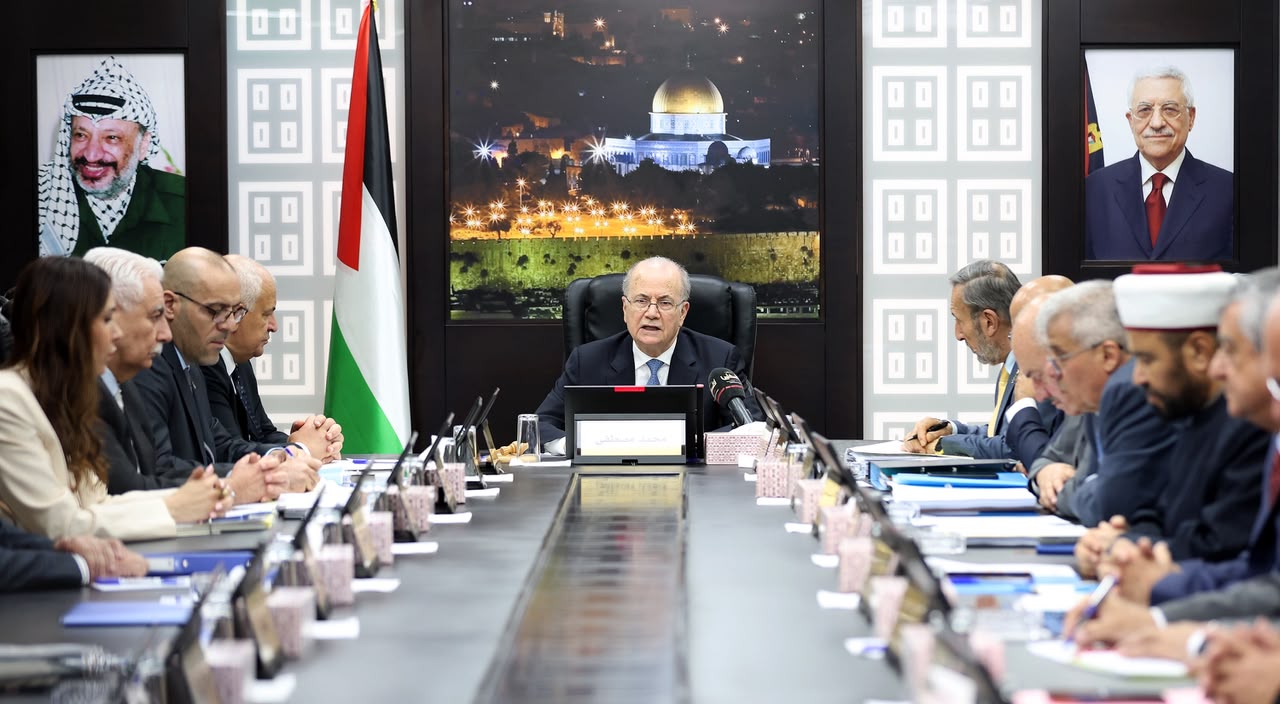
RAMALLAH, August 4, 2026 (WAFA) — Prime Minister Mohammad Mustafa opened the Cabinet's weekly session by addressing the Palestinian people on a number of key national issues.
The PM opened the 121st weekly cabinet meeting on Tuesday with a speech addressing the latest political and economic developments. He emphasized that the suffering endured by the Palestinian people, particularly in the Gaza Strip, stems primarily from premeditated Israeli political motives targeting the Palestinian national project and its institutions.
Mustafa stated that the economic and financial crisis, with its resulting liquidity shortages and limited provision of some essential services, is not a passing crisis. Rather, it is part of a strategic and political pressure aimed at undermining and weakening national institutions, ultimately leading to chaos and lawlessness.
Here's the full text of the PM's speech:
"What our people are enduring at this stage—particularly in the Gaza Strip—is fundamentally the result of deliberate Israeli political objectives.
The severe economic and fiscal crisis facing Palestine, including the shortage of liquidity and the resulting limitations in the provision of certain essential public services, is not a temporary or isolated challenge. Rather, it forms part of a broader political and strategic campaign targeting and undermining the Palestinian national project as a whole by weakening national institutions and creating conditions of instability and disorder.
At the same time, we continue to witness sustained attempts by the Israeli side to destabilize the legitimate Palestinian political representation and disregard signed international agreements in an effort to evade and reverse the Palestinian national achievements secured by our people and leadership over the past years.
It is with this understanding, the Government has adopted an approach centered on protecting society, preserving the ability of national institutions to continue fulfilling their responsibilities, managing what may be the most dangerous phase in the history of the Palestinian-Israeli conflict, mobilizing the broadest possible international political, financial, and economic support for our people, and acting with national responsibility and sound judgment while firmly rejecting any external political dictates.
Addressing the Shekel Liquidity Crisis
Regarding the accumulation of Israeli shekels and the concerns surrounding correspondent banking relations between Palestinian banks and Israeli counterpart banks, as well as their impact on economic activity—one of the most significant manifestations of the current Israeli pressure—I would like to clarify the following:
The Ministerial Committee formed by the Cabinet, in partnership with the Palestinian Monetary Authority and the private sector, continues its work along two parallel tracks:
First: Implementing urgent measures to mitigate the impact of the shekel liquidity crisis and ensure the continued availability of fuel and essential commodities.
Second: Developing a longer-term strategy to address these challenges more sustainably and strengthen fiscal and economic stability amid the continued uncertainty created by the prevailing political and security conditions in the region.
During its first two meetings last week, the Committee discussed the growing accumulation of Israeli shekel banknotes within Palestinian banks and the Palestinian Monetary Authority. This situation is a direct result of Israeli restrictions imposed on the volume of physical shekels permitted to be transferred back to the Israeli side, despite their essential role in financing external trade, including with Israel, particularly petroleum products.
In this regard, the Government has already begun implementing urgent measures to alleviate the fuel crisis and limit its repercussions. Relevant institutions have commenced work on several immediate and urgent actions, including:
1. Allocating additional financial resources through the Palestinian General Commission of Petroleum and the Ministry of Finance to increase fuel imports and meet market demand.
2. Expanding the allocation of electronic shekel transactions to finance petroleum imports.
3. Securing the necessary number of fuel transport vehicles in light the constraints imposed by the Israeli side.
4. Expanding the use of electronic payment systems for selected fees and services as part of a gradual strategy to reduce reliance on physical shekel banknotes.
5. Reaching new arrangements between the Palestinian General Commission of Petroleum and fuel station owners to improve supply mechanisms and increase storage capacity.
6. Introducing special operational arrangements for fuel distribution, including supplying commercial trucks during nighttime hours whenever feasible.
Accordingly, we expect these efforts to begin producing tangible results in the near future, and early positive indicators have already emerged.
More importantly, we will continue preparing for the post-crisis phase by pursuing measures that reinforce the long-term stability of Palestine's financial, economic, and service sectors.
Banking Relations
With regard to concerns over correspondent banking relations between Palestinian banks and Israeli banks, as well as their impact on national economy, the Palestinian Monetary Authority, with the support of all relevant stakeholders, continues to work efficiently and effectively to find solutions that will ensure the stability and continuity of the banking sector.
We extend our appreciation to all international efforts—particularly from the United States, several European countries, and other friendly nations—whose efforts contributed to extending these banking arrangements until the end of 2026. However, we stress the importance of Israeli banks’ full commitment to this decision, rather than only limiting it to October 1, as has been reported.
In this context, we affirm that the State of Palestine remains committed to working with all relevant parties to establish more sustainable long-term banking arrangements for banking operations in the future, in a manner that ensures the continuity of economic and commercial activity, provides goods and services to our citizens, while maintaining security and stability.
Palestinian Clearance Revenues
As for Palestinian clearance revenues, we reviewed with the Ministerial Committee the latest efforts undertaken to secure the release of Palestinian tax and customs revenues unlawfully withheld by Israel, including our recent engagements and actions we are taking with various actors to ensure their release, most recently during our meetings with the European Union, other key states, and international institutions at the recent Brussels meetings.
We will spare no effort in securing the release of these vital Palestinian funds needed to meet our obligations toward our people.
It is also important to recognize that, despite the complete withholding of clearance revenues for sixteen consecutive months now, we are proud—as a people and as a leadership—to have prevented an even more severe outcome. At the same time, we call upon the international community to treat this issue with far greater urgency rather than waiting until conditions deteriorate further before acting to uphold international law and existing agreements.
Protecting Public Funds and State Assets
The measures we are taking today to address the clearance revenue crisis, as well as the liquidity and fuel crises, are inseparable from the work we began two years ago to address the causes of financial vulnerability, protect public funds, restore public revenues, and limit any party’s ability to extort our economy and institutions.
I wish to reaffirm that protecting public funds, safeguarding state assets and resources, and combating fraud and smuggling are national responsibilities from which we will not retreat. We will continue pursuing these objectives in cooperation with all relevant parties, particularly law enforcement institutions.
Any delay in completing this task in certain sectors—regardless of the reasons—must never be interpreted as relinquishing the public interest or weakening our determination to complete these tasks, even if implementation comes later than anticipated.
With the full support of His Excellency President Mahmoud Abbas and in partnership with law enforcement institutions, the Government will therefore continue intensifying the efforts initiated nearly two years ago to protect public funds—which have already begun yielding results on the ground—and will continue to advance the institutional restructuring necessary to ensure their sustainability in the relevant sectors.
Among the key milestones, I mention the following:
* Financial settlements: The Government implemented a comprehensive financial settlement program that reorganized financial rights and obligations between the Government, 162 local government units, all electricity distribution companies, and major water utilities after years of uncertainty. This process secured approximately NIS 3 billion in financial claims in favor of the State of Palestine and established agreed repayment arrangements.
* Water sector: We have made significant progress in addressing illegal water connections in several governorates that had unlawfully diverted thousands of cubic meters of water each day while depriving thousands of citizens of reliable water access.
* Land registration: We have launched a dedicated national program to expedite land registration and complete land settlement across all governorates following the integration of the Palestinian Land and Water Settlement Commission into the Palestinian Land Authority. To date, settlement procedures have been initiated for 320 land blocks covering more than 87,000 dunums, while 336 land blocks covering over 102,000 dunums have been finalized. More than 42,000 land registration transactions have been completed, resulting in the issuance of over 80,000 property titles. Land settlement is expected to be completed in Jericho Governorate by the end of this year and in Tulkarm, Tubas, and Jenin Governorates by the end of 2027.
* State land protection: The Government has made substantial progress in implementing a national program to protect state-owned lands, particularly in Jericho and the Jordan Valley, including the implementation of 53 measures to address encroachments, remove violations, review lease agreements, and recently issue and publish the delegation regulations.
* Combating smuggling: The Government continues strengthening oversight at border crossings and markets to combat the smuggling of cigarettes, tobacco products, gold, medicines, and other goods. Significant progress has been achieved through the efforts of the recently established Economic Security Team.
* Customs quota governance: Work has begun to reform and strengthen governance over the customs quota and tax exemptions to ensure these incentives serve the public interest rather than generating private gains.
* Fuel sector development and governance: The Government is simultaneously advancing development and governance in the petroleum sector to strengthen oversight, prevent smuggling, expand storage capacity, and address approximately NIS 3 billion in accumulated debts owed by the Palestinian General Petroleum Commission, thereby improving the efficiency and reliability of fuel supply in the near future.
We do not claim that all challenges have been resolved, particularly as Israeli restrictive measures continue. However, we clearly affirm that the Government is working with all partners not only to manage the immediate symptoms of the crisis but also to address its structural causes, develop more sustainable solutions, and lay the foundations for a stronger future despite the extraordinary complexity of the circumstances.
Our work in these areas is not a temporary response to a passing crisis. It is an integral part of our national responsibility to protect state institutions, safeguard public resources, ensure the continuity of essential public services, and strengthen Palestine's resilience against any pressures or crises.
While we may not be able to remove every restriction imposed by the Israeli occupation, we can—and must—manage responsibly what falls within our authority, protect every public resource, direct it toward serving our citizens, strengthen their steadfastness, and reinforce the capacity of our institutions to endure.
We will continue fulfilling our responsibilities with determination and commitment, no matter how great the challenges may be, drawing strength from the will of our people, the justice of our cause, and our unwavering belief that Palestine will continue to stand firm through protecting public resources, strengthening governance, upholding the rule of law, developing and safeguarding our institutions, protecting the inalienable rights of our people, and ultimately achieving our freedom and realizing the independent Palestinian State with Jerusalem as its capital.
I extend my salute to our steadfast people everywhere, especially in Jerusalem, Gaza, and all targeted refugee camps, villages, towns, and cities across Palestine, who continue to defend their land and their rights, and whose resilience and perseverance continue to embody the highest expressions of national steadfastness.
I also salute everyone who continues to fulfill their national duty in State institutions, the security services, local government bodies, the private sector, civil society organizations, and every partner contributing to protecting our homeland and strengthening the steadfastness of our people."
K.T