The steadfastness of our people and their peaceful popular resistance are the first line of defense for our land
We call on the international community to assume its responsibilities and stop the E1 settlement plan
We reject measures aimed at altering the identity of holy sites or undermining freedom of worship there
Israel’s withholding of our funds is part of a policy aimed at weakening our people’s ability to remain steadfast
We continue our efforts to protect the two-state solution, halt settlement activity, and secure the release of our withheld funds
We will not accept any infringement on the unity of Palestinian territory or on the sovereign institutions of the State of Palestine
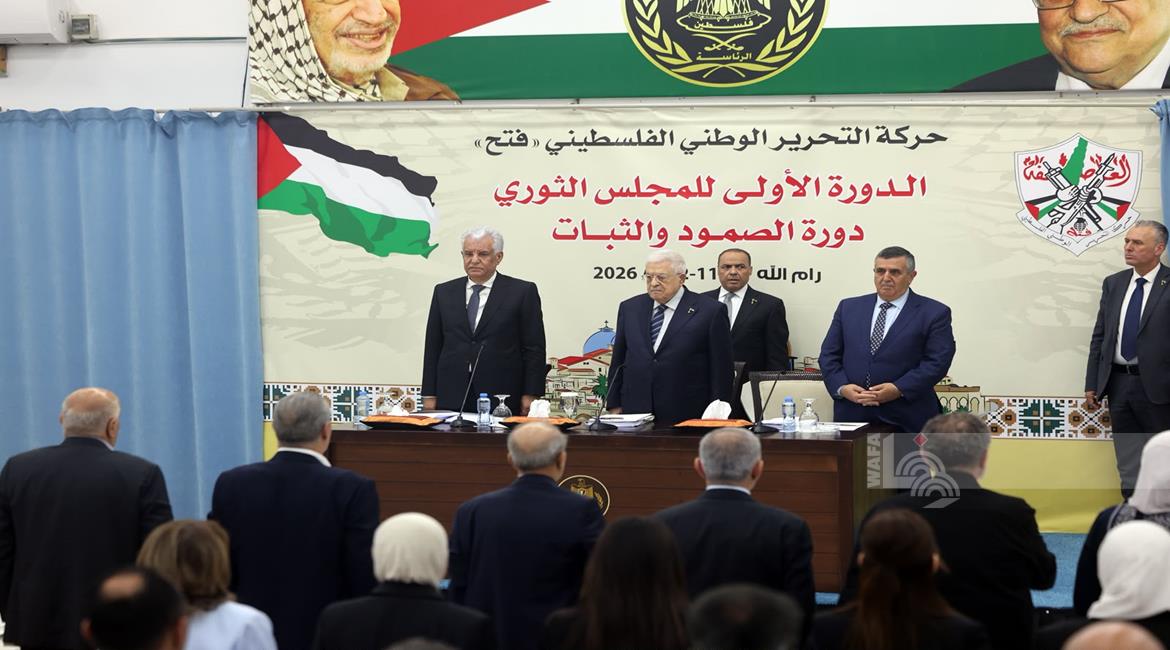
RAMALLAH, September 10, 2026 (WAFA) — President Mahmoud Abbas said on Thursday that protecting the Palestinian people, strengthening their steadfastness, preserving the unity of their land and institutions, and thwarting plans for displacement and annexation are the leadership's and Fatah's foremost responsibilities.
He made the remarks while chairing the opening session of the first meeting of the Revolutionary Council of the Fatah movement, held under the theme "Steadfastness and Resilience." The meeting was held at the presidential headquarters in Ramallah, simultaneously with sessions in Cairo and Beirut.
The President said Palestinians are facing extremely difficult and complex circumstances amid the continued occupation, aggression and settlement expansion, as well as attempts to undermine Palestinian national institutions and impose a reality targeting Palestinian land, presence and prospects for statehood.
He stressed that the steadfastness of Palestinians and their peaceful popular resistance in villages and towns facing attacks by Israeli forces and colonists constitute the first line of defense for Palestinian land and deserve all forms of support.
President Abbas warned of the Israeli settlement plan known as E1, saying it seeks to separate the northern and southern parts of the occupied West Bank, isolate East Jerusalem from its surroundings and undermine the possibility of establishing a geographically contiguous independent Palestinian state. He called on the international community to fulfill its responsibilities and stop the plan.
He also stressed the need to preserve the historical and legal status of Islamic and Christian holy sites in Jerusalem and Hebron and rejected measures aimed at changing their identity or restricting freedom of worship.
The President said Israel's withholding of more than $6 billion in Palestinian funds, along with measures aimed at undermining the institutions of the Palestinian Authority, constitutes more than financial pressure, saying it forms part of a policy aimed at weakening Palestinians' ability to remain and withstand pressure and pushing them toward emigration.
President Abbas said he continues to engage with international parties, including the European Union and its member states, to secure the release of Palestinian funds, halt settlement expansion and unilateral measures, and take practical steps to protect the two-state solution.
Gaza and Palestinian institutions
Regarding the Gaza Strip, he reiterated the need for the immediate and full implementation of the second phase of US President Donald Trump's plan, including a ceasefire, a full Israeli withdrawal, unhindered delivery of humanitarian aid, and the launch of recovery and reconstruction efforts.
He also called for Palestinian state institutions to be enabled to assume their responsibilities in Gaza, stressing that the territory is an integral part of the State of Palestine.
"We will not accept any infringement on the unity of the Palestinian land or the sovereign institutions of the State of Palestine," the President said, adding that the transitional bodies of the Board of Peace have a limited mandate and must not become an alternative to Palestinian legitimacy or lead to the separation of Gaza from the West Bank and East Jerusalem.
On the national reform program, President Abbas said work will continue to implement the program and complete its main components. He said the government is pursuing a broad program to develop governance and public administration in coordination with the European Union and international partners.
He stressed that reform is not a response to external pressure but a national choice stemming from the leadership's responsibility toward the Palestinian people and its commitment to building modern, democratic state institutions based on the rule of law, transparency, accountability, combating corruption, and empowering women and young people.
Elections and international efforts
The President said renewing national legitimacy through elections is a fundamental part of the Palestinian political and democratic project and efforts to preserve the unity of the Palestinian people, land and institutions.
He announced that November 28 has been set as the date for legislative elections and said committees responsible for elections to the Palestinian National Council have begun their work.
He pointed out that the process will include the election of 150 members from abroad, alongside completing an agreement on 67 members representing factions of the Palestine Liberation Organization and its institutions from inside Palestine, paving the way for the National Council to convene before the end of the year.
He described the elections as more than a procedural obligation, calling them a political and democratic effort to affirm Palestinian national unity, the unity of the land, the right to self-determination and the renewal of national institutions on the basis of partnership, responsibility and a unified national program.
On the international front, President Abbas said the Palestinian leadership will continue working with the international coalition to implement the two-state solution and chair the international peace conference to follow up on the implementation of the New York Declaration and translate international commitments into practical measures to end the occupation and establish an independent Palestinian state in accordance with international legitimacy resolutions.
He said the number of countries recognizing the State of Palestine has risen to 160 and that efforts are continuing to strengthen relations with countries that have yet to recognize Palestine, including Italy, the Netherlands and Germany.
President Abbas said preparations are also underway for meetings in New York on September 24, where the Palestinian leadership will continue mobilizing international support for Palestinian rights and pursuing implementation of the New York Declaration.
M.N