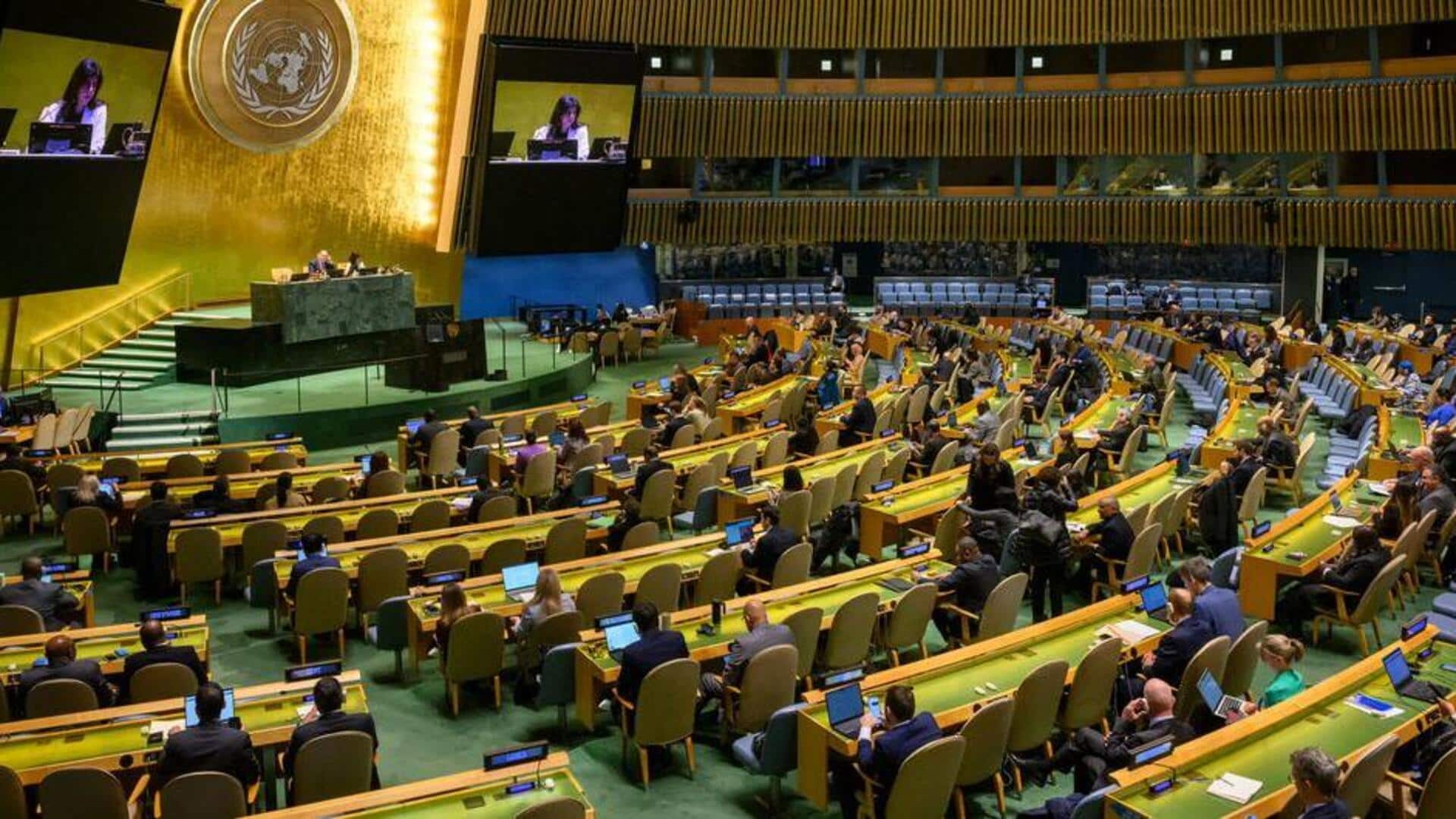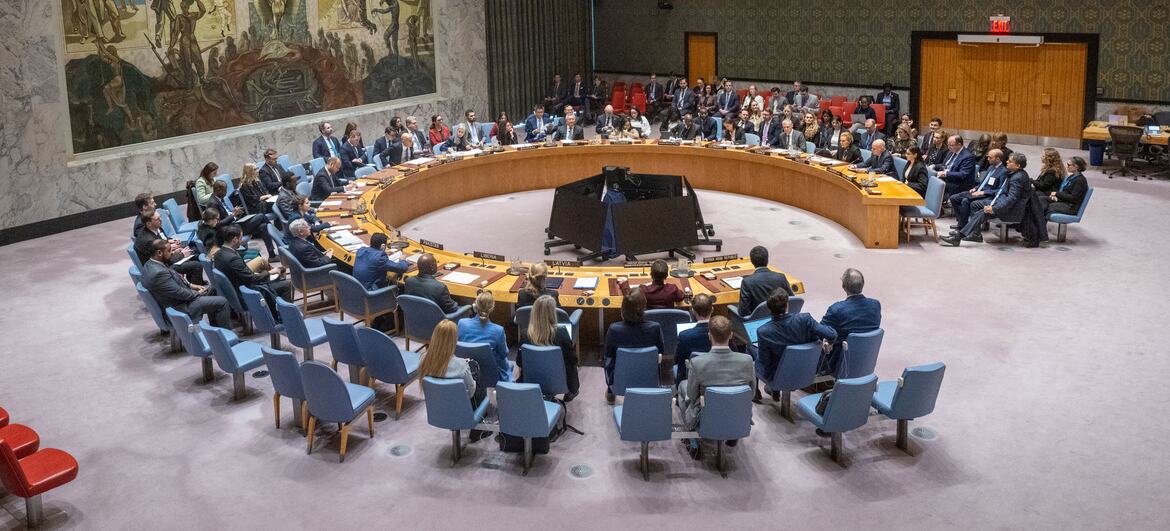
NEW YORK, March 24, 2026 (WAFA) – The United Nations Security Council convened its regular session Tuesday evening under the agenda item “The situation in the Middle East, including the Palestinian question.”
During the session, Ramiz Alakbarov, the UN Deputy Special Coordinator for the Middle East Peace Process, delivered a briefing on the Secretary-General’s report addressing the implementation of Resolution 2334, with a focus on settlement activity in the occupied Palestinian Territory, including East Jerusalem.
The resolution, adopted by the Security Council in 2016, affirms that “the establishment by Israel of settlements in the Palestinian territory occupied since 1967, including East Jerusalem, has no legal validity and constitutes a flagrant violation under international law and a major obstacle to the achievement of the two‑State solution and a just, lasting and comprehensive peace.”
Israel’s settlement activity in the Occupied Palestinian Territory continues at “high levels”, Deputy Special Coordinator and Resident Coordinator at the Office of the UN Special Coordinator for the Middle East Peace Process Ramiz Alakbarov told the Security Council today.
Yet, he said, resolution 2334 (2016) calls on Israel to “immediately and completely cease all settlement activity” in the area and to “fully respect all its legal obligations in this regard”.
He said that between 3 December 2025 and 13 March 2026 - the period covered by the Secretary-General’s latest report – Israel advanced or approved over 6,000 housing units in the occupied West Bank, including around 3,160 in Area C, and 2,850 units in East Jerusalem.
Alakbarov also reported an acceleration in the demolition and seizure of buildings owned by Palestinians, citing the near-impossibility of obtaining building permits.
He added that the forced displacement of Palestinians from their homes in occupied East Jerusalem has continued, alongside ongoing violence against civilians, marked by numerous bloody incidents. During the period covered by the report, 32 Palestinians were killed, including seven children, in large-scale operations carried out by Israeli forces and attacks by colonists.
He further noted that daily attacks by colonists have intensified, often occurring in the presence of Israeli forces, causing casualties, property damage, and displacement across Palestinian communities throughout the occupied West Bank.
The UN Coordinator emphasized that the ceasefire in Gaza remains extremely fragile and highlighted the ongoing Israeli aerial operations, shelling, and gunfire throughout the Gaza Strip, including areas near what is referred to as the “Yellow Line.”
For his part, the Board of Peace High Representative to Gaza, Nikolay Mladenov, emphasized the necessity of keeping the Rafah crossing open, ensuring that aid reaches the agreed-upon levels, and providing temporary housing solutions. He also renewed his call for the withdrawal of Israeli forces and stressed the importance of guaranteeing the Palestinian people’s right to self-determination and the establishment of their state through serious negotiations.
Ambassador Asim Iftikhar Ahmad of Pakistan also expressed concern over the unprecedented levels of violence in the West Bank, denouncing the acts carried out by colonists as organized and coordinated. He called for a halt to settlement expansion in accordance with Resolution 2334 and stressed that any measures aimed at altering the demographic, legal, or historical character of the occupied Palestinian Territory are illegal and must be reversed.
Ambassador Fu Cong of China also condemned the continued shelling and killings in Gaza, as well as settlement activities in the West Bank, warning that these Israeli violations undermine the foundations of the two‑State solution.
He accused Israel of continuing its attacks despite the ceasefire agreement, imposing tighter restrictions on the delivery of humanitarian aid, and repeatedly closing the Rafah crossing, urging it to fulfill its obligations under international humanitarian law.
He called for an end to settlement activities in the West Bank, denouncing the establishment of new settlements and the increase in violent incidents involving colonists, and urged Israel to halt these actions and conduct investigations.
He stressed the importance of implementing the two‑State solution and respecting the Palestinian people’s right to self-determination, calling on the international community to reject any attempt to annex Palestinian lands.
He emphasized that the Palestinian issue cannot be marginalized and that support for the establishment of an independent Palestinian state must be ensured as soon as possible.
Ambassador James Kariuki of the United Kingdom stated that the Middle East crisis cannot be resolved without progress on a comprehensive Gaza plan, emphasizing the necessity of allowing humanitarian aid into Gaza, where Israel continues to restrict access, a situation he described as entirely unacceptable.
He noted that the Israeli government has implemented measures that limit the ability of international organizations to operate.
He stressed that Israeli settlements are illegal and expressed shock at the killings, torture, and ill-treatment of Palestinians by colonists, stating that the terrorism of these colonists must be condemned and that the Israeli government must put an end to their actions.
He affirmed that there is no alternative to the two‑State solution and stressed that, to advance peace, security, and stability, Israel must halt its expansion of control over the West Bank.
The representative of France stated that Gaza and the West Bank, including East Jerusalem, must receive urgent attention amid the unprecedented escalation in the Middle East, emphasizing that lasting peace and security cannot be achieved without a just resolution to the Israeli-Palestinian conflict and the implementation of the two‑State solution.
He noted that the ceasefire remains fragile and the humanitarian crisis continues, calling for the lifting of restrictions on the delivery of humanitarian aid and describing the ongoing attacks on UNRWA, including the destruction of its headquarters in Jerusalem, as unacceptable.
He stressed the necessity for the Security Council to take action to address the alarming acceleration of Israeli settlement activity in the West Bank.
He also described the Israeli government’s refusal to transfer tax revenues to the Palestinian Authority and to renew banking relations as unjustified.
The representative of Denmark expressed regret over the slow implementation of Resolution 2803, particularly regarding humanitarian issues. She noted that the United Nations humanitarian system has demonstrated its ability to deliver aid efficiently and safely, calling on Israel to remove all obstacles to the provision of this vital assistance.
She also condemned the acceleration of settlement expansion and the seizure of Palestinian lands, criticizing the alarming increase in colonist violence.
She stressed the necessity of halting settlement expansion, ending the fragmentation of the occupied Palestinian Territory, releasing withheld Palestinian tax revenues, and reunifying Gaza and the West Bank under the authority of the Palestinian Authority, warning that otherwise the establishment of a future Palestinian state will become nothing more than an illusion.
T.R.