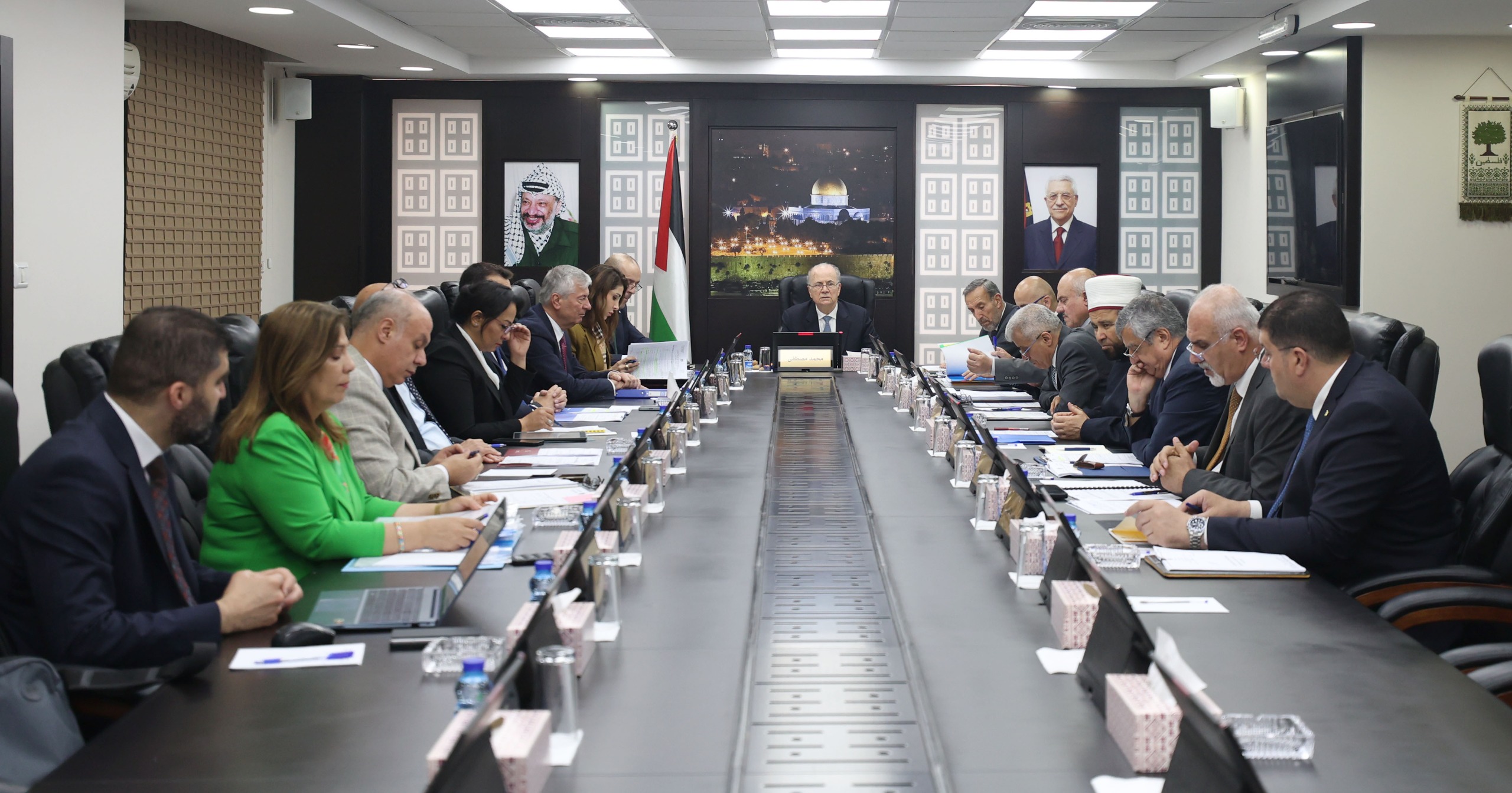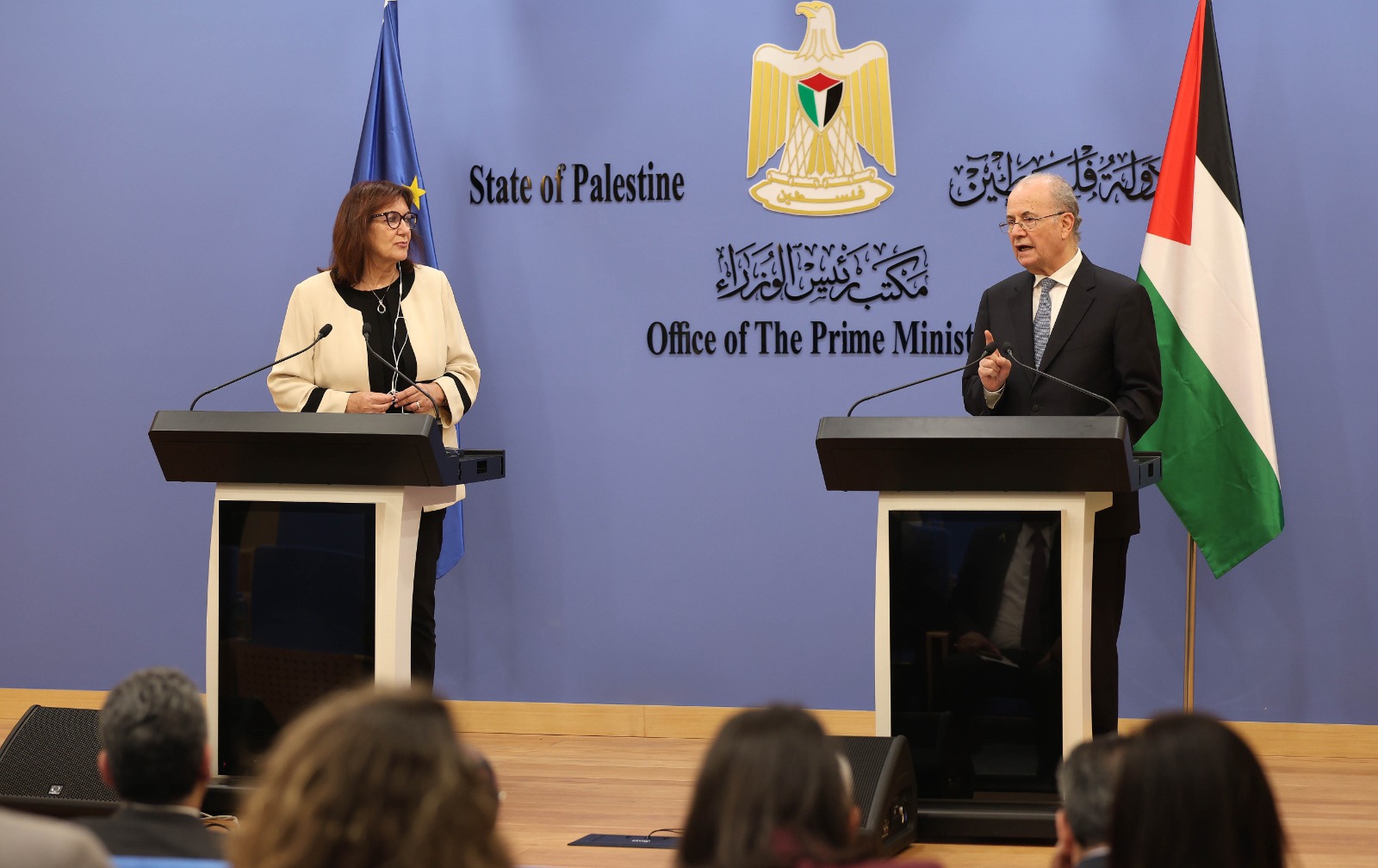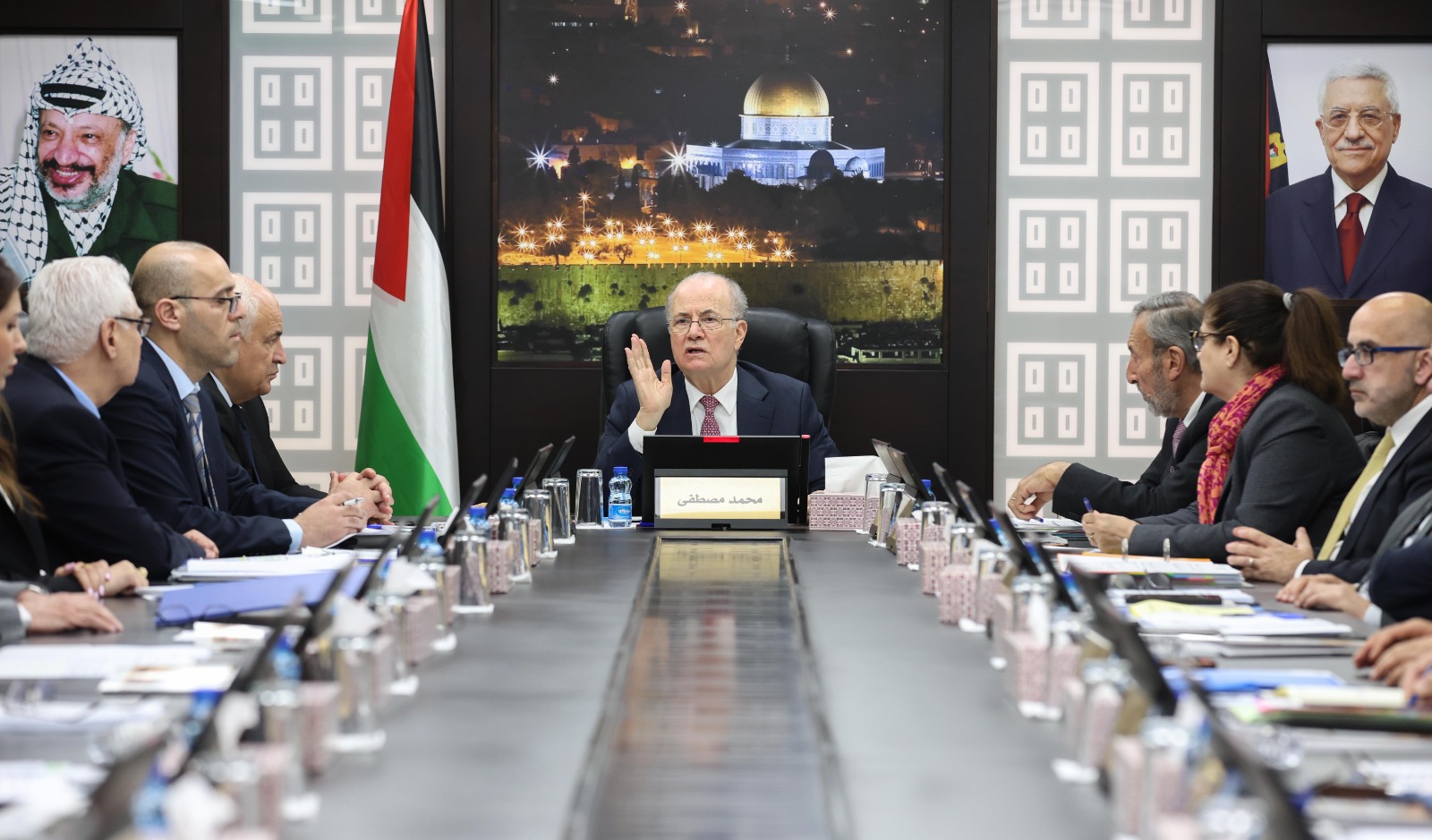
RAMALLAH, April 22, 2026 (WAFA) — Prime Minister Mohammad Mustafa opened the weekly Cabinet session today, Wednesday, reviewing the latest international developments, particularly his participation in the International Alliance for the Implementation of the Two-State Solution and the Donor Group for Palestine (AHLC) meetings in Brussels.
He also highlighted a series of bilateral meetings with European and international officials aimed at mobilizing greater political support and action in favor of our people, rejecting unilateral and unlawful measures imposed by the occupation, and securing financial support to enhance economic and security stability.
On a related note, the Cabinet condemned the continued targeting of civilians in the Gaza Strip by Israeli occupation forces, the obstruction of relief efforts, and restrictions on the movement of goods.
It also denounced the escalating attacks by terrorist settler militias against Palestinian villages and communities, most recently the repeated assaults on the town of al-Mughayyir yesterday, which resulted in the killing of a young man and a boy under the age of fourteen—part of a pattern of terrorist attacks that had previously claimed the life of the boy’s father seven years ago.
The Cabinet renewed its call on the international community to shoulder its legal and moral responsibilities and to take effective measures to halt settler crimes, which continue in the absence of accountability, under the protection of occupation forces, and with open incitement from extremists within the Israeli government.
The Cabinet further warned of the occupying Power's persistent unilateral policies and measures, which are intensifying amid growing international distraction with regional crises and conflicts.
It stressed that such practices—whether military actions or economic pressure and blockade—do not contribute to security or stability for any party.
The Palestinian Government, under the directives of President Mahmoud Abbas, remains committed to advancing its programs and efforts to strengthen citizens’ Steadfastness and ensure the provision of essential services to the extent possible.
The Cabinet reaffirmed that international legitimacy and historical justice will continue to favor the inalienable rights of the Palestinian people, foremost among them the right to realize an independent, sovereign state on the territories occupied in 1967.
It warned that continued disregard by the occupation for international positions and condemnations will only deepen tensions and violence, undermining prospects for a just and lasting peace.
In another development, Prime Minister Mustafa also directed that vehicle licensing fees and personal driving license fees for public employees for 2026 be deducted from their accrued entitlements. The Ministries of Finance and Planning and of Transport are to issue the necessary technical and administrative arrangements upon completion. He further instructed the study of additional measures to alleviate burdens on citizens under current circumstances.
The Cabinet further approved a Memorandum of Understanding between the Palestinian Ministry of Telecommunications and Digital Economy and its Saudi counterpart in the fields of communications and information technology. The MoU serves as a foundation for major cooperation projects, particularly in digital transformation, development of digital infrastructure, enabling digital ecosystems, exchange of expertise and experience in e-government, and the development of digital capabilities and talent.
As part of the Government’s accelerating digital transformation agenda, the Cabinet also approved the regulation on licensing and fees for trust service providers, which includes electronic signatures, secure access to online platforms, electronic seals, and digital certification services, following three readings and consultations with relevant stakeholders across sectors.
Additionally, the Cabinet adopted the executive regulation exempting vehicles for persons with disabilities from customs duties and taxes, expanding the scope of beneficiaries in a fair manner within defined financial ceilings and regulatory frameworks that ensure proper use of the exemption.
T.R.