GAZA, April 1, 2026 (WAFA) – What does it mean for a child with autism to live in Gaza today, amid Israeli occupation airstrikes, the loss of stability, and the cessation of treatment? This question underscores the stark reality confronting hundreds of children who have been deprived of essential medical and psychological support amid a conflict that has produced one of the world’s most complex humanitarian crises.
As the world marks World Autism Awareness Day on April 2, families across the Gaza Strip grapple with protecting their children amid ongoing war, displacement, and the collapse of care and rehabilitation services. For these families, the challenge extends far beyond providing therapy or rehabilitative support; it has become a relentless struggle to secure even the most basic measures of safety and stability.
Daily care under impossible conditions
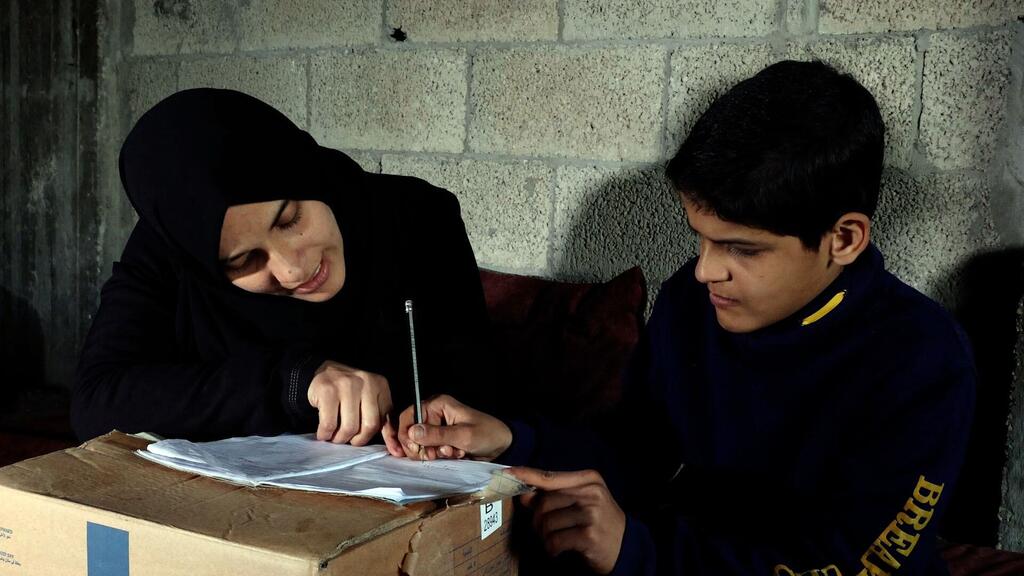
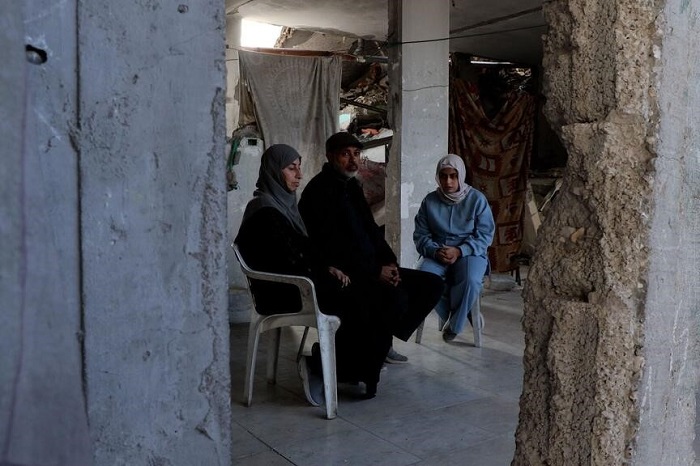
In the Sheikh Radwan neighborhood, north of Gaza City, 16-year-old Layan Abu Qousa, who has autism, lives with her family amid the rubble of their destroyed home, in conditions her family says have worsened the daily challenges to her health.
Her father, Hammad Qousa, explained that even before the outbreak of the war, his daughter required regular medical and rehabilitative care, but the economic situation and scarcity of resources in Gaza made it impossible for the family to secure that support.
He told the United Nations News site: “Even before the war on the Gaza Strip, my daughter Layan needed a medical treatment program, in addition to a rehabilitation program. But the limited operational capacity in Gaza, along with the financial hardship our family faces, prevented us from meeting Layan’s needs.”
As she gets older, the difficulties increase
The father added that the challenges related to his daughter’s condition have grown more complex as she gets older, saying: “The older Layan becomes, the greater the difficulties in her life. She was easier to manage years ago, but as she grew, it became harder to control her and organize her behavior within the family.”
The family says that the destruction of their home by the occupation has made caring for Layan even more difficult, as her surroundings have become more hazardous and unstable, forcing family members to constantly supervise her.
Hammad Qousa said: “The situation in the house now is extremely difficult. Caring for her was already challenging before; so how is it now? The risks have increased, and the destruction in the house has added a new burden to our efforts to control and supervise Layan inside the home.”
He explained that the family must monitor Layan around the clock, with at least one member staying with her inside the house during the day, which restricts the family’s movement and affects their productivity, as they cannot leave her alone to move freely and safely.
Displacement disrupts the treatment journey
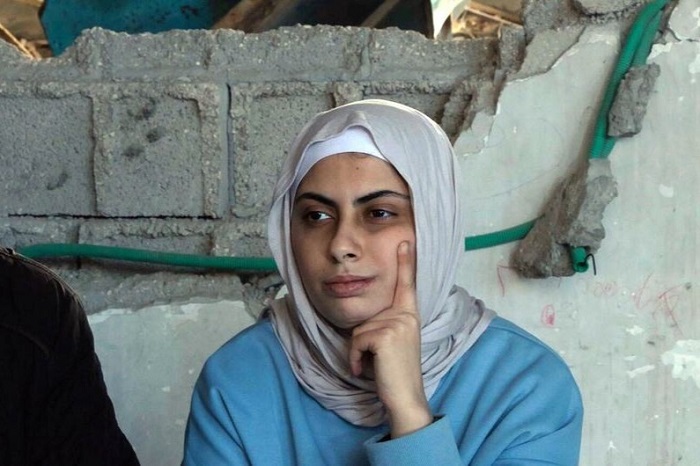
In a similar case, Islam Shamali said the war disrupted her son Yahya’s treatment. Yahya, who has autism, had been making noticeable health progress before the war, but his condition deteriorated after the war began.
Shamali noted that her son had been receiving follow-up care at specialized centers before the war, and that the family also sought treatment for him in Egypt, where his condition improved significantly.
She said, “Before the war, Yahya attended specialized centers and followed up with doctors. We also traveled to Egypt for treatment, where his condition improved and reached advanced stages of recovery.”
Lack of routine worsens challenges
Shamali noted that this progress came to a halt shortly after the family returned to Gaza, just days before the outbreak of the war, and was subsequently disrupted by repeated waves of displacement and instability.
She continued: “After a year of treatment in Egypt, we returned to the Gaza Strip, and after just one week, the war broke out. We then had to flee, and Yahya’s condition worsened due to constant movement from place to place. His condition deteriorated further, and he would frequently run away from the tent because there was no safe space for him inside it.”
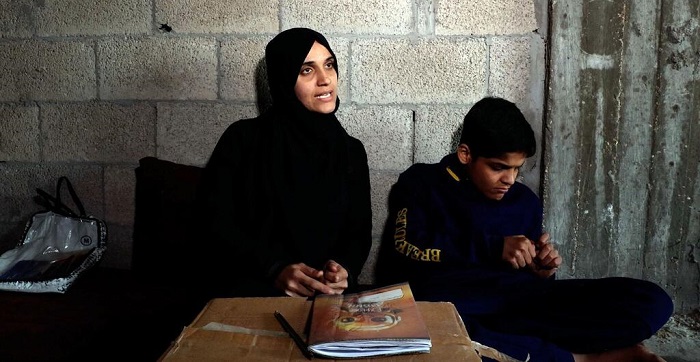
She stressed that children with autism require a safe and stable environment, as they often cannot recognize surrounding dangers, and any disruption to their daily routine directly affects their health.
She said: “Children with autism need to be in safe places because they do not perceive danger. Another reason for his condition’s deterioration is that children with autism naturally rely on routine, and constant movement from place to place worsened his state. Ultimately, we arrived at this place and rented this apartment—which is still under construction—even though the rent exceeds our financial capacity; we did all of this to protect Yahya and safeguard his life.”
Shamali concluded that since the outbreak of the war, her son has been unable to continue his treatment at any specialized center or with any doctor.
When parents become “specialists” out of necessity
Experts indicate that the war has deepened an already existing crisis in caring for children with autism in Gaza, where the Strip has long suffered from a shortage of qualified professionals and weak rehabilitation and support services for this group.
Reem Jaarour, the coordinator of the Dolphin Club, which specializes in aquatic therapy for autistic patients, said: “Even before the war, we were already grappling with limited availability of doctors and specialists, as well as the scarcity of care and rehabilitation centers.” “There were numerous challenges even before the outbreak of the war,” she said, highlighting how much more difficult the situation must be now.
She added that, during the war, many families have been forced to fill in for the absent specialists, despite lacking the necessary tools and expertise.
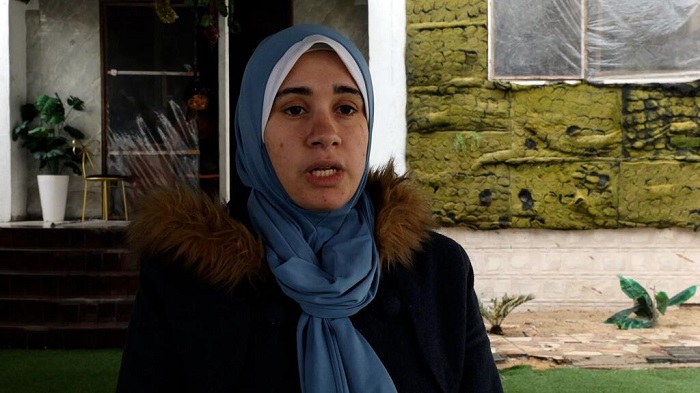
She said: “During the war, parents found themselves forced to assume the roles of supporter, caregiver, and even specialist. The situation was extremely challenging for them, as not all parents were qualified or capable of managing their children in this way.”
She added that parents were unable to engage with their children using the specialized methods used by professionals, causing the children to lose significant psychological, emotional, and material support, which affected their communication skills and overall development and growth.
In the Gaza Strip, there are no precise statistics or specialized surveys to determine the number of children with autism. However, professionals in the field estimate their numbers in the hundreds, amid complaints about weak rehabilitation services and the limited expertise available in care centers—a crisis that specialists say has worsened significantly during the war.
A world that embraces everyone
In a message marking World Autism Awareness Day, United Nations Secretary-General António Guterres emphasized the need for people with autism, like everyone else, to be able to make their own life choices and contribute to shaping our shared future, noting that their talents, perspectives, and contributions enrich the world immeasurably.
He added that ensuring people with autism have the opportunities they deserve to participate in society and thrive requires guaranteeing equality in education, fairness in employment, and access to health systems for all.
On the occasion of World Autism Awareness Day, the Secretary-General called for a renewed commitment to building a world more capable of embracing everyone.
T.R.