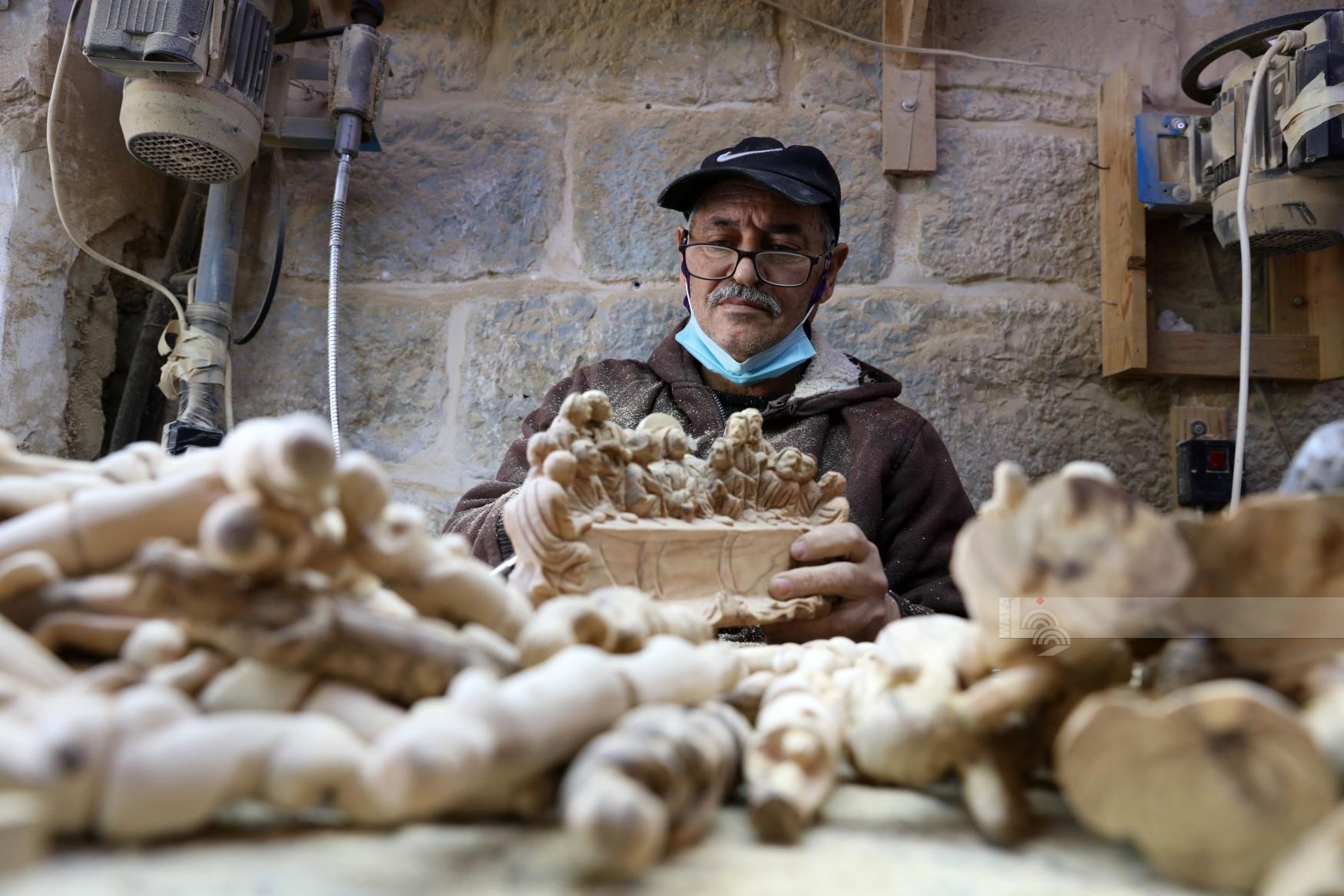
RAMALLAH, March 25, 2026 (WAFA) – Minister of Culture Imad Hamdan announced a new achievement in preserving Palestinian cultural heritage. Two prominent Palestinian elements—olive wood carving and Hebron glassmaking—were included on the list of the Islamic World Educational, Scientific and Cultural Organization (ICESCO) during the meeting of the Islamic World Heritage Committee held in Tashkent, Uzbekistan, which saw wide participation from member states and heritage experts.
Minister Hamdan said in a statement on Wednesday evening that this achievement crowns intensive efforts by the Ministry of Culture, in cooperation with national and community bodies, to prepare comprehensive nomination files in accordance with international standards, ensuring that the historical and cultural value of these traditional crafts is highlighted.
He added that the inclusion of these two elements represents a strategic step to strengthen the presence of the Palestinian cultural narrative in international forums and affirms the deep connection of the Palestinian people to their heritage and identity amid ongoing challenges.
He explained that the ministry views this achievement as a real boost to the handicrafts sector, contributing to the empowerment of artisans, encouraging investment in traditional industries, enhancing cultural tourism, and motivating younger generations to learn and continue these crafts.
He emphasized that the ministry will continue documenting and registering additional Palestinian heritage elements, both tangible and intangible, on regional and international lists, in cooperation with national and international institutions, to protect this cultural legacy from disappearance and reinforce its role as an integral part of Palestinian national identity.
The Islamic World Heritage Committee, affiliated with ICESCO, is the technical body responsible for reviewing nomination files and approving their inclusion. Its membership includes experts from nine countries, elected to ensure balanced geographic representation. The committee relies on precise criteria, especially for intangible heritage, including continuity of practice, its role in reinforcing identity, mechanisms for transmitting it across generations, and the requirement of obtaining approval from local communities.
T.R.