


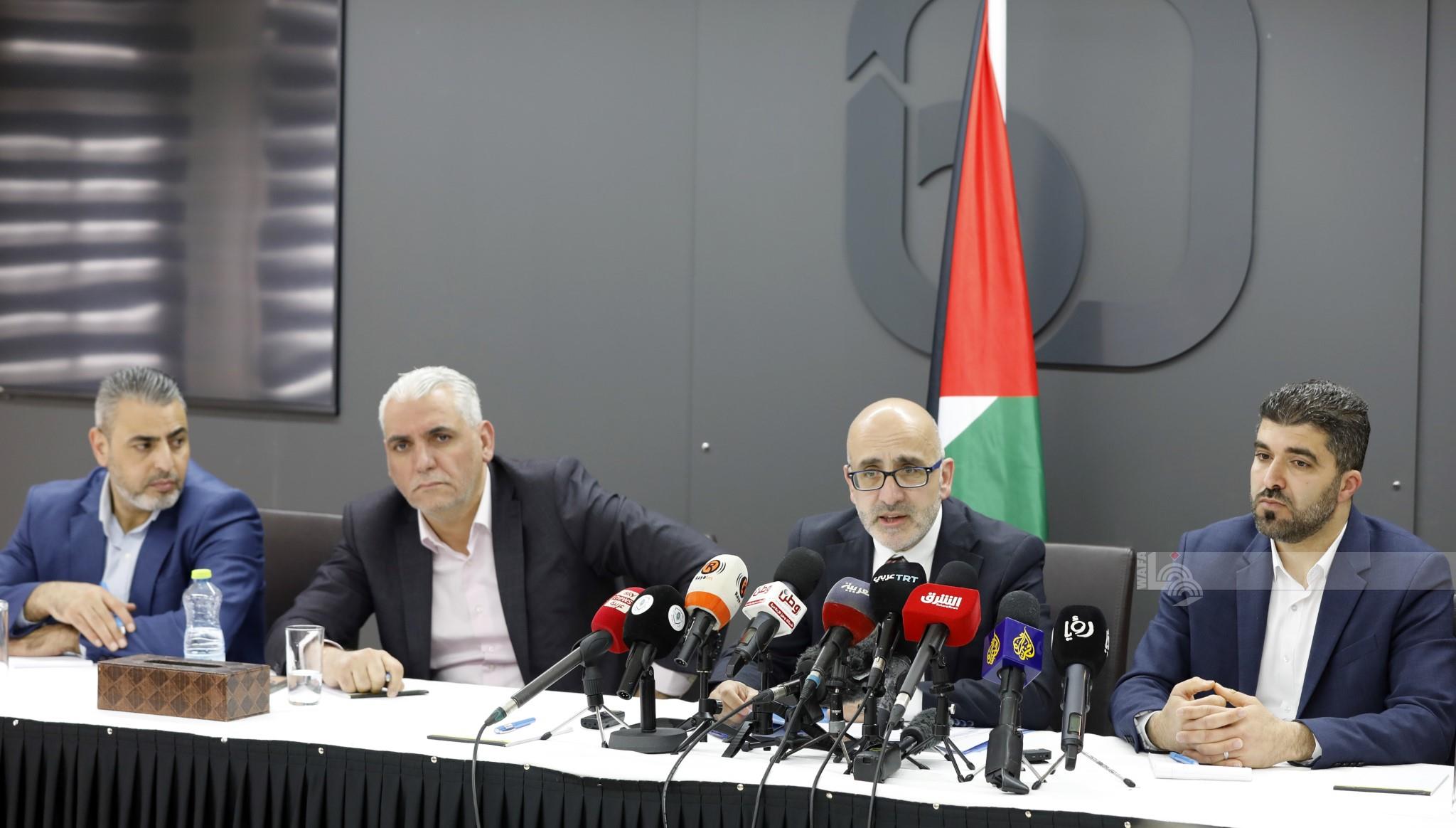
RAMALLAH, February 12. 2026 (WAFA) – The Minister of Finance and Planning, Estephan Anton Salameh, warned that the financial situation of the Palestinian National Authority has reached a critical and highly precarious stage, jeopardizing its ability to continue delivering essential public services. This deterioration comes amid Israel’s refusal to transfer Palestinian tax revenues for the tenth consecutive month, further deepening the fiscal crisis.
At a press conference held in Ramallah on Thursday, Salameh stated, “For the tenth consecutive month, we have not received a single penny of our clearance revenues. The situation has become extremely dangerous and now threatens our capacity to provide essential services to our citizens.”
He further noted that Israel is currently withholding approximately $4.4 billion—equivalent to around 13 billion shekels—in Palestinian clearance funds, exacerbating the already severe fiscal crisis.
Commenting on reports regarding alleged Israeli intentions to “zero out” the clearance revenues—effectively confiscating them under various pretexts—Salameh stated that the clearance revenues, which make up around 70 percent of Palestinian public income, are being stolen by Israel, stressing that no country in the world can continue to function in the absence of such a large portion of its revenues.
Salameh warned that government institutions are operating “ten degrees below the minimum,” including vital sectors such as health, education, and security, and that the Palestinian Authority needs one billion shekels per month to operate at this low level. He said that austerity is no longer an option, but has become compulsory.
Salameh stated that if Israel had fully transferred the Palestinian tax revenues in 2025 in accordance with the agreements, the Authority would have been able to pay salaries in full and close the year with a deficit of less than 400 million shekels. However, due to the withholding of these revenues and the deductions imposed on them, the year ultimately ended with a deficit exceeding 4.5 billion shekels.
Salameh said that domestic revenues in 2025 amounted to approximately 5 billion shekels, while total clearance revenues reached 10.293 billion shekels, of which Israel transferred only 1.951 billion shekels, covering the first four months of the year.
He said that the total Israeli deductions from clearance revenues reached 4.4 billion dollars, and there are 475 lawsuits filed against the Authority in Israeli courts with a total value of 45 billion shekels, in addition to compensations amounting to approximately 20 billion shekels.
He said that by the end of 2025, the indebtedness of the National Authority reached around 15.426 billion dollars, and this indebtedness is attributed not to mismanagement of public funds but to the withholding of Palestinian revenues by Israel.
The Minister stressed that all on-the-ground solutions have been exhausted, and the resulting financial strain has brought the Authority close to collapse, while the observed discipline in cities such as Jenin, Nablus, and Hebron reflects a societal value system rather than the security situation.
He said that a significant development in 2025 was the increase in foreign aid, with the public treasury receiving approximately 850 million dollars, representing a notable rise compared to previous years and signaling international political support for Palestinian rights.
He said that the financial outlook for 2026 is expected to be the most challenging in the history of the National Authority, with clearance revenues potentially not forthcoming and foreign support uncertain at least until June.
He said that emergency support mechanisms approved by donors last year yielded only 250 million dollars out of the expected 1.2 billion dollars.
He said that the 2026 budget is currently under preparation, focusing on sectors with an existential dimension.
The minister added that the draft budget includes measures aimed at addressing the current financial situation, achieving social justice, and preventing tax evasion and smuggling, which are considered not only legal issues but also national priorities.
T.R.


