


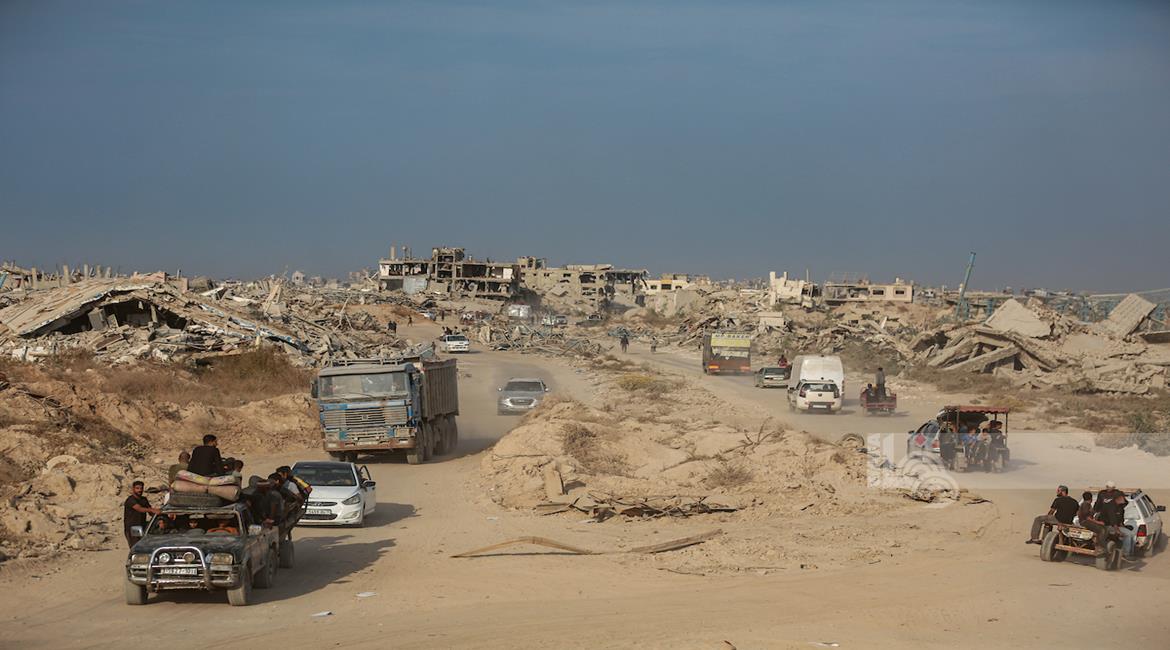
NEW YORK, January 16, 2026 (WAFA) — A senior United Nations official on Thursday called for accelerating reconstruction and early recovery efforts in the Gaza Strip, warning that Palestinians are enduring “inhumane” living conditions despite the entry of a U.S.-backed ceasefire into its second phase.
Jorge Moreira da Silva, Executive Director of the UN Office for Project Services (UNOPS), said the scale of destruction in Gaza was far beyond expectations after a visit to the territory.
“I wouldn’t have imagined what I saw today, which is total destruction, not much is standing,” da Silva told journalists, stressing the urgency of immediate action. “We can’t wait, we can’t procrastinate.”
He said Palestinians across Gaza are living in an inhumane situation, as entire neighborhoods, hospitals, schools, and essential infrastructure have been heavily damaged or destroyed, forcing hundreds of thousands to seek shelter in makeshift conditions.
Da Silva described the launch of the second phase of the Gaza truce as a “historical” opportunity that must be seized to initiate rebuilding efforts. He cited joint assessments by the World Bank, the United Nations, and the European Commission estimating that Gaza’s reconstruction will require around $52 billion.
However, he emphasized that early recovery cannot be delayed. “We can’t wait for the big reconstruction, which requires billions, to immediately launch the early recovery that requires millions,” he said.
On Wednesday, U.S. Middle East envoy Steve Witkoff announced the start of phase two of the ceasefire, saying it is intended to pave the way for reconstruction and the demilitarization of factions in Gaza.
Da Silva said the war has left approximately 60 million tons of rubble across the strip. “Gaza is flooded by rubble and debris,” he said, noting that the debris contains unexploded ordnance, hazardous waste, and human remains, posing serious risks to civilians and recovery efforts.
He identified fuel access as one of the most urgent needs, as Gaza relies heavily on fuel-powered generators for electricity. Other priorities include demining, restoring water networks, lifting restrictions on aid entry, and allowing spare parts and equipment needed for repairs.
Humanitarian organizations have warned that Israeli restrictions have hindered the entry of critical supplies and equipment, complicating relief and recovery operations as Gaza’s population continues to face severe humanitarian challenges.
M.N


