* Ministry of Tourism launches the “Rescue to Resilience” plan with a €31.2 million budget to protect cultural heritage
* 71.5% of heritage sites damaged; 33 sites at risk of collapse
* 4,992 tourism establishments damaged or destroyed; 15,265 jobs lost
* Major challenges in restoring archaeological sites due to restrictions on construction materials
* Al-Hayek: The occupation deliberately targeted heritage sites in an attempt to erase Palestinian identity and collective memory
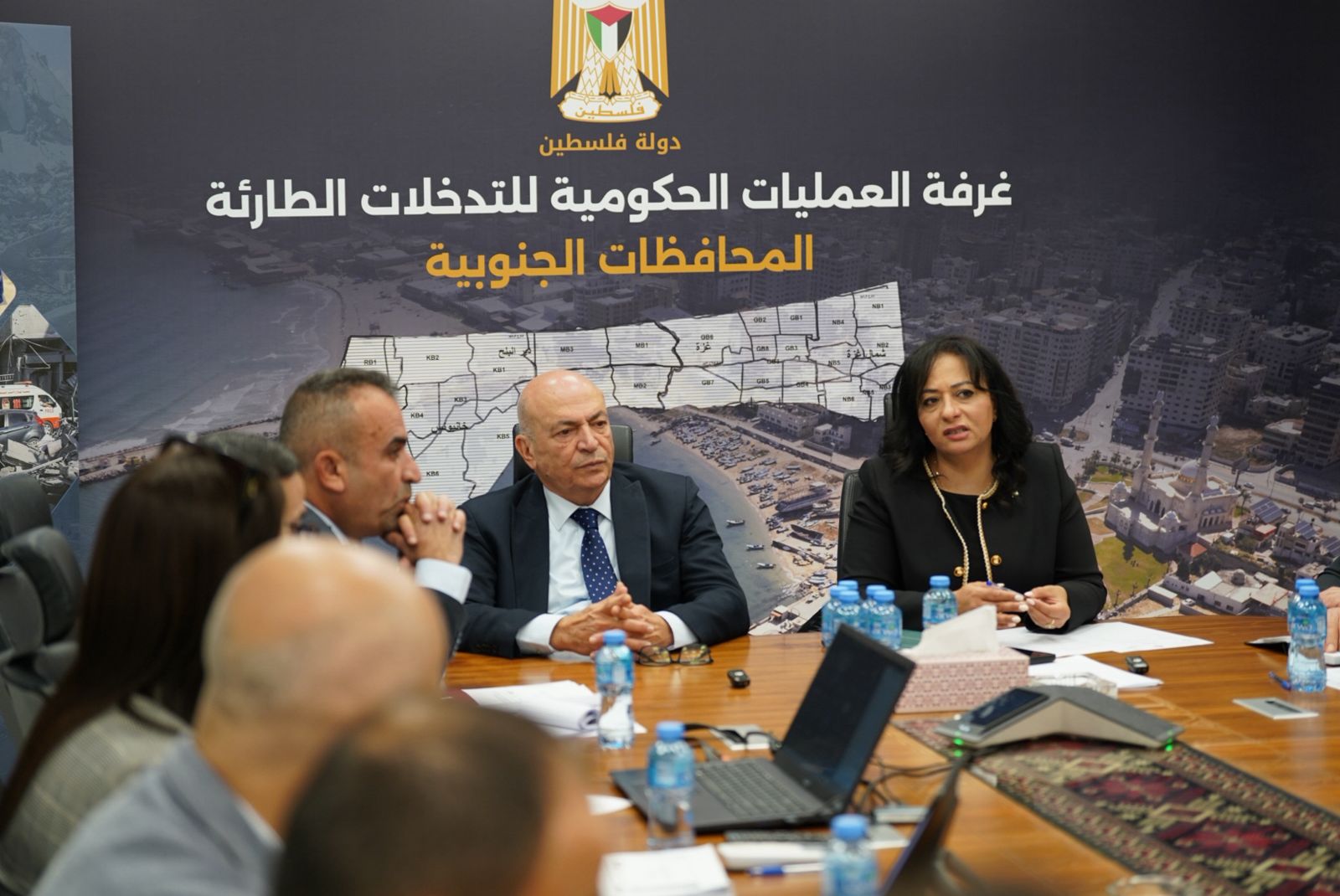
RAMALLAH, December 1, 2025 (WAFA) - The Government Operations Room for Emergency Interventions in the Gaza Strip reviewed today, Monday, the early recovery and relief plan submitted by the Ministry of Tourism and Antiquities for the Gaza Strip.
The session, attended by representatives of international organizations, partner institutions, and donor agencies, focused on identifying priority interventions in one of the sectors most severely affected by the ongoing aggression.
This meeting forms part of the Operations Room’s continuous review of sectoral recovery plans aimed at ensuring a unified and effective national response to the extraordinary humanitarian conditions in the Gaza Strip. The Room emphasized that protecting cultural heritage and strengthening the Palestinian historical narrative are fundamental pillars in countering systematic attempts to erase Palestinian identity.
Samah Hamad, Head of the Operations Room, stated that the Ministry’s plan aligns with a broader sequence of sectoral frameworks currently under review—plans that are regularly updated in coordination with local and international experts. She underscored that preserving Gaza’s cultural heritage is not only a technical necessity but a national responsibility essential to safeguarding Palestinian memory and identity.
During the session, Minister of Tourism and Antiquities Hani Al-Hayek stressed that the occupation had intentionally targeted Gaza’s heritage sites “in an attempt to erase Palestinian identity and collective memory.” He reported that 226 out of 316 registered heritage sites had been damaged (71.5%), and that the tourism sector had incurred an estimated $3.9 billion in losses. A total of 4,992 tourism establishments—including hotels, restaurants, and travel agencies—were destroyed or damaged, while 15,265 workers lost their jobs either permanently or temporarily. Al-Hayek emphasized that protecting cultural heritage remains a national priority, as it stands as a living testament to Gaza’s deep-rooted history across the Canaanite, Byzantine, and Islamic periods.
The Ministry’s technical team provided a detailed overview of the destruction, including ongoing efforts to stabilize 33 high-risk sites facing imminent collapse—an urgency heightened with the onset of winter. The team also noted progress in completing digital and geospatial documentation for 138 destroyed sites.
Al-Hayek further explained that the Ministry has launched a comprehensive six-month plan titled “From Rescue to Resilience,” with a €31.2 million budget dedicated to structural stabilization of high-risk heritage sites and the development of a transitional recovery plan for the next phase.
He added that the National Committee for Damage Assessment and Heritage Rescue, established under Ministerial Decision No. (1) of 2024, continues to work in close technical coordination with the Centre for Cultural Heritage Preservation (CCHP). The committee is currently preparing an urgent assessment list covering 20 archaeological sites and museums, including Tell al-Ajoul and the Roman Cemetery.
The presentation also outlined progress made in restoring several historic landmarks, including the Great Omari Mosque, the Moroccan Mosque, Khan Younis Castle, the Qaysariyya Market, and the Pasha Palace. However, these restoration efforts still face significant barriers due to strict restrictions on the entry of construction materials and the deteriorating environmental conditions around the sites.
The meeting also highlighted a major achievement: the inscription of the Monastery of St. Hilarion (Tell Umm Amer) on the UNESCO List of World Heritage in Danger, along with its receipt of “enhanced protection” under the Hague Convention. This status opens the door to expanded international support. Work is currently underway to rehabilitate the site into a major tourism and economic development center as part of a €12 million project funded by the French Development Agency.
Additionally, the Ministry presented its ongoing efforts to secure and document archaeological artifacts. This includes its joint initiative with the Arab World Institute in Paris to launch the exhibition “Treasures Saved from Gaza,” featuring 130 artifacts representing more than 5,000 years of Gaza’s history. The exhibition serves as a form of cultural resistance and conveys a global message on the importance of protecting Palestinian identity and heritage. It is scheduled to tour several countries worldwide.
T.R.