BETHLEHEM, May 13, 2010 (WAFA)- Palestinian singer Rim Banna and other artists will perform, Friday May 14, 2010 by the path of the Wall near Al-Ma’asara, south of Bethlehem, to commemorate 62 years to the Palestinian Nakba (1948 Catastrophe) and celebrate the culture of popular resistance.
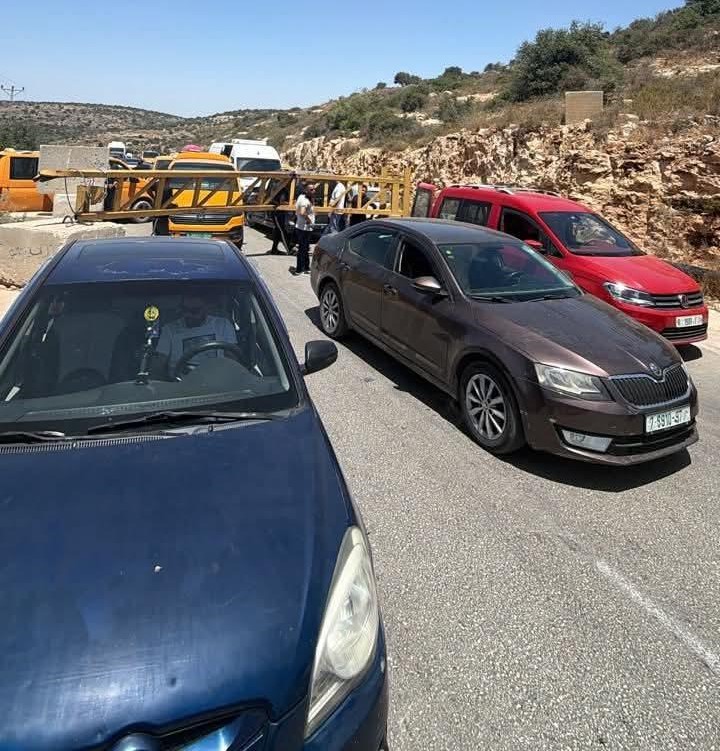
Gathering will be held at the entrance to Al-Ma’asara village, by the roadblock the Army erects every Friday in order to stifle protest, Popular Struggle Coordination Committee announced, today.
The 1948 Nakba and the 1967 occupation are, among other thing, an assault on Palestinian heritage and culture. This week's Friday demonstration in the
As soldiers amass at the entrance to the village, as they do every Friday in an attempt to quell the demonstration, Internationally renowned Palestinian singer Rim Banna, accompanied by Beit Sahour guitarist Usama Al-Lati, will hold a special performance.
The event will also include a Dabka performance, poetry reading and speeches by a representative of the village's popular committee and by Palestinian Minister of Culture, Siham Barghouthi.
Al-Ma’asara is a mountain-top village of 900 residents located
Since November 2006, demonstrations organized by the Al-Ma’asara Popular Committee are held on a weekly basis to protest the Wall, settlements and the Occupation in general. Initially, protesters were usually able to march to the construction site of the Wall and at times to temporarily block bulldozers and disrupt construction. Today however, protesters are stopped near the entrance to the village. Every Friday, the Israeli army erects a razor-wire barricade and heavily armed soldiers take positions behind it, effectively sealing all access to at least two villages.
As part of the recent wave of ongoing repression against the Palestinian popular struggle, the army's position has gradually moved closer into the built-up area of the village, also positioning soldiers on the rooftops of residential buildings, overlooking the demonstration like snipers.
In May 2009, three members of the Popular Committee were violently arrested during a Labor Day protest in the village together with other Palestinians, an international, and an Israeli activist. While the international and the Israeli were released hours later, the Palestinians were released only several weeks later after depositing the total of NIS78,000 in bail and on the condition that they do not participate in demonstrations until the end of legal proceedings in their case. To date, a year later, their cases are pending.
As the protests in the South of Bethlehem continue with growing support, the Army has launched a wave of repression hoping to squelch the popular struggle. Since the end of 2009, members of the Popular Committee were explicitly threatened eight times that they will be arrested and beaten should demonstrations continue. The threats were issued during night raids on the houses of Popular Committee members. During one of these raids, an officer 'if trouble continue, a child from the village may find himself dead'.
In March 2010, two organizers from the village were assaulted at the Container Checkpoint on the road to Ramallah after Border Police officers recognized them from demonstrations. On March 2nd, the Mayor of Al-Ma’asara and member of the popular committee, Mahmoud Zwahre, was searched for over an hour at the checkpoint on his way to a meeting in Ramallah. He was then taken to an interrogation room, where he was assaulted by a soldier, explicitly told that he is beaten for his involvement in the Friday demonstrations. On March 14th, Omar Alaaeddin was nabbed from the Container Checkpoint after a Border Police officer recognized him from the Friday demonstrations. He was beaten and thrown on razor-wire at the checkpoint, and subsequently tortured while in jail. He reports to have been kicked, punched and even electro shocked with a taser by the soldiers and his jailers.
In addition to the weekly demonstrations, the Al-Ma’asara Popular Committee also organizes summer camps, olive tree planting, workshops for children, youth and women, and capacity building trainings. Members of the popular committee frequently tour