Important News
- Weather: Pleasant conditions prevail
-

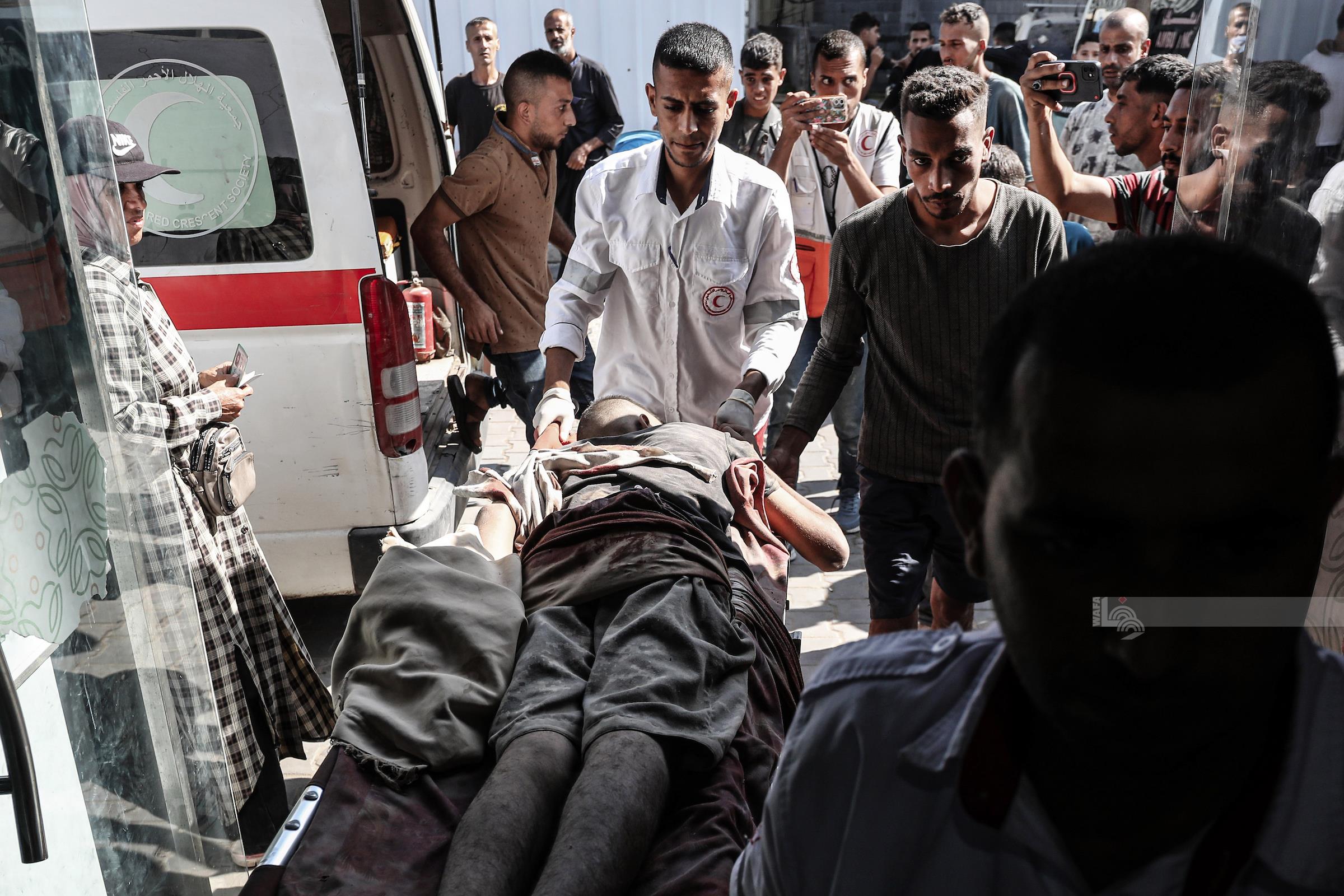
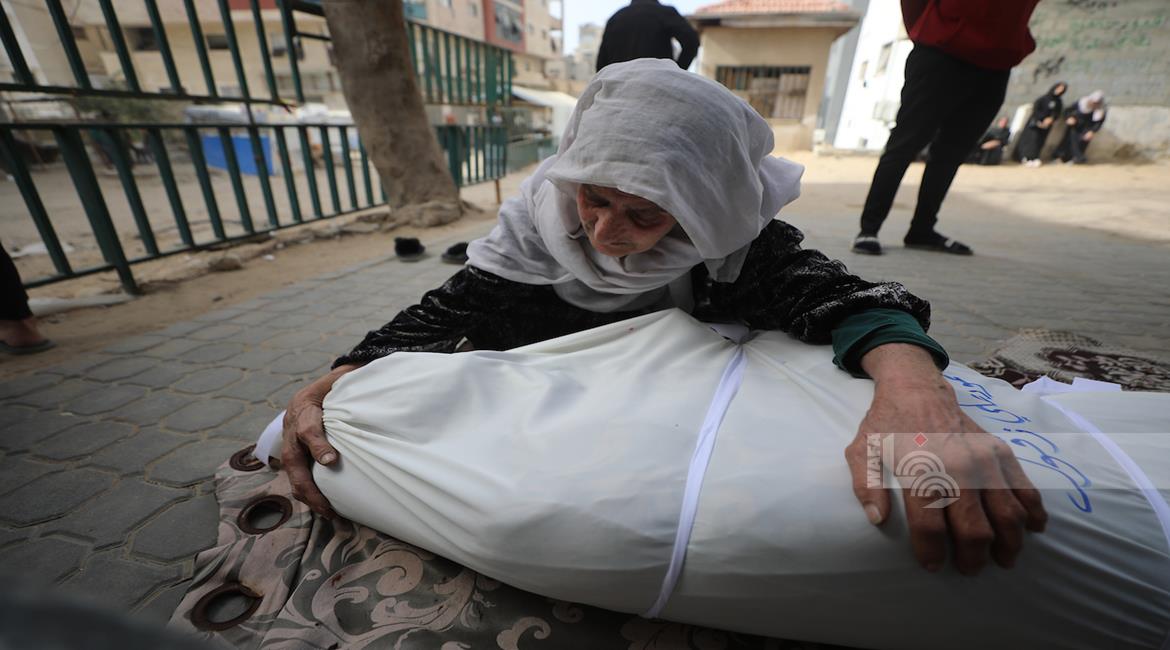
- Palestinians killed and wounded by Israeli bombing in central Gaza
-
- Occupation forces seize election posters in Beit Jala, West of Bethlehem
-
- Suffocation cases among students after Israeli forces fired tear gas canisters at them near Hebron
-
- Oil prices soar amid geopolitical tensions and increased demand
-
- US President Trump says blockade imposed on ships entering or leaving Iranian ports starts today
-
- Occupation forces close eastern gate of town near Nablus
-
- Two injured by Israeli gunfire near Jerusalem
-
- Israeli airstrike kills four, including woman, in Lebanon as aggression continues
-
- Colonists break into Jerusalem's Aqsa mosque
-
- WHO official says Israel's restrictions on medical aid entry to Gaza hinders heath response
-
- Israeli colonists set up iron gate in Jerusalem's Old City
-
- Israeli forces demolish Palestinian house, commercial structure near Tulkarm
-

PCBS: Lifting Siege Key for Economic Recovery in OPT
RAMALLAH, March 26, 2007, (WAFA)-Palestinian Central Bureau of Statistics (PCBS) said Monday that lifting the siege is the key for economic recovery in the Occupied Palestinian Territory(OPT).
In a press release on the economic forecasts for 2007, PCBS showed that Palestinian economic conditions again declined in 2006, as seen by the deterioration in most economic indicators during 2006 compared with 2005. This release presents a brief summary of economic conditions in the Palestinian Territory during 2006, along with forecasts for the main economic indicators in 2007.
"These predictions are based on three scenarios. These scenarios were constructed by an expert task force from PCBS, Ministry of Finance, IMF, and World Bank in which each scenario built upon internal political situation, financial siege, foreign assistance, Israeli measures on the Palestinian Territory, and number of Palestinian workers in Israel," PCBS added.
As for Economic Conditions During 2006, it revealed that quarterly national accounts showed that real gross domestic product (GDP)declined during 2006 by 6.6% compared with 2005 in the Palestinian Territory. Industry, construction and services activities declined by 6.0%, 12.9%, and 3.2% respectively, while agriculture activity increased by 6.8% during2006 compared with 2005.
"Prices data show that the consumer price index (CPI) increased by 3.8% during 2006 compared with 2005. When we look at the nature of goods and services and the change in prices we find that transport and communication services showed the highest increase in prices among goods and services with an increase of 5.0% in 2006 compared with 2005. The second highest rise was in food with an increase of 4.6%, followed by beverages and tobacco with an increase by 3.3%. The increase in prices also includes the cost of education and medical care services, which increased by 1.6% and 1.5% respectively. Recreational, cultural goods and services are the only commodities showing a decrease in prices, by 1.0%," PCBS said.
PCBS showed that total government revenues collected during 2006 reached 351 million US dollars with a decrease by 71.0% compared with 2005 of 1,208.6 million US dollars. The reason behind this dramatic decline was the halt of tax (clearance revenues) transfer from the GOI to the PNA, which was estimated at 733 million US dollars in 2006, but what was received was 69 million US at the beginning of 2006.
"The decline in total government-collected revenues affect total government expenses. Government employees received just 44.6% of their compensations in 2006 (33.2% from government and the President's office, and 11.4% from the European Union), which was estimated at 1.2 billion US dollars in 2006. Government current and other capital expenses declined by 37.5%, and development expenses declined by 75.5% during 2006 compared with 2005".
As for theExpected Scenarios in2007, PCBS showed that forming Palestinian unity government, lifting the siege partially, i.e., Israel release some of taxes revenues (about $US 300 million), and also Arab countries financial assistant remains as in 2006.
This scenario assumes that foreign assistant (International Temporary Mechanism ITM) remains at its level in 2006 ($US 730 million). Israel continues on its measures in the Palestinian Territory to hinder the movement of people and goods within the Palestinian Territory and between the Palestinian Territory and the neighboring countries, and with no significant changes in the number of Palestinian workers in Israel.
"Baseline scenario results expect that a slight improvement will happen to the economic conditions in 2007 compared with 2006. Real GDP is expected to increase by 3.2%, real gross national income (GNI) is expected to increase by 3.1%, and real gross national disposable income (GNDI) is expected to increase by 7.2%. Regarding GDP per capita and GNI per capita both are expected to decrease by 0.1% and 0.2% respectively, while GNDI per capita is expected to increase by 3.8%. Private consumption, private investment, exports, and imports are expected to increase by 3.3%, 2.8%, 4.0% and 1.0% respectively".
Optimistic scenario expects that an obvious improvement will occur in the economic conditions in 2007 compared with 2006. Real GDP is expected to increase by 7.3%, real GNI is expected to increase by 6.9%, and real GNDI is expected to increase by 7.6%. Regarding GDP per capita and GNI per capita, and GNDI per capita is expected to increase by 3.8%, 3.4%, and 4.1% respectively. Private consumption, private investment, exports, and imports is expected to increase by 3.3%, 6.8%, 8.0% and 6.5% respectively, according to press release.
As for the pessimistic scenario, PCBS expects economic conditions become worst than in 2006, especially the siege, but foreign assistance (ITM) continue at its 2006 levels, inability of the Palestinian government to collect internal taxes and fees and also to pay wages and salaries, and a decrease in the number of Palestinian workers in Israel.
"This scenario expects a dramatic decline in the economic conditions in 2007 compared with 2006. Real GDP is expected to decrease by 2.6%, real GNI is expected to decrease by 2.4%, while real GNDI is expected to increase by 3.5%. Regarding GDP per capita and GNI per capita both are expected to decrease, by 5.7% and 5.5% respectively, while GNDI per capita is expected to increase by 0.2%. Private consumption, private investment, exports, and imports are expected to decrease by 1.3%, 1.8%, 10.0% and 5.0% respectively," PCBS concluded.
ÜÜÜÜÜÜÜÜÜÜÜÜÜÜÜÜÜÜÜÜÜ
M.H. (09:50 P)(07:50 GMT)