HEBRON, June 11, 2016 (WAFA) – Israeli forces Saturday demolished the Hebron home of a Palestinian suspect whom Israel accuses of killing a female settler almost six months ago, according to a local activist.
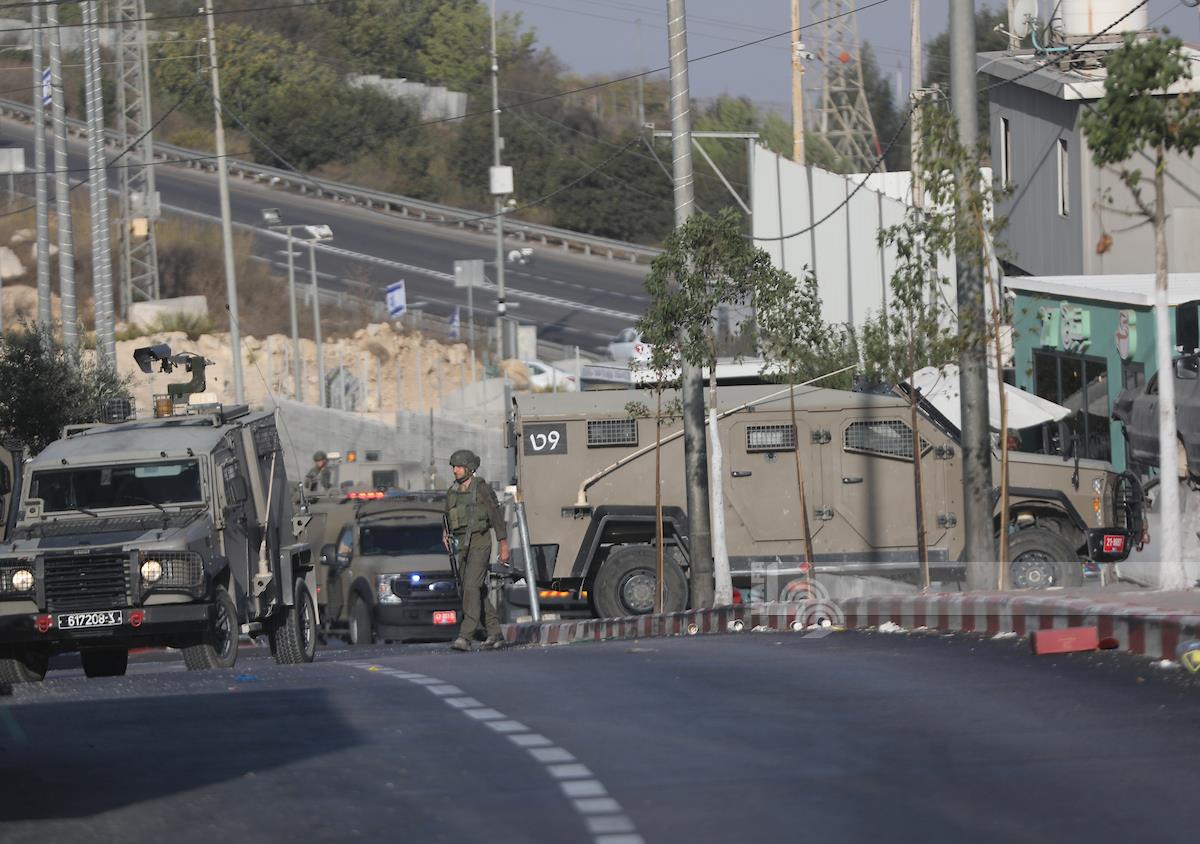
Large Israeli military forces, accompanied by bulldozers, raided the village of Beit ‘Amra, in southern Hebron, and demolished the two-storey family home of Murad Id’ais, without any prior notice. To be noted, the army prevented the family from removing their possessions.
Forces further destroyed the contents of a local laboratory, as well as raided, searched, and wreaked havoc into a number of homes in the area.
Israel resorts to punitively demolish the family homes of any Palestinians – as means of deterrence – accused of being involved in attacks against Israelis, a policy that Israel does not use against Israeli settlers who were involved in fatal attacks against Palestinians.
Al-Haq human rights group slammed the punitive home demolition of Palestinians suspected of being involved in attacks against Israelis, as a collective punishment and that in accordance with humanitarian law and human rights law; it is assessed as a war crime and a crime against humanity.
B’Tselem, an Israeli human rights group, says: “The people who bear the brunt of the [punitive] demolitions are relatives – including women, the elderly, and children – whom Israel does not suspect of involvement in any offense.”
“In the vast majority of cases, the person whose actions prompted the demolition was not even living in the house at the time of the demolition,” adds the group.
“The official objective of the house demolition policy is deterrence … yet the deterrent effect of house demolitions has never been proven.”
It said that, “ Since this constitutes deliberate harm to innocents, it is clear that even if house demolition had the desired deterrent effect, it would, nevertheless, remain unlawful.”
In the meantime, Amnesty International, argued that, The Israeli authorities’ claim that such demolitions are effective in dissuading potential attackers is entirely irrelevant in the eyes of International humanitarian law, which places clear s on the actions which an occupying power may take in the name of security, and the absolute prohibition on collective punishment is one of the most important of these rules.
“Collective punishment is never permissible under any circumstances,” it said.
In November, 2016, the United Nations’ Coordinator for Humanitarian Aid and Development Activities in the occupied Palestinian Territory, Robert Riper, contended that Israel’s punitive home demolition policy taken against Palestinians suspected of carrying attacks against Israelis violates international law, calling for its cessation.
“I am distressed by reports of punitive demolitions carried out by Israeli security forces of five homes in the Jerusalem, Nablus, and Ramallah governorates in the last few days,” said UN Riper.
“We recognize Israel’s serious security challenges today, but any law enforcement response must be consistent with international law,” maintaining that, “Punitive demolitions are inherently unjust, punishing innocent people for the acts of others.”
“Punitive demolitions are a form of collective penalty as they effectively punish not only the alleged perpetrators but also people (relatives, neighbors) for acts they have not individually committed,” stressed the statement.
The policy of such punitive demolitions was suspended by the Government of Israel in 2005 after an Israeli military committee deemed it ineffective as a deterrent.
Such actions have restarted since mid-2014, with the exception of one case in 2009.
T.R.