NEW DELHI, September 12, 2026 (WAFA) — Leaders of the BRICS group on Saturday reaffirmed that a just and lasting solution to the Palestinian-Israeli conflict can only be achieved through peaceful means and requires upholding the legitimate rights of the Palestinian people, including their rights to self-determination and return.
In the New Delhi Declaration issued at the 18th BRICS Summit, chaired by India, the leaders stressed the need for appropriate representation of Palestine in all relevant international organizations, including multilateral financial institutions, and for Palestine to have access to their resources. They also renewed their support for the full membership of the State of Palestine in the United Nations.
The declaration reaffirmed the BRICS countries' commitment to a two-state solution in accordance with international law, relevant UN Security Council and General Assembly resolutions, and the Arab Peace Initiative. It supported the establishment of a sovereign, independent and viable Palestinian state along the internationally recognized 1967 borders, including the Gaza Strip and the West Bank, with East Jerusalem as its capital, with the two states living side by side in peace and security.
Regarding Gaza, the leaders referred to the adoption of UN Security Council Resolution 2803 and called for the implementation of relevant General Assembly and Security Council resolutions. They urged all parties to ensure the continuation of the ceasefire and the full and unhindered delivery of humanitarian aid to Gaza, while expressing grave concern over continued attacks in the territory despite the ceasefire agreement reached in October 2025.
The leaders called for an end to policies aimed at the forced displacement of Palestinians from Gaza and expressed concern over arrangements that could undermine the inalienable rights of the Palestinian people, legitimize the occupation or prolong it.
The declaration firmly opposed forced displacement, whether temporary or permanent and under any pretext, of the Palestinian population from the occupied Palestinian territory, as well as any geographic or demographic changes in the Gaza Strip.
It further reaffirmed that international law and international judicial bodies require an end to the unlawful occupation and the immediate cessation of practices that undermine legal norms and obstruct the achievement of a just and lasting peace.
The BRICS leaders expressed grave concern over the situation in the occupied Palestinian territory, including the humanitarian situation in Gaza, and called for adherence to international law, particularly international humanitarian law and international human rights law.
They condemned all violations, including the use of starvation as a method of warfare, attacks targeting civilians and civilian objects, including healthcare facilities and other civilian infrastructure, and unlawful obstruction of humanitarian aid. They also condemned attempts to politicize or militarize the delivery of humanitarian assistance.
The declaration renewed the group's firm support for the United Nations Relief and Works Agency for Palestine Refugees in the Near East (UNRWA) and stressed the need to fully respect the mandate granted to the agency by the UN General Assembly to provide essential services to Palestinian refugees across its five fields of operation.
Regarding occupied Jerusalem, the BRICS leaders rejected any unilateral measures seeking to alter the city's legal and historical status. They called for full respect for the sanctity of all religious sites and holy places in the city and for the right of all people to access them and practice their religious rites without obstruction.
The unanimously adopted New Delhi Declaration stressed the importance of preventing conflicts, addressing their root causes and resolving international disputes peacefully through dialogue, consultation and diplomacy, reflecting the shared commitment of BRICS members to a more peaceful and cooperative world.
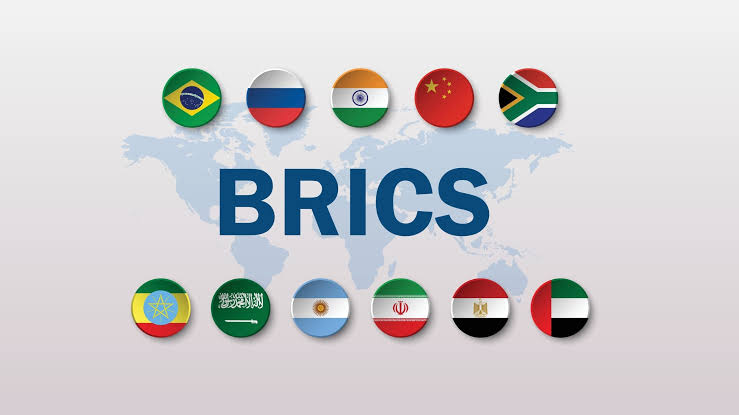
The 18th BRICS Summit is being held in New Delhi on September 12 and 13, 2026, under India's chairmanship and Prime Minister Narendra Modi, under the theme “Building for Resilience, Innovation, Cooperation and Sustainability.”
M.N