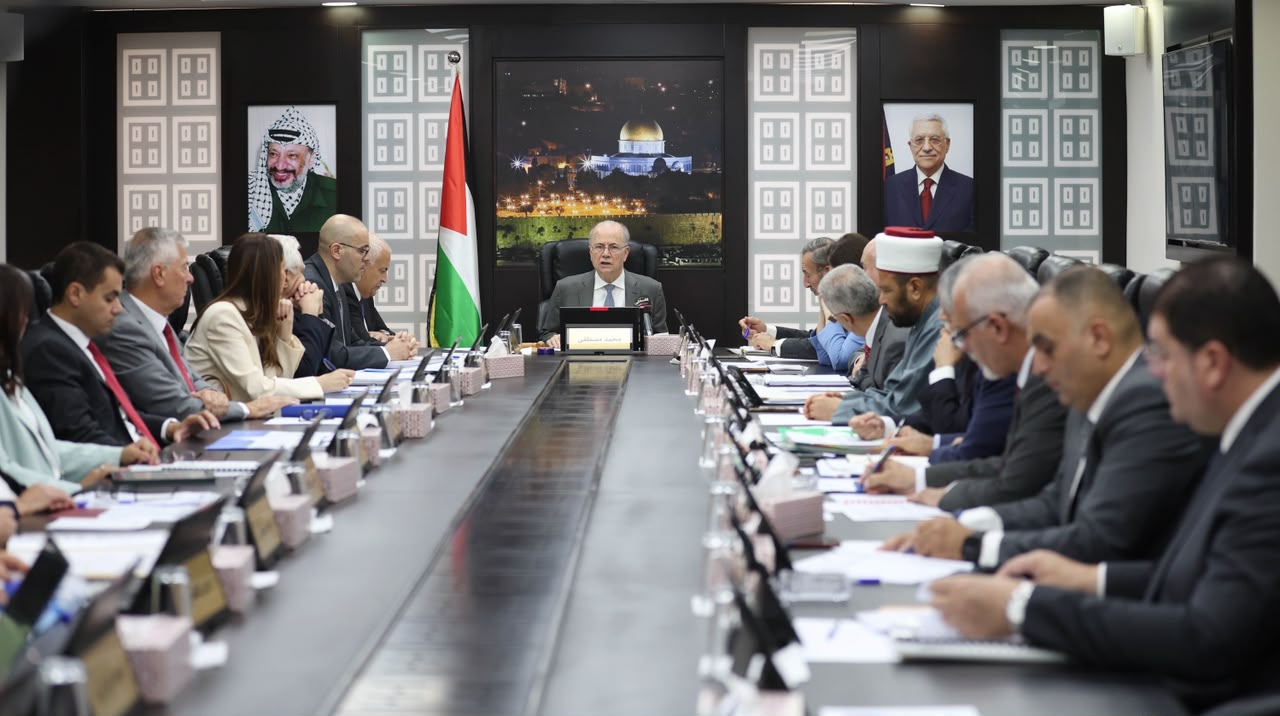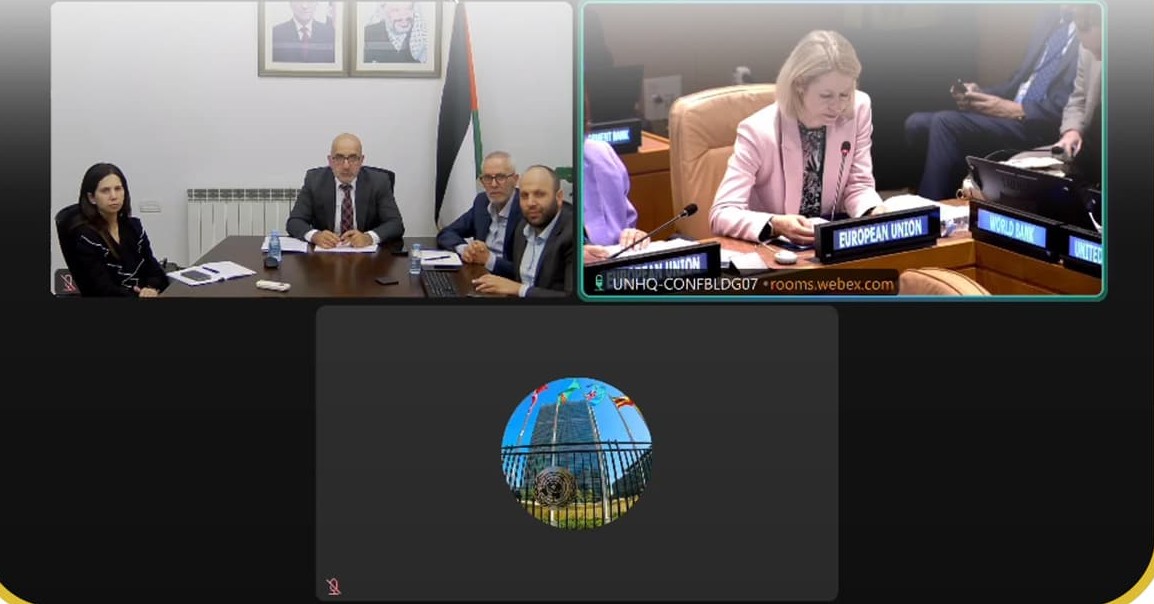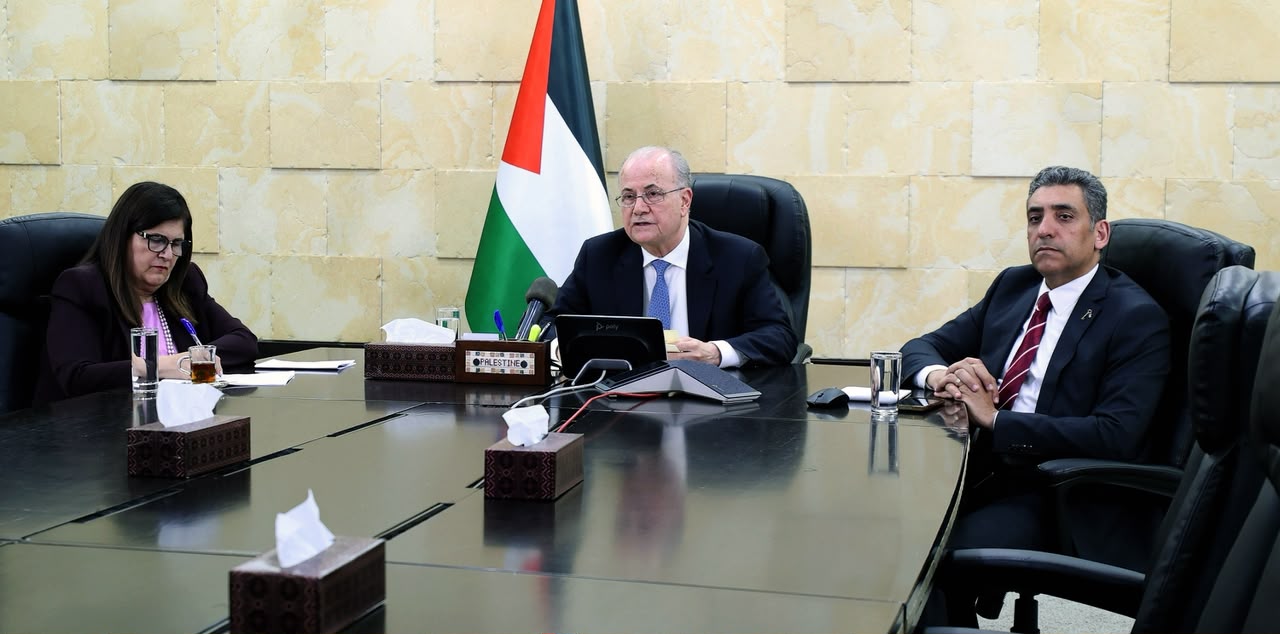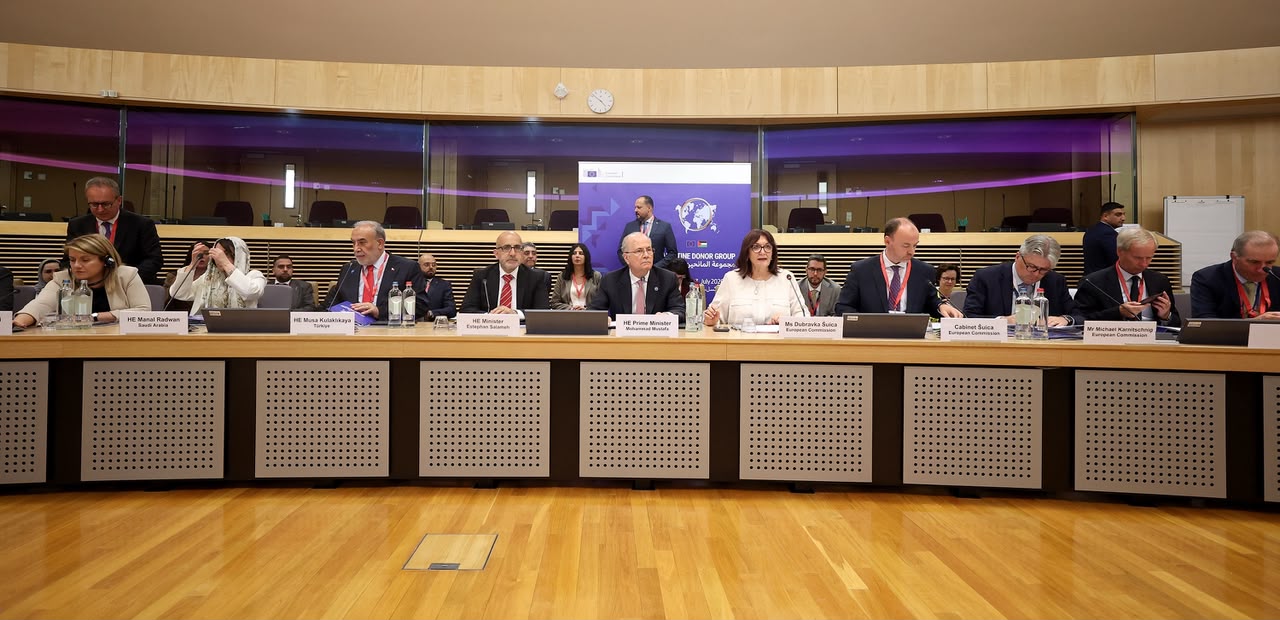
RAMALLAH, July 13, 2026 (WAFA) -- Prime Minister Mohammad Mustafa co-chaired the second ministerial meeting of the Palestine Donors Group in Brussels on Monday alongside European Commissioner for the Mediterranean Dubravka Šuica, with the participation of around 65 representatives of donor countries, international institutions, and development partners to discuss support for the Palestinian government and early recovery and reconstruction efforts in the Gaza Strip.
In his address, Mustafa said the war on Gaza had left unprecedented destruction, immense humanitarian suffering, and major political, economic, social, and security challenges. He added that the occupied West Bank, including East Jerusalem, continues to face accelerating annexation, colonial expansion, colonists' attacks, movement restrictions, and Israeli measures aimed at undermining the Palestinian Authority and the viability of the two-state solution.
He said the Palestinian economy has contracted by 30% since October 2023, unemployment has reached 50%, more than 500,000 people have lost their jobs, and the government's fiscal deficit has reached unprecedented levels due to Israel's continued withholding of Palestinian clearance revenues and restrictions on the Palestinian financial and economic system.
Mustafa stated that Israel has completely halted the regular transfer of Palestinian clearance revenues for the past 15 months, severely limiting the government's ability to meet its obligations. Despite these challenges, he said, the Palestinian government has remained operational, responsible, and committed to reform, stability, and institution-building.
The Prime Minister outlined the government's 18-month strategy focused on transitioning from reform to recovery, strengthening resilience, restoring unity, and building the state. The strategy is based on five pillars: strengthening national resilience and supporting vulnerable communities; reinforcing state institutions, governance, and the rule of law; supporting Gaza's recovery and the gradual restoration of government responsibilities there; promoting economic self-reliance through investment in productive sectors, digital services, food security, and energy security; and advancing political efforts by expanding international recognition of the State of Palestine in partnership with the Global Alliance and other international partners.
Mustafa said the strategy's success requires stronger political support for the Palestinian Authority, decisive steps to end Israel's illegal occupation, and broader recognition of the State of Palestine. He also called for upgrading the 1997 Interim Association Agreement on Trade and Cooperation between the European Union and the Palestine Liberation Organization into a full association agreement.
He urged the European Union and regional and international partners to provide immediate and guaranteed emergency budget support to enable the government to maintain essential public services, preserve institutional continuity, and continue implementing its reform agenda. He also called for a coordinated international effort to immediately begin Gaza's recovery and reconstruction by ensuring adequate funding and the unrestricted entry of humanitarian aid, commercial goods, and reconstruction materials, while supporting measures that strengthen Palestine's capacity to manage its economy and public finances.
Mustafa stressed that no reform or strategy can succeed without the political and economic conditions necessary for implementation, adding that economic recovery is impossible while revenues remain withheld and freedom of movement and access remains restricted. He also said progress toward the two-state solution cannot be achieved without genuine political support and a credible path to ending the occupation.
He said Israel's repeated violations of its obligations under the Paris Protocol—including withholding Palestinian tax revenues, restricting correspondent banking relations, maintaining limits on the return of Israeli shekels, restricting the movement of people and goods, and revoking permits for Palestinian workers—have severely damaged the Palestinian economy, undermined its stability, and pushed it to the brink of collapse.
Mustafa added that if Israel is no longer willing or able to implement and respect the customs union model established under the Paris Protocol, the international community should support the establishment of an independent Palestinian customs system. He also said that if current banking and monetary arrangements cease to function effectively, international support should be provided for the gradual creation of a Palestinian currency and for developing the Palestine Monetary Authority into a fully empowered central bank, describing these steps as essential for economic recovery, greater economic sovereignty, resilience, and long-term stability.
Reviewing progress on the government's reform agenda, Mustafa said substantial progress has been made across four reform pillars and 53 key measures despite exceptional political and financial constraints, with most agreed reforms completed and the remaining measures at advanced stages of implementation.
He said the government has strengthened fiscal discipline through expenditure controls, improved debt and financial risk management, advanced reforms to reduce net lending and improve budget sustainability, and introduced the most significant overhaul of Palestine's social protection system in decades through a unified framework established under Decree-Law No. 4 of 2025. The new framework replaces fragmented assistance programs with a single transparent, needs-based system overseen by an independent supervisory structure and supported by a national digital platform.
Mustafa also said education reforms are being implemented in line with UNESCO standards and international best practices. He added that the government continues to implement President Mahmoud Abbas's political reform program, noting that municipal elections were successfully held across Palestine, including in Deir al-Balah in the Gaza Strip, demonstrating the government's commitment to democratic participation despite extremely difficult conditions. He further noted that President Abbas recently issued a decree calling for nationwide legislative elections on November 28 this year.
The Prime Minister expressed gratitude to Commissioner Šuica and the European Union for their continued partnership with Palestine and thanked donor countries, international organizations, and international financial institutions for their political, humanitarian, and financial support during one of the most difficult periods in modern Palestinian history.
He said their continued support reflects not only solidarity with the Palestinian people but also a shared commitment to preserving the viability of the two-state solution, strengthening the Palestinian Authority and its institutions, supporting regional stability, and achieving a just, lasting, and comprehensive peace based on international law, relevant United Nations resolutions, and the Arab Peace Initiative.
On the sidelines of the donors' meeting, the European Union, together with Spain, Denmark, Cyprus, Ireland, Greece, Portugal, Italy, the Netherlands, France, Switzerland, and Belgium, signed new contribution agreements worth €41.7 million with Palestinian Minister of Finance and Planning Estefan Salameh under the PEGASE program. The funding represents additional financial support from EU member states following the group's first meeting and comes in addition to the €310 million allocated by the European Commission to the PEGASE program for 2026 and 2027.
M.N