NEW YORK, May 15, 2026 (WAFA) – The Committee on the Exercise of the Inalienable Rights of the Palestinian People meets on Friday at the UN Headquarters in New York to commemorate the 78th anniversary of the Nakba, according to the UN News website.
Senior UN officials, including General Assembly President Annalena Baerbock and Assistant Secretary-General Khaled Khiari, are expected to address the meeting. The event will also feature testimonies from Palestinian families and a tribute to the historian of Palestine and the Nakba, Walid Khalidi.
In her statement, Annalena Baerbock, President of the General Assembly, said: “The United Nations has a 78-year-old responsibility to address the Question of Palestine and must continue pushing for a just and lasting solution in accordance with the UN Charter, international law and UN resolutions.”
She urged Member States to recommit to the New York Declaration and “embrace it also here in these UN halls” towards the realization of the two-State solution.
“Recognizing that a future where the State of Israel and the State of Palestine can live side by side in peace, security and mutual respect is neither a threat for Israel nor a reward for violence, but rather an investment in long-term peace, security, dignity and equal rights for all,” she said.
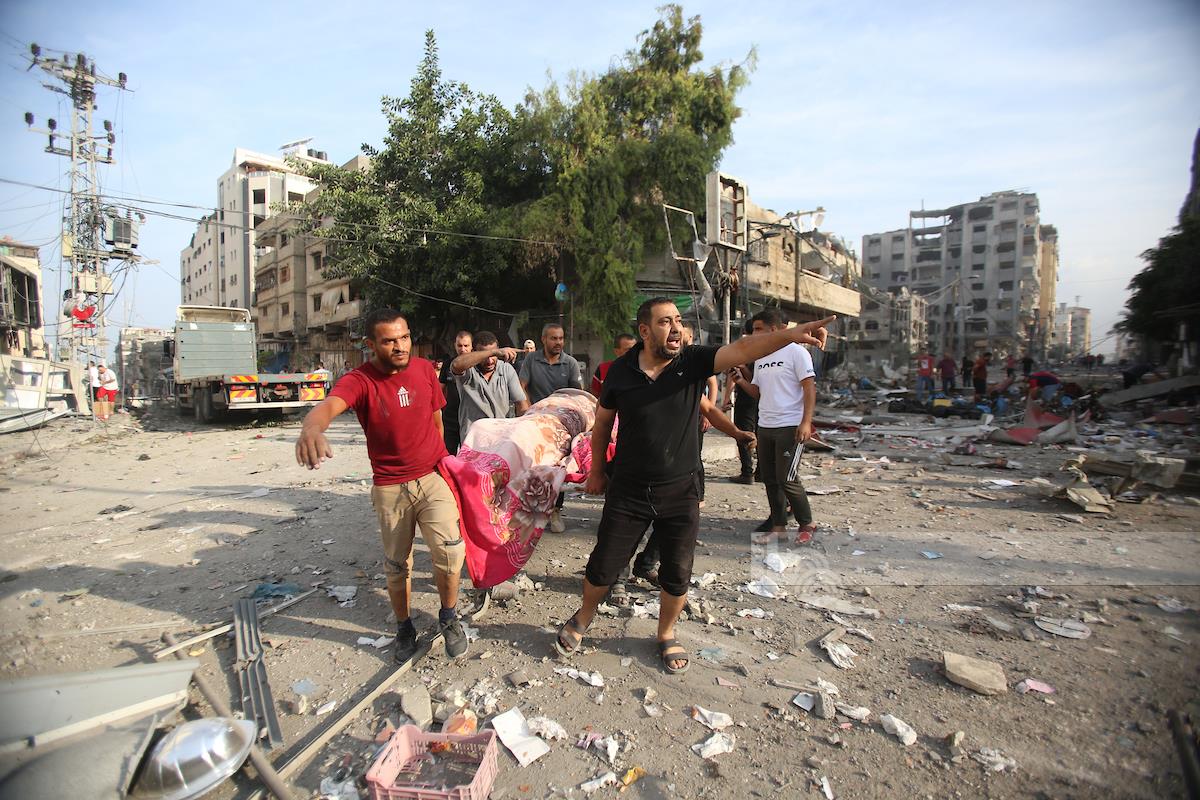
She urged Member States to “not lose sight of what’s going on right now in Gaza”, where close to 800 Palestinians, including many children, have been killed since the announcement of the so-called ceasefire of October 2025, at a time when the humanitarian situation remains catastrophic, access limited, and demand high.
"While the situation in the Strait of Hormuz dominates headlines, these deteriorating conditions should deepen our resolve to make a reality what we set out in the Charter 80 years ago: 'to save succeeding generations from the scourge of war'," she stressed. Top of Form
Meanwhile, Khaled Khiari, Assistant Secretary‑General for the Middle East, Europe, the Americas, Asia and the Pacific at the UN Department for Political and Peacebuilding Affairs, said: “The Nakba is not merely a historical event. This is the world’s longest-standing protracted refugee crisis – one that remains painfully unresolved, shaping identity, lives and the enduring pursuit of justice and self-determination for the Palestinian people.”
“Remembering the Nakba imposes responsibilities — not only of remembrance, but of action,” he said.
The path forward, he noted, is well-known, and rooted in international law, relevant UN resolutions and the collective commitments of the international community.
These include ending unlawful practices, protecting civilians, supporting Palestinian governance and institution‑building, and reviving a credible political process towards a negotiated two‑State solution, with Israel and Palestine living side by side in peace and security.
“If implemented comprehensively, the 20-point US plan to end the Gaza conflict — endorsed by UN Security Council resolution 2803 (2025) — could offer a pathway towards addressing these long-standing issues,” he said.
Speaking for President Mahmoud Abbas, Palestine’s Permanent Observer to the UN, Riyad Mansour, stated: “Today we commemorate the seventy-eighth anniversary of the Nakba — the catastrophe that is ongoing until this very day, and the crime of ethnic cleansing inflicted on our Palestinian people.”
He denounced the “heinous crime” carried out by Zionist militants with the assistance of colonial Powers, which uprooted of 950,000 Palestinians and erased 538 towns and villages.
He underscored the Palestinian people’s enduring struggle and inalienable rights and diplomatic progress, while urging stronger international action.
Pointing to recent diplomatic developments, he welcomed “President Trump’s plan for a ceasefire”, and Security Council resolution 2803 (2025), alongside the growing instability.
The UN has adopted “more than a thousand resolutions affirming the inalienable rights of the Palestinian people”, including resolutions 181 and 194, he said, which Israel continues to disregard.
Urging global recognition of the Nakba, he warned that “nothing deepens tragedies more than denying them”. Acknowledgment is essential to achieving justice and lasting peace.
“My child was executed by 355 bullets. My biggest joy was when Hind was born,” Wesam Hemada, mother of Hind Rajab, said.
Rajab was a 6-year-old Palestinian girl who was targeted along with five of her family members with 335 Israeli army bullets as they attempted to flee northern Gaza in their car on January 29, 2024.
Hemada emphasized in her testimony that her tragedy is not isolated, but part of a wider reality faced by “tens of thousands of mothers in Gaza” whose suffering remains unheard.
Hamada described the pain of losing not only her daughter but also “my peace and all the joy” that left with her.
Recounting the horror of hearing her child plead for help, she asked: “Do you know what it feels like when your child begs you to save them?” “I hope the world never forgets the children of Gaza,” she stressed, calling attention to the continued civilian suffering of the Palestinian people.
She asked the audience to imagine “what it means for your child to be hungry… and then fall asleep dreaming about food” or seeking safety “beneath your dress” during airstrikes.
She situated this within a continuing historical trauma, asserting, “Our Nakba is still ongoing”.
Entire families have been uprooted and do not know if they will ever be able to return home.
She insisted, “these are not numbers… they are human beings,” and concluded with a plea that “the whole world never forget the children of God” who deserve “life, education, and a far better life”.
K.F.