JERUSALEM, June 21, 2010 (WAFA)- Palestinian casualties decrease in May with an increasing trend in Jewish settlers violence, said the OCHA Humanitarian Monitor of May.
After three years of blockade, the Gaza Strip continues to suffer from a severe human dignity crisis characterized by high food insecurity rates, high dependency on foreign aid, a 'locked in' civilian population, and 'de-development'.
The treatment of patients suffering from bleeding disorders, certain types of cancers, kidney failure, and some infant allergies, is expected to be severely affected by a depletion of essential drugs to the lowest levels seen since June 2007.
In the West Bank, the Israeli authorities announced a number of additional measures that may ease movement of Palestinian traffic between West Bank towns and cities. Access to education has been undermined for hundreds of thousands of Palestinian students by widespread classroom shortages throughout the oPt. Humanitarian monitoring reports
The Monitor showed some key facts and figures:
In the West Bank, casualties and property damage resulting from Settler violence on the rise:
· The number of settler incidents resulting in either Palestinian casualties or property damage recorded in the first five months of 2010 is more than twice the average of such incidents during the equivalent period in the previous four years – 120 compared to 54 incidents (Updated figures for mid June 2010 – indicate 135/64 respectively)
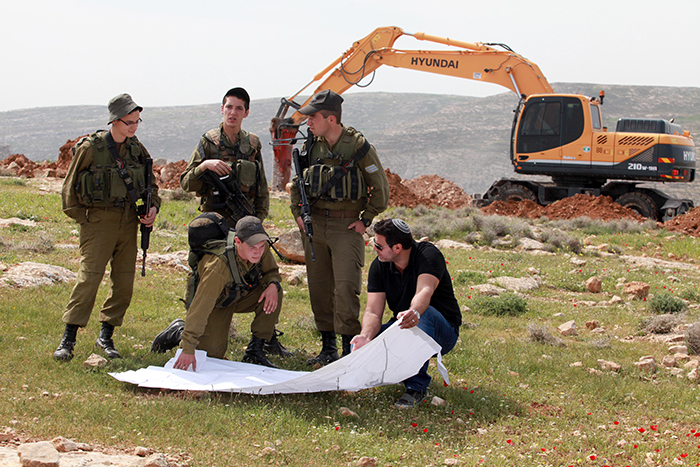
· Nearly 40 percent of the Palestinian casualties this month (30) occurred during incidents involving Israeli settlers, including 17 injuries caused directly by settlers and 13 by Israeli security forces. Overall, this was the highest incident category leading to injuries in May 2010.
· This month OCHA recorded 18 settler-related incidents affecting Palestinian property, which included the uprooting or burning of 140 dunums of olive trees, the setting fire to a mosque in the Nablus district, and other acts of theft and vandalism.
In Gaza civilians continue to bear the brunt of the Israeli-Palestinian violence :
· At least 40 percent of Palestinians killed and 83 percent of those injured since the end of ‘Cast Lead’ are civilians
· A total of three Palestinians were killed throughout the month and 41 others were injured, constituting the highest number of casualties (death and injuries combined) since the end of the ‘Cast Lead’ offensive.
Access to health in Gaza deteriorates:
· Treatment of patients suffering from bleeding disorders, certain types of cancers, kidney failure, and some infant allergies, is expected to be severely affected by drug shortage; More drugs are out of stock at Gaza’s Central Drug Store than at any point since the beginning of the blockade in 2007.
· Increase in the denial of referral patients: 155 patients seeking medical treatment abroad, or 13 percent of total applicants, were denied permission to cross the Erez crossing. This is more than seven times the average from the months from January 08- April 10 (less than 2%) .
The right to education of Palestinian students undermined
Hundreds of thousands of Palestinian students face shortage of classrooms throughout the oPt
· Gaza: UNRWA requires 100 additional schools within the next five academic years, of which 15 are needed immediately.
· Gaza Ministry of Education estimates that it needs 10-14 new schools to address the needs of the student population in the coming year.
· West Bank area C and East Jerusalem: Currently, there is a shortage of over 1000 classrooms in East Jerusalem, and many of the existing structures are substandard and do not meet basic educational and health standards
· At least 20 schools in Area C are currently prevented from expanding or improving their facilities, or have carried out construction without a permit and have subsequently been served stop-construction or demolition orders by the Israeli Civil Authorities (ICA).