* 909 mosques completely destroyed and 251 partially damaged out of 1,244 in the Gaza Strip
* 428,000 affected families and 1.9 million displaced people in urgent need of humanitarian assistance
* Ministry priorities center on shelter, support for affected families, and rehabilitation of mosques and religious facilities
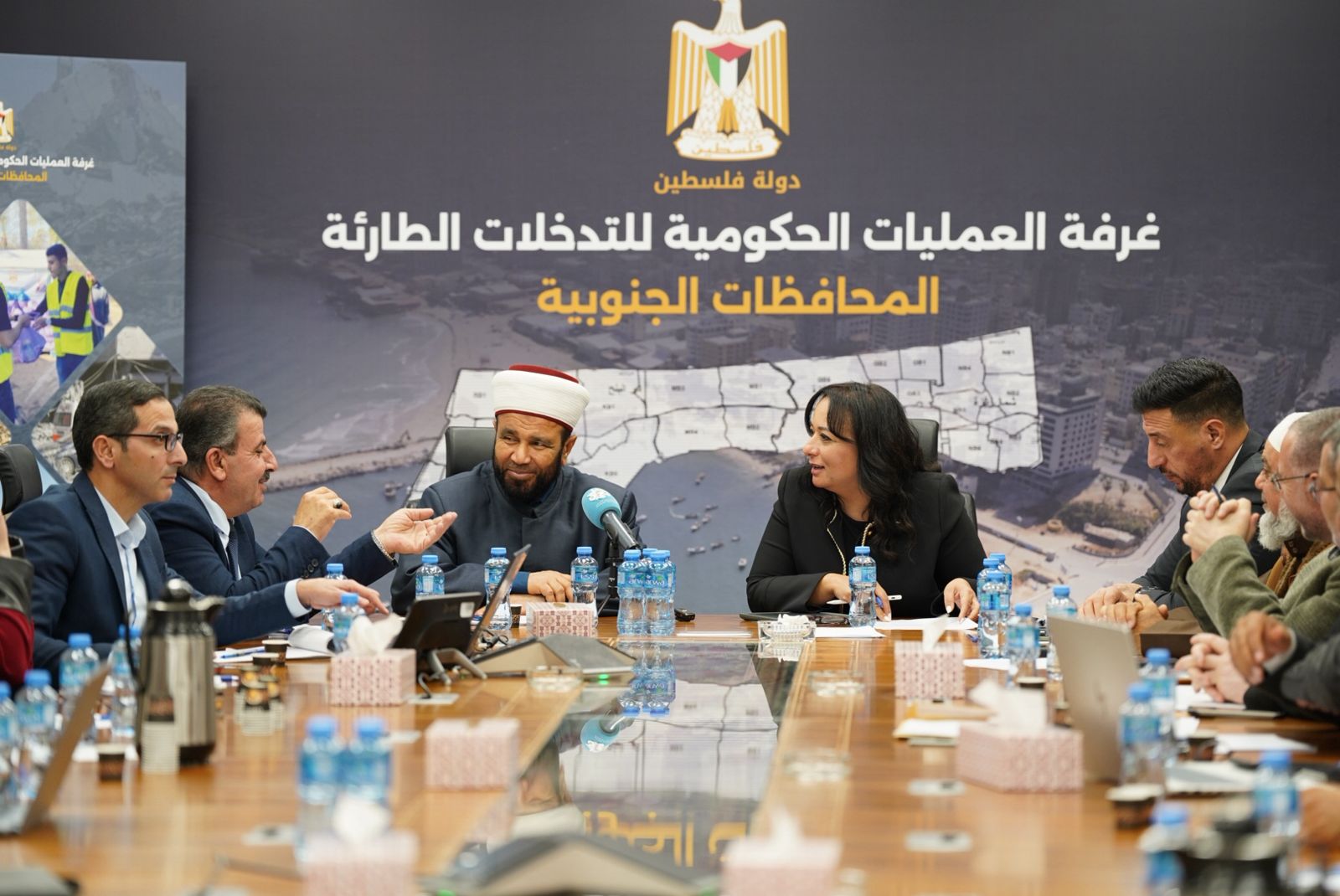
RAMALLAH, December 1, 2025 (WAFA) - The Government Operations Room for Emergency Interventions in the Gaza Strip reviewed today, Monday, the relief and early recovery plan of the Ministry of Awqaf and Religious Affairs for the Gaza Strip. The meeting focused on identifying intervention priorities, assessing damage to religious facilities, and strengthening the Ministry’s role in delivering relief services and caring for affected families and orphans.
Samah Hamad, Head of the Operations Room, emphasized the importance of close coordination among ministries and partner institutions to accelerate urgent interventions, reinforce citizens’ resilience, and ensure the provision of essential services under highly challenging conditions. She noted that the Ministry of Awqaf plays a central role in national recovery efforts—not only through protecting religious facilities, but also through its humanitarian responsibility toward vulnerable families.
Minister of Awqaf and Religious Affairs, Sheikh Muhammad Mustafa Najm, explained that the aggression has caused unprecedented destruction to religious and humanitarian facilities. He highlighted the Ministry’s pivotal role in preserving religious heritage, providing emergency assistance, and supporting orphans despite severe resource shortages and deteriorating conditions.
The Minister noted that the Ministry’s priorities include providing shelter and in-kind support for the most affected families, and rehabilitating mosques and religious institutions damaged during the assault.
The Ministry presented a detailed overview of the extent of destruction: 909 mosques were completely destroyed and 251 partially damaged, out of 1,244 mosques in the Gaza Strip. Additionally, 22 cemeteries were completely destroyed and 18 suffered partial damage. The destruction also included the complete demolition of the College of Da‘wa in northern Gaza, partial damage to its branch in Deir al-Balah, the destruction of two Sharia schools in Khan Younis and Al-Shuja‘iya, and 646 damaged waqf properties.
The presentation also highlighted that 1.9 million displaced people have lost shelter and stability, while around 428,000 families are living in dire humanitarian conditions. The number of orphans has reached 47,000, all requiring immediate support and care.
The Ministry affirmed that, through the Zakat Fund, it is implementing urgent interventions including the provision of tents, blankets, and in-kind assistance, in addition to orphan sponsorship programs and economic empowerment initiatives targeting low-income families.
A six-month package of relief projects was also shared, including the provision of 2,000 temporary shelter tents, expansion of orphan sponsorship programs, and support for small-scale economic initiatives, with the possibility of scaling agricultural and greenhouse projects in cooperation with donor partners.
The Ministry outlined its plan to rebuild damaged mosques and religious facilities, emphasizing the need for comprehensive engineering and technical efforts, as well as the installation of solar energy systems to ensure continuity of services.
The Ministry expressed gratitude to its partners supporting relief and empowerment programs—including the Jordanian Charitable Advocacy for Supporting the Palestinian People, Maksar Sustainable Development Company (Jordan), the Omani Charitable Organization, and Al-Salam Charitable Foundation—whose representatives presented updates on the projects they are implementing in Gaza.
The Ministry also detailed its arrangements for the upcoming Hajj season, affirming its commitment to enabling pilgrims from the Gaza Strip to perform the pilgrimage, based on security conditions, mobility constraints, and the operation of border crossings within the timeframe set by Saudi Arabia. It stressed that its goal is to ensure fairness and ease the hardships faced by citizens. If conditions allow, priority will be given to residents inside Gaza. Should circumstances prevent Gaza residents from joining the Hajj mission, the Ministry will allocate the quota to Gazans residing abroad to ensure their right to perform the pilgrimage is not lost.
The Ministry concluded by outlining the major challenges facing relief efforts, including severe restrictions on the entry of aid due to the blockade, lack of accurate damage assessments, and declining local donations. It stressed the urgent need to strengthen international cooperation and support relief and reconstruction initiatives in Gaza.