RAMALLAH, May 14, 2013 (WAFA) – On the eve of the Nakba
(catastrophe) 65th anniversary, the refugees make almost half of the total
Palestinian population, the Palestinian Central Bureau of Statistics (PCBS)
said Tuesday.
While statistical data show that refugees constitute 44.2%
of the total Palestinian population in Palestine, records by the United Nations
Relief and Works Agency for Palestine Refugees (UNRWA) showed that there were
5.3 million registered Palestinian refugees by mid-2013, constituting 45.7% of
the total Palestinian population worldwide, said the PCBS.
It said 59% of the refugees live in Jordan, Syria and
Lebanon, 17% in the West Bank and 24% in Gaza Strip.
About 29% of registered refugees live in 58 refugee camps,
of which 10 are in Jordan, nine in Syria, 12 in Lebanon, 19 in the West Bank,
and eight in Gaza Strip.
The PCBS said, however, that these estimates represent the
minimum number of Palestinian refugees, given the fact that there are many
non-registered refugees.
These estimates also do not include Palestinians who were
displaced between 1949 and the 1967 war and do not include the non-refugees who
left or were forced to leave as a result of the war in 1967.
The number of Palestinians who remained in their towns and
village in 1948 after the Nakba was estimated at 154,000. Their number is now
estimated as 1.4 million on the 65rd anniversary of the Nakba.
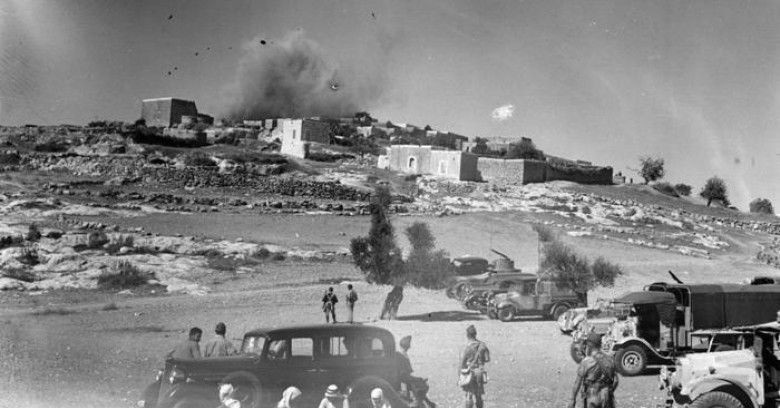
In 1948, 1.4 million Palestinians lived in 1,300 Palestinian
towns and villages in historic Palestine. The Israelis controlled 774 towns and
villages and destroyed 531 Palestinian towns and villages during the Nakba.
More than 800,000 of the population were driven out of their
homeland to the West Bank and Gaza Strip, neighboring Arab countries and other
countries of the world.
The Palestinian population worldwide is estimated 11.6
million by the end of 2012, said the PCBS. This means that the number of
Palestinians worldwide has multiplied eight-fold in the 65 years since the
Nakba.
A total of 5.8 million live in historic Palestine and this
number is expected to rise to 7.2 million by the end of 2020, based on current
growth rates, said the PCBS.
M.S./F.R.