By Hussein Sinwar
GAZA, November 22, 2026 (WAFA) – The destruction of sewage networks and infrastructure across the Gaza Strip during more than 37 months of ongoing Israeli genocide has forced displaced Palestinians to resort to unsafe makeshift cesspits, creating mounting health and environmental hazards around overcrowded displacement camps and damaged residential buildings.
With sewage systems largely out of service, families have been left with little choice but to dig rudimentary soakaway pits beside their tents, makeshift shelters and the remains of their homes. These pits, often poorly constructed and inadequately covered, have become a widespread feature of displacement sites, exposing residents to sewage contamination, foul odors, insects, mosquitoes and rodents.
The consequences are increasingly visible in the form of skin conditions and respiratory illnesses, while the leakage of untreated wastewater into the soil raises growing concerns over contamination of Gaza's already vulnerable groundwater.
For Mahmoud Abdel Nabi, the crisis has become part of everyday life.
"We were forced to dig a cesspit beside our tent because there is no functioning sewage network," he said. "But it fills up quickly, forcing us to dig another one. The problem keeps recurring, and we are effectively living above a swamp of sewage, kitchen wastewater and water from washing and bathing."
Abdel Nabi said members of his family had begun suffering from skin and respiratory problems as a result of the damp and contaminated surroundings.
He added that the family's difficult financial circumstances made it impossible to afford a sewage tanker to empty the pits. Instead, they are forced to dig new ones whenever the existing pits become full.
The growing volume of wastewater has overwhelmed the soil's capacity to absorb it, resulting in stagnant pools and sewage-filled areas around tents and shelters. Even relatively small pools produce persistent foul odors and attract insects, mosquitoes and rodents, further worsening living conditions.
Beyond the immediate health risks, the pits pose a serious threat to children's safety, particularly in overcrowded displacement camps where there are few designated or safe places to play.
Maher Barhoum said children and young people often play near the pits and stagnant water surrounding tents, leaving them exposed to the risk of falling into the uncovered or poorly secured holes.
He said several children and young people had fallen into cesspits on previous occasions, resulting in deaths and injuries.
"The failure to properly cover these pits makes the danger even greater," Barhoum said, explaining that many families use worn-out metal sheets or pieces of wood to cover the openings. Others resort to plastic sheets or nylon, which provide little protection.
He warned that these makeshift covers can easily become ineffective, particularly when exposed to water and deteriorating weather conditions.
Barhoum called on the relevant authorities to monitor the situation and ensure that the pits are properly secured before the onset of winter storms.
He cautioned that rainwater flooding streets and displacement sites makes it difficult to identify the location of the pits, increasing the risk of children and elderly people falling into them.
The danger extends beyond the immediate surroundings of the displacement camps to the groundwater on which many residents depend.
Thaer Baraka said wastewater leaking from the pits was threatening underground water sources, particularly because many groundwater wells and pumping facilities are located close to the makeshift cesspits.
Residents are increasingly forced to operate pumps to extract water from underground sources, but the water is often contaminated and unsuitable for use, he said.
Baraka said residents had repeatedly noticed changes in the color of extracted water, increased salinity and the presence of visible impurities, raising concerns about the extent of groundwater contamination.
Winter rainfall is expected to compound the problem, as overflowing cesspits could mix with rainwater, allowing contaminated water to accumulate around tents and seep into temporary shelters.
Baraka recalled that during the latest low-pressure weather system, rainwater mixed with sewage in the Unknown Soldier area in central Gaza City, as well as in several locations in al-Mawasi in Khan Younis, the central Gaza Strip and northern Gaza.
He warned that similar incidents could recur during the winter, adding that displaced families already struggling to survive in tents cannot withstand further deterioration in their living conditions.
The foul odors from the pits, he said, have become impossible to escape, penetrating sleeping and cooking areas and accompanying families throughout their daily lives.
The scale of the crisis is reflected in figures released by the Palestinian Water Authority, which said Gaza's sewage system is facing an unprecedented emergency.
Approximately 55,000 cubic meters of untreated wastewater are discharged daily across the Gaza Strip, including around 40,000 cubic meters into the sea and another 15,000 cubic meters into the environment through soakaway pits and leaks from damaged sewage networks.
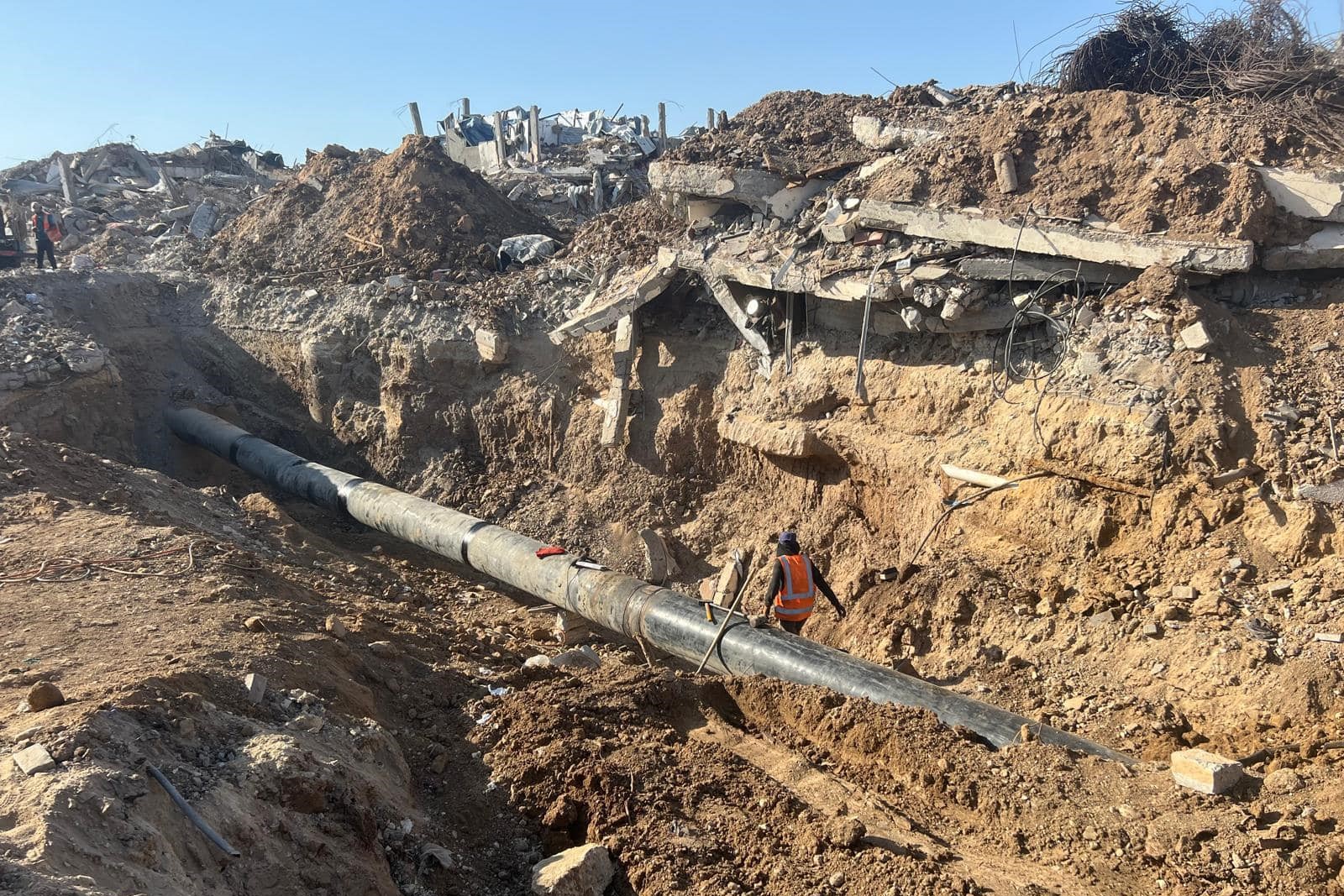
The authority said all five main wastewater treatment plants had ceased operating, while only 18 of the Strip's 74 pumping stations were functioning partially.
More than 80% of water infrastructure has been destroyed, along with approximately 700 kilometers of sewage networks, it said.
The proportion of the population served by sewage networks has consequently fallen from more than 85% to around 45%.
The authority warned that the presence of more than 320,000 soakaway pits poses a serious threat to groundwater contamination, while the continued discharge of untreated wastewater is aggravating marine and environmental pollution, threatening public health and fish stocks.
It also warned that the contamination could contribute to the emergence and spread of microorganisms with increased resistance to antimicrobial treatments.
Over the past three years, dozens of cesspit collapses have been recorded across Gaza, resulting in multiple deaths and injuries.
More than 300,000 unlined soakaway pits are estimated to be located around tents and displacement areas, posing persistent risks to residents.
The cost of emptying and transporting wastewater to dumping sites far from displacement camps has also risen sharply. The shortage of sewage tankers and other machinery, together with the scarcity of lubricants, spare parts and essential maintenance supplies, has made the service increasingly unaffordable. The entry of many of these materials into Gaza remains restricted by Israeli authorities.
As winter approaches, the proliferation of makeshift cesspits has become another daily threat facing displaced Palestinians, adding to the destruction of homes, shortages of clean water and deteriorating shelter conditions.
For families living in tents, the danger is no longer confined to the lack of proper sanitation. It is also beneath their feet, in the contaminated soil and groundwater, and in the uncovered pits surrounding the places where they sleep, eat and try to protect their children.
M.N