By Rami Samara
RAMALLAH, November 1, 2026 (WAFA) —
“How do you recognize a poor person?”
“I recognize them by their teeth. Poor people cannot afford the luxury of taking care of them.”
These two lines are not excerpts from a literary masterpiece or an imagined story. They are part of a real exchange that took place inside an Israeli occupation prison between an interrogator seeking to find reasons to incriminate and imprison others, and a doctor in his seventies who has spent his life searching for ways to treat patients and save lives.
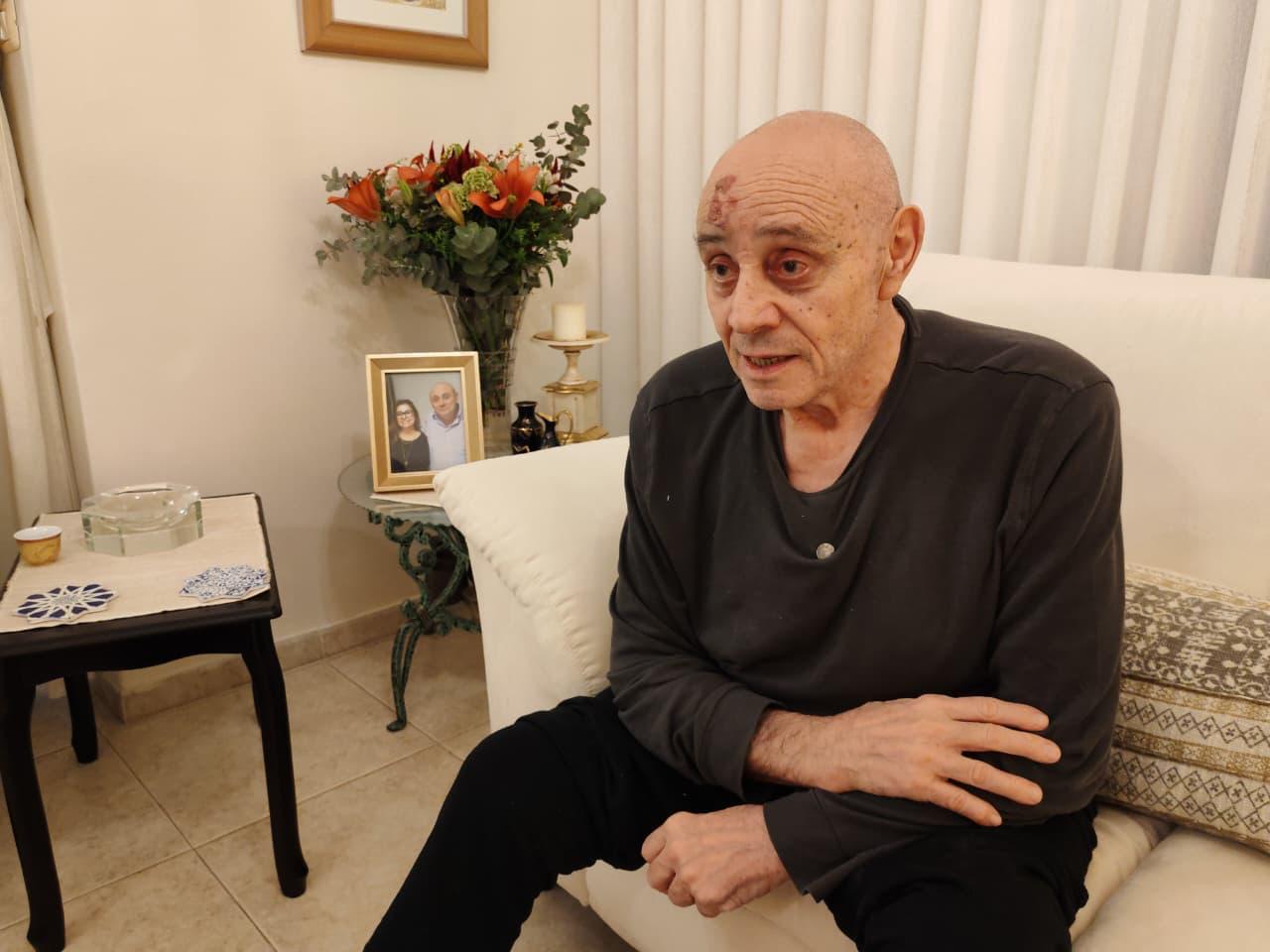
Mazen al-Rantisi, 71, a general practitioner who has devoted 45 years to diagnosing and treating people living in poverty, found himself branded a “security threat” by the Israeli occupation authorities. With no weapon in his possession other than a stethoscope and a prescription pad, he was detained for four months.
“My detention was never based on genuine accusations. It was a reflection of the occupation's obsession, which sees every act of social solidarity as a threat and every humanitarian initiative as a danger that must be eradicated,” al-Rantisi said.
He earned the title “Doctor of the Poor” because he treats those who cannot afford medical care without charging them and provides free voluntary medical services. This, he believes, has not gone unnoticed by an occupation that he says is capable of monitoring virtually everything.
“My detention falls within an effort to dismantle the Palestinian social fabric. The jailer wants Palestinians to believe that they are stripped of human values. The occupation, as a system, seeks to deepen social fragmentation and eradicate anything beautiful from our lives. They want to punish love, criminalize generosity and turn humanity into an accusation,” he said.
Al-Rantisi pointed to the detention of nine other doctors during the same period, arguing that it was no coincidence but rather a clear message of intimidation directed at anyone who considers helping marginalized people and placing humanity above all other considerations.
In Israeli prisons, al-Rantisi said, humanity gives way to sadism, while violence is unleashed without restraint. He likened the prison system to a magnet that attracts psychologically disturbed individuals and people who have been marginalized in their own societies, turning them into jailers who project their psychological complexes and thirst for revenge onto the exhausted bodies of prisoners.
He described a pattern of physical and psychological abuse that included beatings, torture, prolonged restraint in painful and degrading positions, verbal humiliation, raids on prisoners' cells accompanied by tear gas, sleep deprivation and the deliberate deprivation of food, including the provision of poor-quality and insufficient meals as a means of punishment.
“Behind bars, all the other side's supposedly humanitarian masks fall away. Even Israeli medical personnel become part of the systematic machinery of repression. They forget that they are supposed to be angels of mercy and instead turn into devils, indistinguishable from the jailers. They abandon the professional ethics that require them to provide treatment even to an enemy,” he said.
According to al-Rantisi, little consideration is given in prisons to medical emergencies, people with serious or chronic illnesses, or prisoners with disabilities.
Scabies has spread through the prisons without adequate medication to relieve its symptoms. Diabetic prisoners have lost their eyesight, while people with intellectual disabilities have been placed under administrative detention, he said.
For al-Rantisi, the situation goes beyond deliberate medical neglect. He was not merely a witness to these practices but also a victim.
During one transfer from a prison cell to another, he was left handcuffed behind his back under the scorching sun, forced to carry his mattress in that position. He eventually collapsed and remained unconscious until the evening. Prisoners who tried to help him were punished.
He was also denied access to the medication he had brought with him on the night of his detention until a human rights organization intervened during a visit.
On another occasion, after developing tonsillitis, he had to convince a prison doctor that he needed antibiotics. The doctor eventually agreed to provide him with just one blister pack instead of two.
Even obtaining a single pill of psychiatric medication became a daily source of mockery for the prison nurses, who used the opportunity to discredit him before other prisoners by accusing him of taking drugs.
Whenever al-Rantisi appealed for some professional consideration on the grounds that he was a fellow doctor, he was met with torrents of profanity and degrading insults. The aim, he said, was to destroy his standing and dignity. Eventually, he stopped telling prison guards that he was a doctor.
He could conceal his profession to protect his dignity, but he could not hide his age. Nor did being in his seventies spare him from assaults inside Israeli prisons, which continued from the day of his detention until his release.
On October 25, the Israeli occupation court ordered al-Rantisi's release. Yet the hours leading up to his freedom became a final reminder of the treatment he had endured throughout his four months behind bars.
His release journey began before sunrise, when he was transferred from prison to court with his hands cuffed behind his back, his feet shackled and his eyes blindfolded.
He was held for hours in a waiting room measuring no more than six square meters alongside 16 other prisoners. He was then forced to walk a distance of at least one kilometer to the courtroom, still handcuffed, shackled and blindfolded, with his head held down in an unbearable position.
During the transfer, a prison guard violently pulled him, causing him to fall onto his knees before his head struck the concrete floor.
“I heard my head hit the concrete, and I saw something like a flash of light in my eyes. Had my head hit the ground before my knees, I could have suffered a brain hemorrhage,” he recalled.
A nurse approached and asked whether he felt anything. He said no. Four months in detention had taught him that any complaint would only become another occasion for ridicule.
When he was brought before the prison director, the latter noticed the bruise on his forehead and asked about it. Al-Rantisi explained that a guard had deliberately pulled him, causing him to fall.
“You're lying,” the director replied coldly.
Despite the abuse, humiliation and medical neglect, al-Rantisi said his detention failed to extinguish his humanitarian mission or dissuade him from continuing to provide medical care to poor and vulnerable people.
After 45 years of voluntary service, four months in prison were not enough to shake his conviction that healthcare is a right belonging to every human being, regardless of their financial circumstances.
Even behind bars, he continued fulfilling his role. He offered medical advice to fellow prisoners, diagnosed their conditions whenever possible, explained how to manage their illnesses with the limited resources available and provided guidance within the constraints of the prison environment.
During the almost daily raids in which prison guards beat and dragged prisoners across the floor, younger detainees would push the elderly doctor into a corner and stand in front of him as human shields, taking the blows with their own frail bodies.
For al-Rantisi, however, what he gave to others was nothing compared with the appreciation he received in return, a form of gratitude that no amount of money could ever match.
He remembers the beginning of his career in the villages around Ramallah in 1985. Back then, he would return home to the city carrying gifts from the people he had treated: figs, olives and traditional taboon bread brought by patients and visitors.
These simple gestures, he said, were expressions of the genuine affection with which ordinary people had embraced him.
Although his release came with a condition of suspended enforcement, al-Rantisi knows that the occupation authorities could prevent him from continuing his voluntary work, close his private clinic or impose hefty financial fines on him.
But they cannot take away the affection of the ordinary people who have stood by him, nor the smiles they offer whenever they see him.
Those smiles, he says, reveal the very teeth that poor people cannot afford the luxury of taking care of.
For a doctor who has spent 45 years treating people without expecting payment, the exchange that began in an interrogation room has come to symbolize something far greater than the cruelty of imprisonment: the enduring bond between a physician and the people whose suffering he has devoted his life to easing.
M.N