Every time Suja Daghameen prepares to take her three-year-old son to hospital, it is not just his treatment appointment that weighs on her mind. She carries another fear: that he might contract an infection along the way, jeopardising his health or disrupting his treatment.
From the town of as-Samu in the Hebron governorate, Suja begins the journey to Beit Jala Governmental Hospital, where her son has been receiving treatment for leukaemia since June 2026. A journey that should be part of his treatment routine has instead become another source of anxiety, as the closure of iron gates and restrictions on movement make travel difficult and often prolong the journey.
Her son's weakened immune system makes every encounter with other people a source of concern. As she tries to get him to the hospital on time, Suja can do little more than navigate the road and minimise his contact with others, hoping he will reach his appointment without contracting an infection that could further complicate his condition.
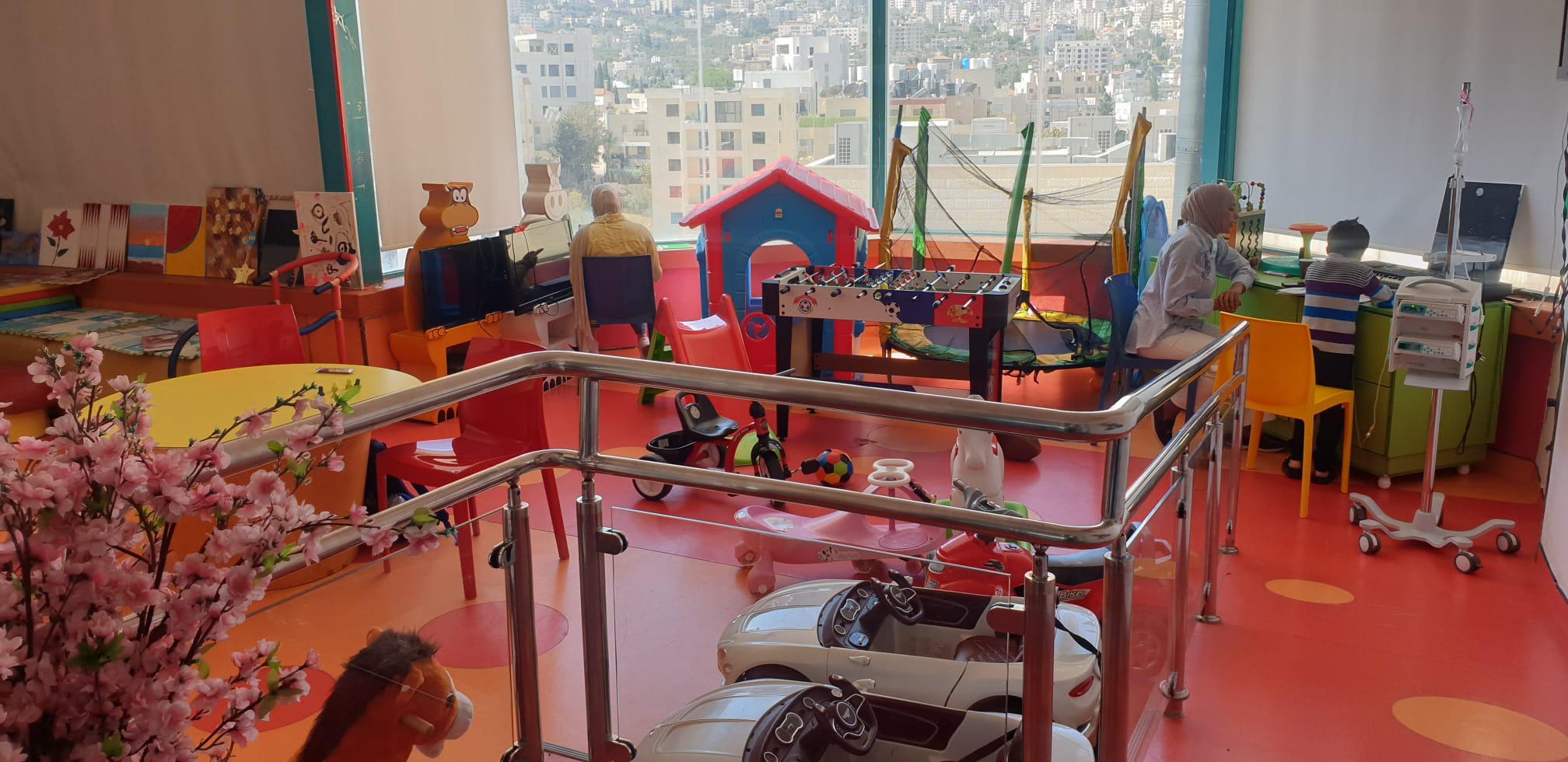
Suja's story is far from unique. At Beit Jala Governmental Hospital, patients with cancer and their families arrive from across the West Bank, each carrying a different story. Their struggles do not begin with a diagnosis, nor do they end with receiving treatment. Between checkpoints and closed gates, shortages of medical resources and mounting pressure on healthcare staff, every hospital visit becomes another journey marked by waiting and uncertainty.
Repeated journeys, with no time to spare
From the town of Tarqumiya in the Hebron governorate, Tuqa Aghreib accompanies her 14-year-old brother, Musab, to the hospital every ten days for treatment for lymphoma, which he was diagnosed with in April 2026.
As the visits have become routine, Tuqa has come to notice not only the difficulties of the journey but also the pressure on the hospital's medical staff, who must attend to growing numbers of patients in need of examinations, diagnosis and treatment.
She describes the staff as cooperative and committed to helping patients, but says their numbers are insufficient given the number of people seeking care. Between reaching the hospital, waiting for their turn and receiving treatment, the family repeats the same journey every ten days, while Musab remains in need of regular follow-up and timely care.
When movement restrictions disrupt continuity of care
Difficulties in accessing treatment extend beyond the distance travelled and the time it takes to reach the hospital. Some specialised medical services are unavailable at Beit Jala Governmental Hospital, forcing patients to travel to other hospitals in different governorates.
Dr Nidal al-Jabrini, medical director of Beit Jala Governmental Hospital and an oncology specialist, says delays in patients' appointments due to checkpoints and movement restrictions are among the main challenges facing the oncology department. He explains that cancer treatment requires continuous follow-up, including examinations, treatment sessions and regular medical reviews.
He adds that some treatments, including radiotherapy, are unavailable at the hospital, making referrals to other governorates necessary. Such referrals bring additional travel and transportation costs for families already struggling with the financial and emotional burdens of the disease.
For patients referred to hospitals in Jerusalem, another obstacle arises: the permit system, which can prevent family members from accompanying them during treatment.
Treatment in Jerusalem, without a loved one