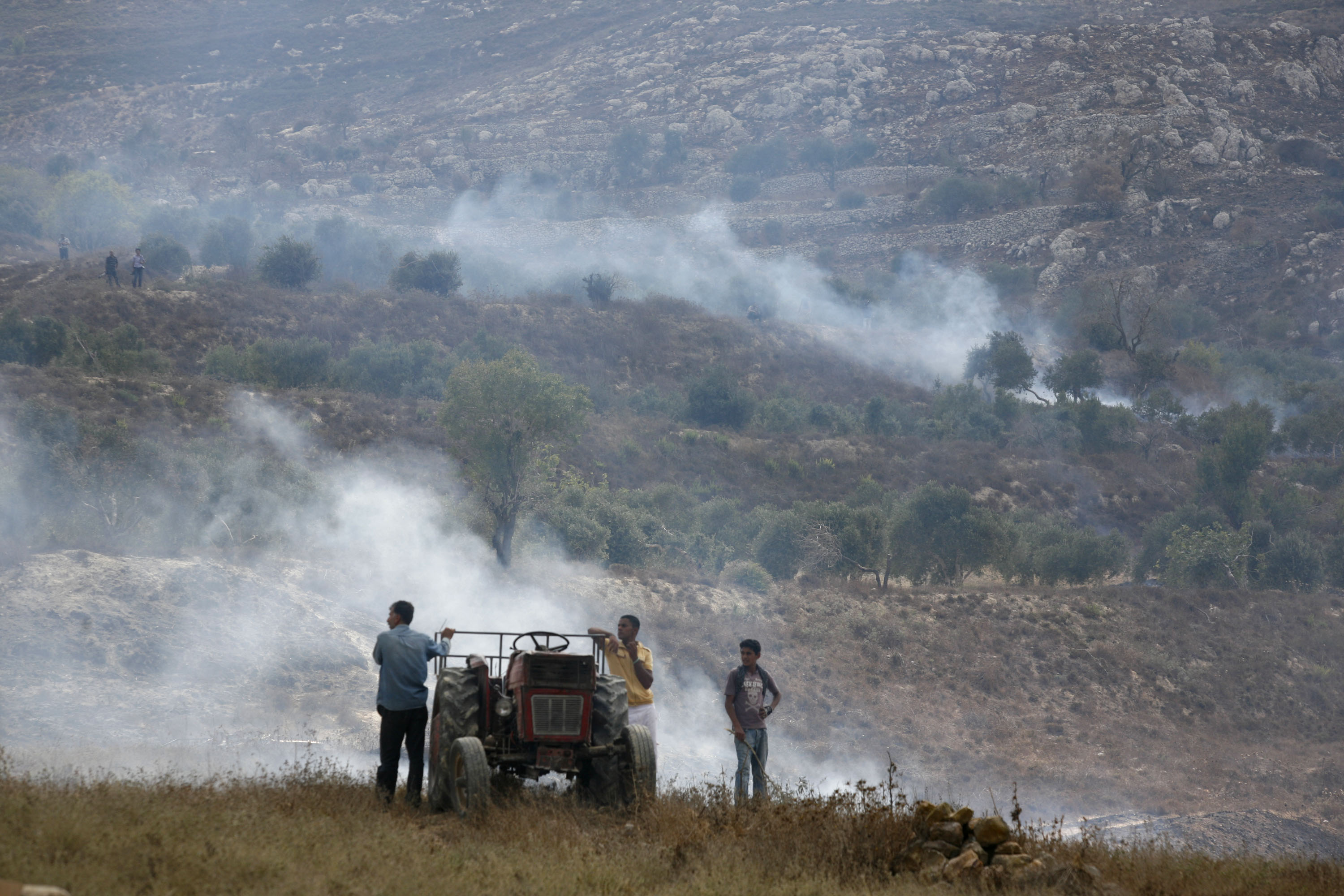
RAMALLAH, November 7, 2026 (WAFA) – The Wall and Settlement Resistance Commission documented 674 attacks by Israeli occupation forces and colonists targeting olive trees and Palestinian farmers across the occupied West Bank, including East Jerusalem, over 37 days between October 1 and November 6, 2026.
According to the commission, colonists carried out 520 attacks, while Israeli occupation forces were responsible for 154, highlighting the escalating targeting of the olive harvest season and the livelihoods of Palestinian farming families.
Nablus recorded the highest number of attacks with 230, followed by Ramallah and al-Bireh with 130, and Salfit with 129. Together, the three governorates accounted for 489 attacks, representing approximately 72.6% of the total.
The commission also documented 87 attacks in Hebron, 41 in Jenin, 30 in Bethlehem, 24 in Qalqilya and three in Jerusalem.
Regarding attacks against farmers, the commission recorded 249 incidents of intimidation and threats, 76 cases of physical assault and beatings, and 43 incidents involving movement restrictions or denial of access to agricultural lands.
Other violations included detentions, gunfire, tear gas and pepper spray attacks, and assaults on international solidarity activists and journalists accompanying farmers. One Palestinian was also killed after succumbing to injuries sustained from colonist gunfire while participating in the olive harvest.
The commission said these practices often begin before farmers reach their lands and continue during harvesting and attempts to transport their crops.
Attacks also targeted olive trees, crops and agricultural equipment. Detailed records documented 91 incidents of olive theft, 37 cases of equipment theft or confiscation, 20 incidents of tree damage and 18 cases of cutting down and uprooting trees.
The commission estimated that approximately 2,974 olive trees had been damaged, noting that specific figures were unavailable for some other incidents. The losses extend beyond the current harvest, affecting agricultural equipment and mature trees that provide farmers with income for years to come.
A comparison of the past four olive harvest seasons reveals a sharp increase in attacks. The commission recorded 333 attacks in 2023, 407 in 2024, more than 441 in 2025, and 674 during the period covered by its 2026 assessment.
The 2026 figure represents an increase of approximately 102% compared with 2023 and 66% compared with 2024, despite the current assessment covering a shorter period than some previous seasons.
The commission called for effective international intervention to protect Palestinian farmers, guarantee their safe access to agricultural lands and ensure accountability for those responsible for the attacks.
M.N