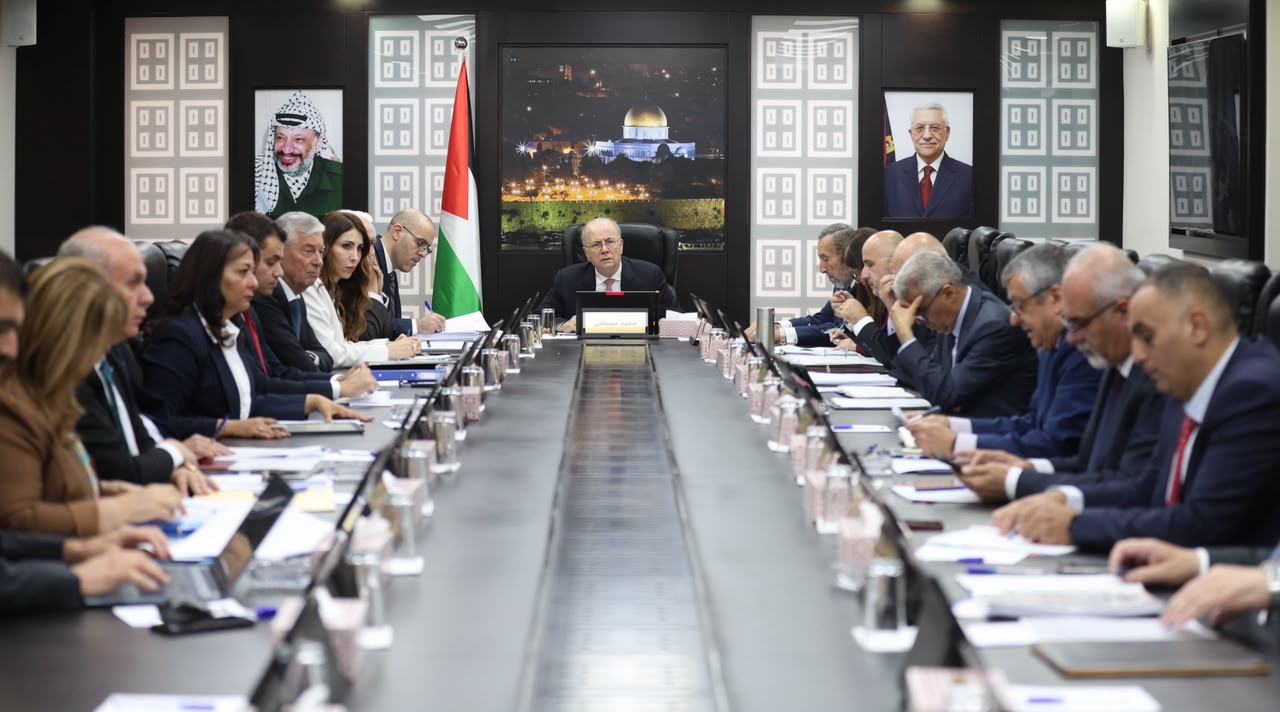
RAMALLAH, September 24, 2026 (WAFA) – Prime Minister Mohammad Mustafa stressed that the urgent priority for the people of the Gaza Strip is to translate political frameworks and international commitments into tangible improvements that alleviate their suffering. He emphasized the need to move from humanitarian relief to early recovery, restore essential services, revive the economy, and reunify the homeland.
Mustafa made the remarks during his virtual participation on Wednesday evening in a high-level roundtable at the United Nations General Assembly on early recovery in Gaza. He stressed that the ultimate objective is to preserve the unity of Palestinian territory, a single political and legal system, and effective institutions capable of serving the Palestinian people in both Gaza and the West Bank.
In his remarks, Mustafa said humanitarian assistance remains indispensable after three years of immense suffering and destruction, but is no longer sufficient on its own, stressing the need to urgently advance early recovery, restore basic services, revive the economy, and achieve reunification.
He reaffirmed the Palestinian Authority’s commitment to constructive engagement with the Board of Peace and support for the transition towards Phase II, stressing the importance of strengthening coordination, clarifying responsibilities, and improving the effectiveness of existing arrangements.
Mustafa also stressed that Palestinian institutions have never ceased fulfilling their responsibilities towards the people of Gaza. He said the Palestinian Government continues to finance and support essential services in the Strip despite the severe fiscal crisis, while the Ministry of Social Development continues providing humanitarian and social-protection assistance, and the Ministry of Public Works and Housing has overseen the removal of more than 1.3 million tons of debris, the rehabilitation of vital roads, and damaged housing units.
He further noted that the Ministry of Education has launched the new school year in Gaza, establishing 700 schools and temporary learning spaces, alongside virtual education, enabling around half a million children to resume their education.
Mustafa emphasized the need for stronger coordination and complementarity among all stakeholders supporting Gaza’s recovery, stressing that the priority now is not to create additional mechanisms, but to connect and scale up existing initiatives and translate available resources, expertise, and financing into visible improvements in the daily lives of Palestinians in Gaza.
He concluded by stressing that the Palestinian Government is ready to play its full role, continue providing services and advancing its reform program, while engaging constructively with international partners. He emphasized that the people of Gaza cannot wait for every political and operational issue to be resolved before recovery begins, stressing that what is needed now is coordination, implementation, and delivery to restore normal life and dignity, rebuild Palestinian institutions, and preserve the unity of Gaza and the West Bank.
K.T