


RAMALLAH, October 27, 2026 (WAFA) – The Colonization and Wall Resistance Commission (CWRC) on Tuesday documented 13 Israeli attacks against olive harvesters across the occupied West Bank in just 12 hours (6:00 a.m. and 6:00 p.m.).
The CWRC said the attacks included physically assaulting and injuring farmers and foreign solidarity activists, stealing olive harvest and equipment, vehicle vandalism, and denying farmers access to their groves, and coincided with the establishment of a new colonial outpost in a farmer’s olive grove.
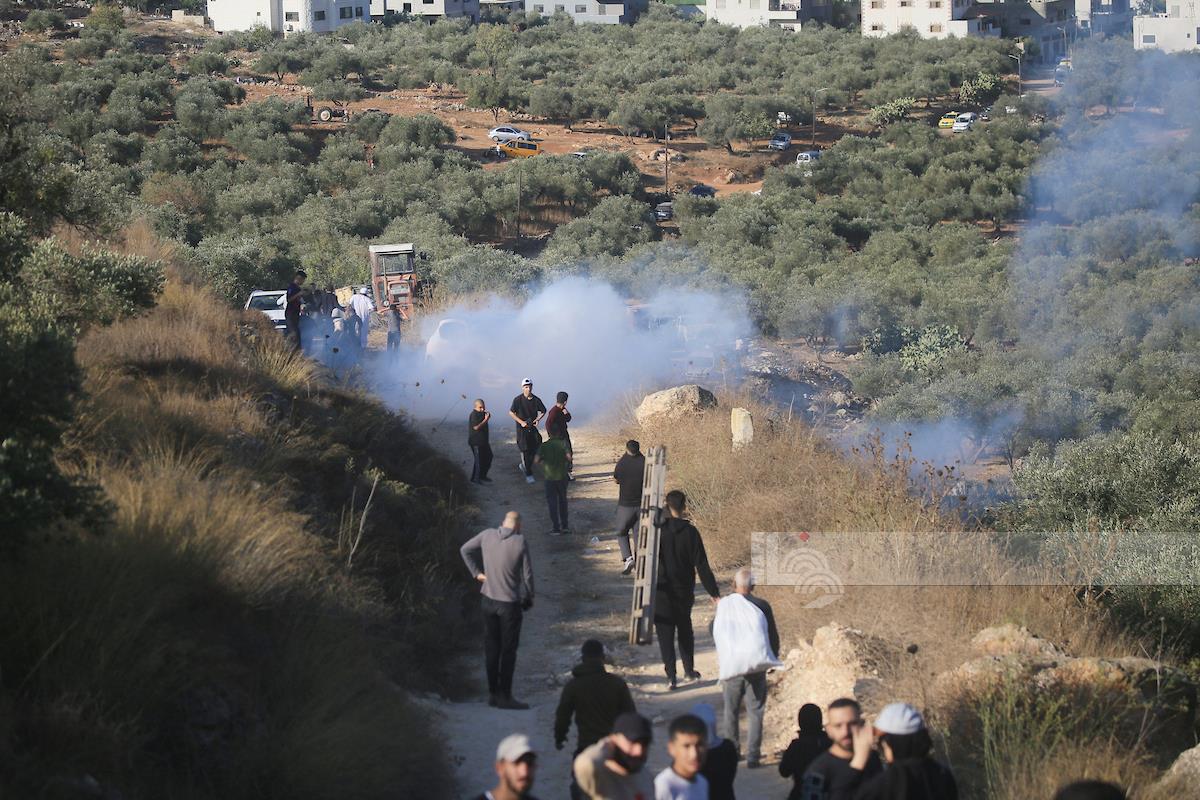
In the Ramallah and al-Bireh governorate, the CWRC noted that the occupation forces and colonists detained dozens of farmers and foreign solidarity activists in the eastern part of Turmus Ayya, preventing them from reaching their orchards. The affected lands included orchards are located only tens of meters from homes in the town. They also vandalized vehicles in the area.
In Sinjil town, a colonist released his livestock onto agricultural land, as farmers were still denied access to vast areas of their lands.
In al-Mughayyir village, colonists broke into a farmer’s agricultural land and carried out provocative tours near another’s home, while occupation bulldozers continued leveling land in the Sahl al-Rafid area.
In the al-Hara'iq area of Deir Jarir village, colonists, under army protection, attacked and pepper-sprayed olive pickers, causing a farmer to suffocate from excessive pepper-spray inhalation and inflicting deep wounds to an elderly man’s hand. The gun-toting soldiers detained a young man after assaulting him. Colonists also attacked farmers on the outskirts of Ein Yabrud, attempting to force them to abandon their fields and releasing their livestock into them.
In Beit Ur al-Tahta village, colonists, under military protection, beat up farmers and foreign solidarity activists, causing several to suffer excessive tear gas inhalation. In the course of the assault, soldiers fired tear gas canisters and live ammunition, forcing some solidarity activists to leave while detaining others.
In the Nablus governorate, colonists attacked olive pickers in the Wadi al-Shami area of Asira al-Qibliya village, smashed a vehicle and forced farmers to leave their lands.
In Madama village, a colonist forced four families to leave their olive orchards at gun point. Colonists also attacked farmers in the Khallat Mahra area of Tell town, adjacent to the Havat Gilad colony, and stole olive harvest. In the al-Thahra area of Beita town, colonists beat farmers and stole their crops and harvesting nets.
In Burqa village, colonists severely beat a 50-year-old farmer while he was harvesting olives, prompting the Palestinian Red Crescent Society (PRCS) crews to transfer him to hospital.
In the Salfit governorate, colonists established a new outpost in the Wadi al-Ahmar area between the villages of Yasuf and Marda, imperiling farmer’s ability to access and cultivate their lands.
In the Jenin governorate, occupation forces prevented farmers from accessing their lands in the Barta'a area, isolated by Israel’s apartheid wall.
The CWRC stressed that the ongoing attacks on the olive harvest season reveal an increasingly close connection between violence targeting farmers and attempts to impose new colonial fait accompli. It noted that assaults, detentions and crop thefts are taking place alongside land leveling, the establishment of colonial outposts and restrictions on access to fields.
It explained that establishing a new outpost amid olive groves between Yasuf and Marda, accompanied by the ongoing razing of cultivated land in the Sahl al-Rafid area, indicates that attacks on the ground are being used as tools to expand control over land and alter its use.
The CWRC emphasized that targeting farmers even on land adjacent to their homes, detaining and assaulting them under army protection reflects a policy aimed at undermining the Palestinian agricultural sector and creating conditions that force landowners to leave.
It warned that the continuation of these practices threatens to turn seasonal restrictions on olive harvesting into permanent exclusion from land and livelihoods, while calling on the international community to intervene to halt the attacks, hold perpetrators accountable, and ensure the protection of farmers and their right to safe access to their lands.
K.F.


