RAMALLAH, August 19, 2026 (WAFA) — Israeli occupation authorities have issued a new declaration to seize approximately 1,152 dunams of Palestinian land in the towns of Sinjil and al-Laban al-Sharqiya and the village of Qaryut, in the occupied West Bank, under the designation of “state property,” according to the Wall and Settlement Resistance Commission.
In a statement issued on Wednesday, the commission said the declaration, numbered H.K./04/26 and dated August 18, 2026, was issued by the Israeli official responsible for government property in the West Bank, pursuant to Military Order No. 59 of 1967.
The declaration gives landowners 45 days to file objections before the military objections committee at Ofer military camp, an Israeli occupation mechanism that, according to the commission, does not provide Palestinian landowners with independent judicial safeguards.
The commission said the designation of the land as “state property” does not change the nature of the measure, describing it as a mechanism for taking control of Palestinian land and subsequently allocating it to the Israeli colonial project.
Under the declaration, the targeted land can be placed under the control of the Israeli official responsible for government property, paving the way for its incorporation into planning areas and zones of influence, road construction, infrastructure development and future colonial expansion.
According to commission data, Israeli occupation authorities have declared more than 28,000 dunams of Palestinian land as “state land” over the past three years, with the overwhelming majority of the seizures occurring in 2024, when more than 24,000 dunams were targeted.
The commission said the escalation demonstrates that Israel has turned “state land” declarations into a central policy for reallocating Palestinian land to settlements and outposts, creating geographic links between them and establishing extensive facts on the ground aimed at facilitating annexation.
The targeted land lies in a strategic area on both sides of Route 60, between the Israeli settlements of Shilo to the east and Ma'ale Levona to the west, and around the outposts of Givat Har'el and Givat Haro'eh.
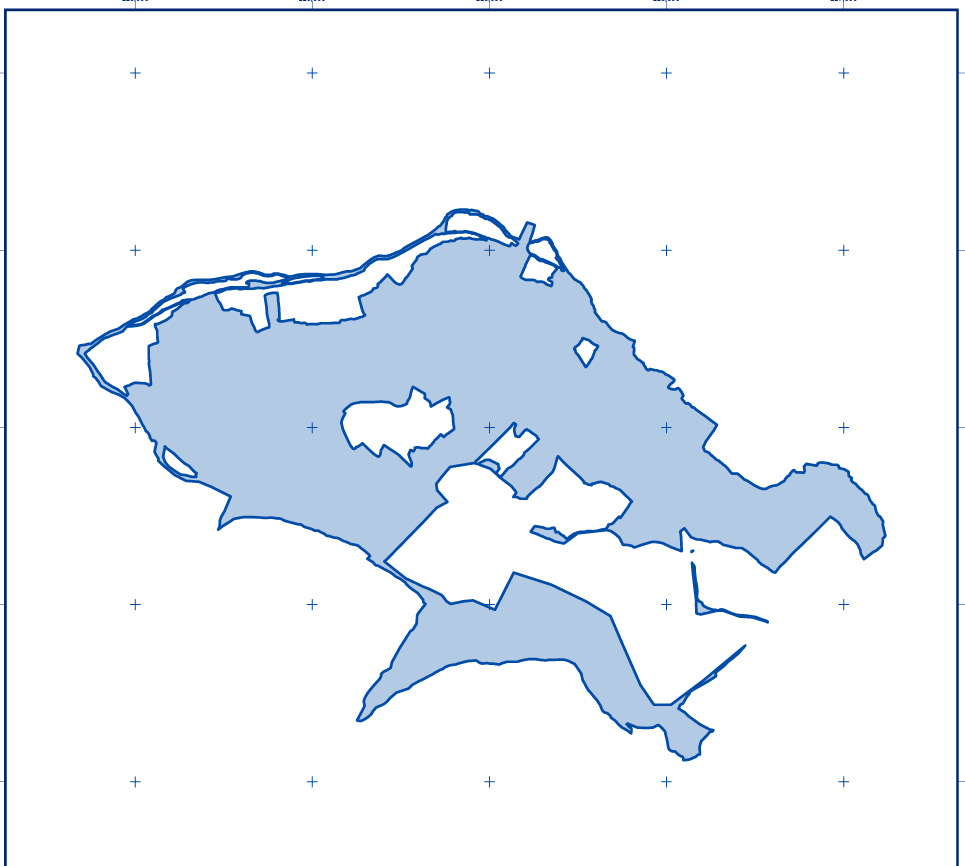
According to the commission, the map accompanying the declaration shows that the targeted area has been delineated in a way that would connect the colonial sites and expand Israeli control over the hills and agricultural lands surrounding Sinjil, al-Laban al-Sharqiya and Qaryut.
The commission stressed that these measures should not be viewed as isolated decisions, but as successive stages of a broader process: establishing an outpost on the ground, adopting a government decision to regularize its status, declaring surrounding Palestinian lands “state property,” establishing a zone of influence, and subsequently preparing structural plans, allocating budgets, constructing roads and infrastructure, and marketing colonial housing units.
The commission warned of the broader geopolitical implications of the declaration, saying it seeks to establish a continuous colonial corridor within what is known as the “Shilo bloc,” extending from Ma'ale Levona in the west through Karmi Oz and surrounding outposts to the settlements of Eli and Shilo in the east.
Such an expansion threatens large areas of agricultural and grazing land, further restricting Palestinians' access to their property and potentially facilitating colonist attacks, the closure of agricultural roads, and the construction of fences and gates.
The commission noted that the consequences would extend beyond the area formally declared “state property,” as its incorporation into a colonial zone would affect surrounding Palestinian lands, isolate portions of them and make access and agricultural use increasingly difficult.
Commission head Mu'ayyad Shaaban said the new declaration demonstrates that the Israeli government is no longer merely protecting colonial outposts established by colonists, but is working to transform them into permanent settlements through an integrated system of military, administrative and planning measures.
He described the developments around Sinjil, al-Laban al-Sharqiya and Qaryut as a clear example of the use of so-called “state property” declarations as a tool to take control of Palestinian land and reshape its geography in favor of the Israeli colonial project.
M.N