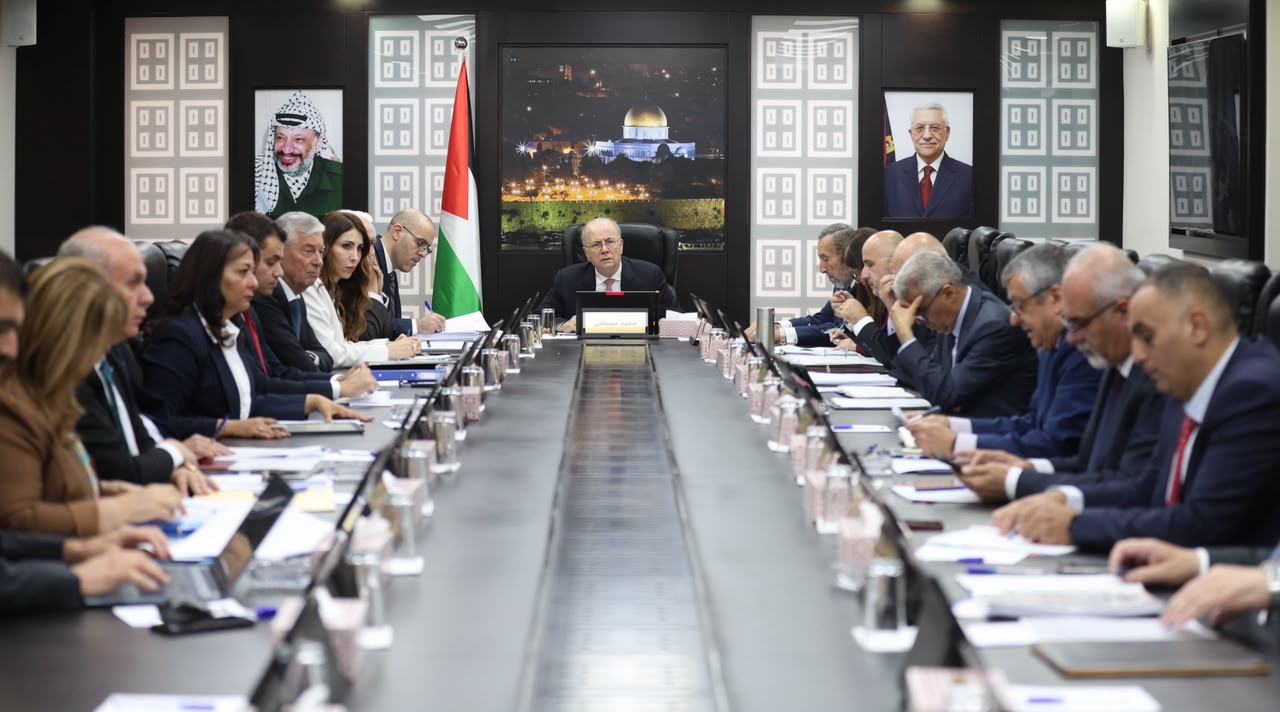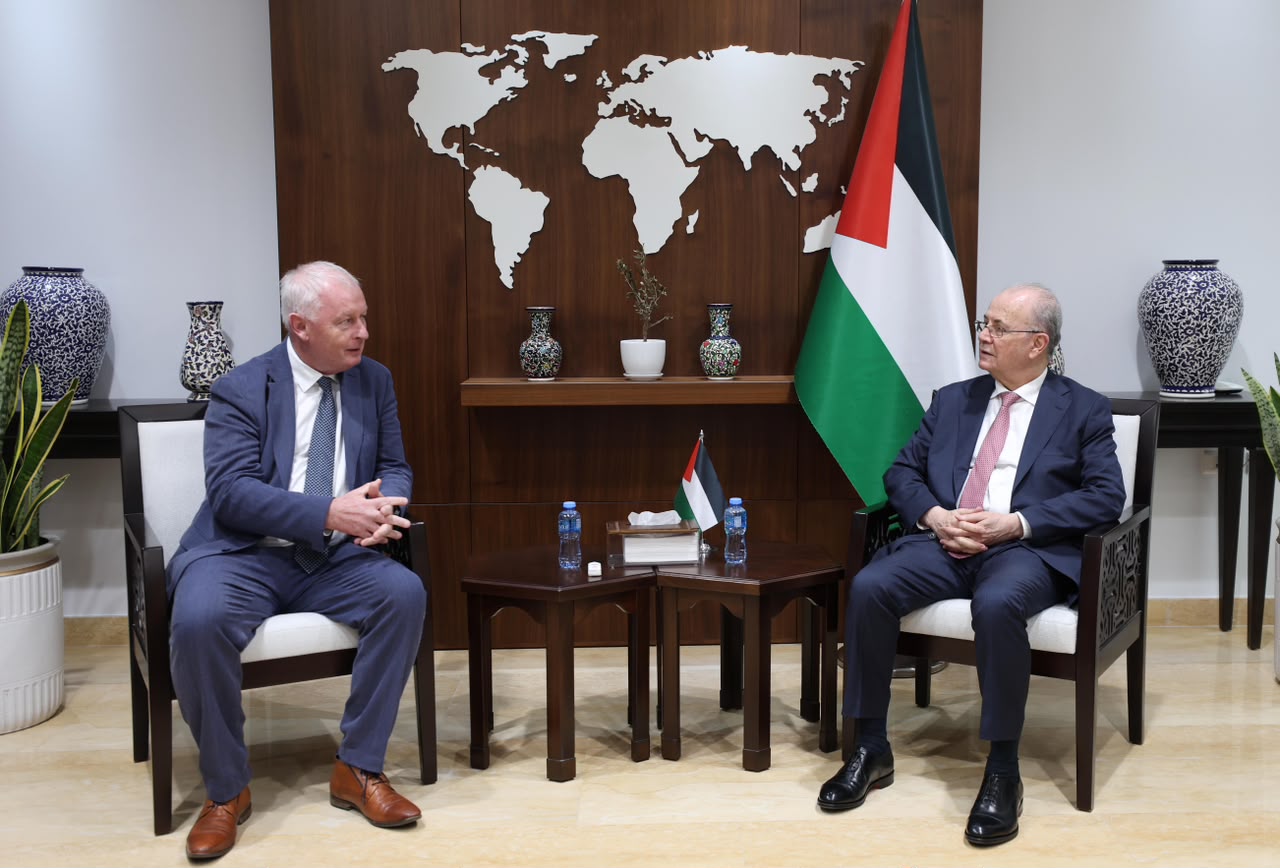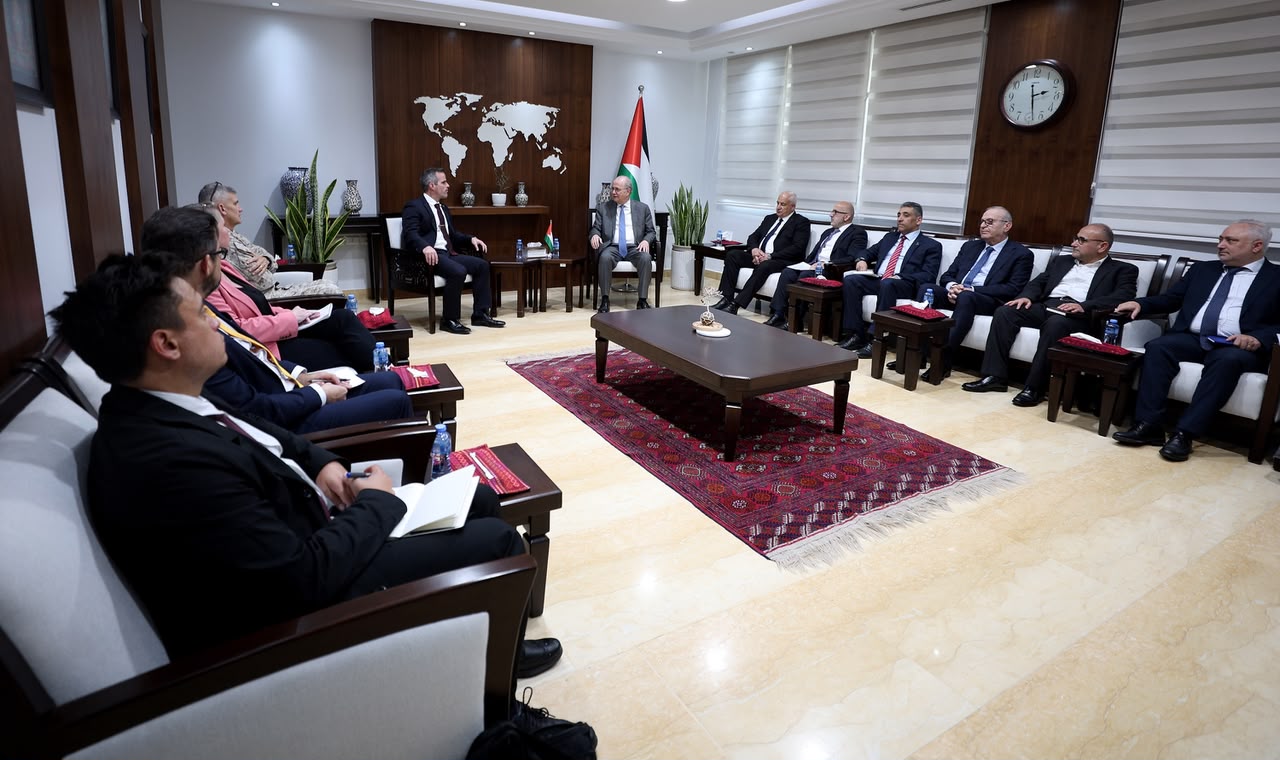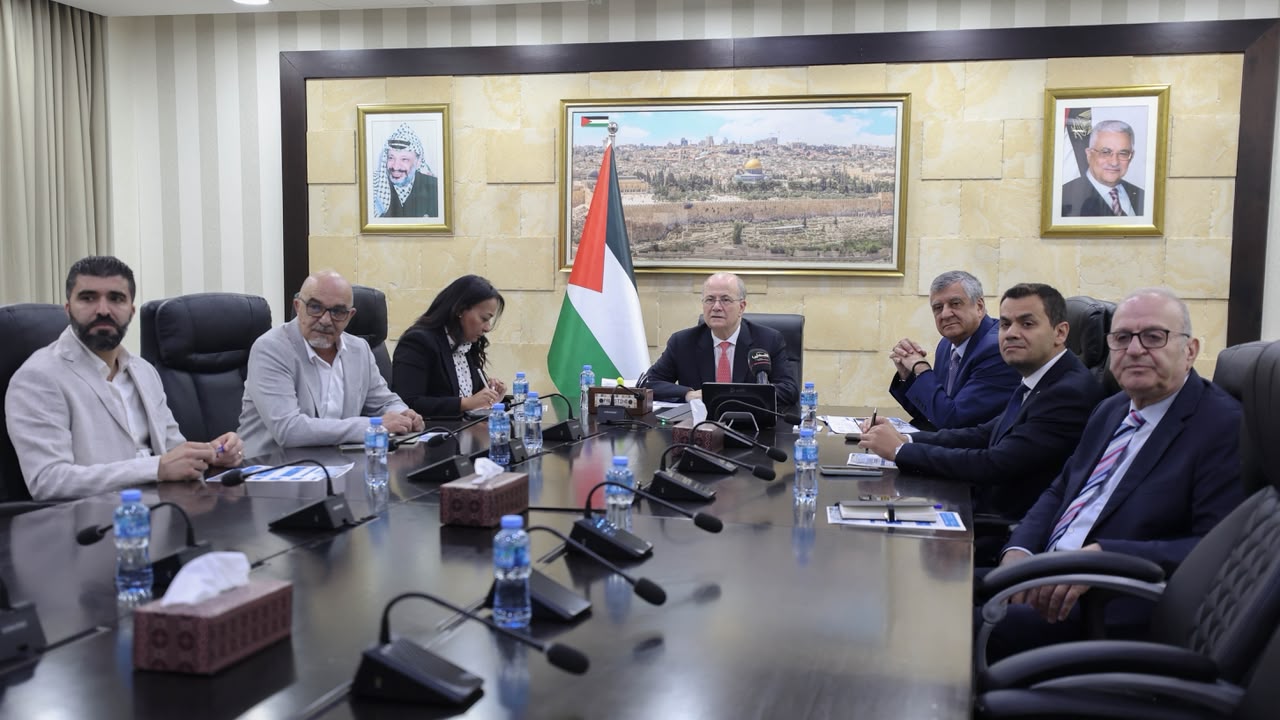
RAMALLAH, August 5, 2026 (WAFA) — Prime Minister Mohammad Mustafa affirmed that all efforts are being made to improve the political, humanitarian, security, and reconstruction conditions in the Gaza Strip, stressing the importance of partnership and collective action to achieve the desired goals, serve Gaza’s people, and ease their suffering as much as possible.
Speaking during a virtual tour on Wednesday of several projects being implemented in Gaza through a partnership between the Palestinian government and the United Nations Development Programme (UNDP), Mustafa, on behalf of President Mahmoud Abbas and the government, expressed appreciation to all those working to improve living conditions for Palestinians in Gaza and provide better services on the path toward recovery and reconstruction.
He highlighted the partnership between the Palestinian government, UNDP, United Nations agencies, and organizations operating in the Gaza Strip.
The virtual tour was attended by Minister of Public Works and Housing Ahed Bseiso, Minister of Communications and Digital Economy Abdul Razzaq Natsheh, Minister of Social Development Samah Hamad, UNDP Special Representative Jako Sellars, and UNDP Assistant Special Representative Sufian Mchacha.
The tour included several key recovery projects, including the Mu’adh water well, part of a program to rehabilitate and maintain water wells across Gaza. With a production capacity of around 60 cubic meters per hour, the well provides water to approximately 18,000 people, helping reduce reliance on water tankers and ensuring more sustainable access to water. The project is being implemented by UNDP in partnership with the Palestinian Water Authority and the Coastal Municipalities Water Utility.
The delegation also visited a rubble management site in central Gaza, one of five locations dedicated to collecting, processing, and recycling rubble for use in temporary housing foundations, road paving, and infrastructure rehabilitation. The initiative contributes to reopening roads, restoring access to vital services, particularly healthcare and education, and creating employment opportunities.
The rubble management cluster, co-chaired by UNDP, works in coordination with the Ministry of Public Works and Housing to identify priority areas for debris removal across Gaza.
The war has left behind more than 61 million tons of rubble, obstructing roads, limiting access to hospitals and schools, and creating environmental and public safety risks. Rubble removal is considered a key first step in early recovery efforts, paving the way for the rehabilitation of essential services and various sectors.
The program’s daily capacity reaches approximately 5,000 tons of rubble. So far, nearly 720,000 tons have been collected, with more than 250,000 tons recycled for road construction and preparing shelter sites.
The tour also included a visit to Deir al-Balah, where local elections were held—the first municipal elections in Gaza in more than two decades—serving around 400,000 residents. The municipality’s 100-day recovery plan has achieved progress in areas including rubble removal, solid waste management, water and sanitation services, strengthening local governance, infrastructure rehabilitation, job creation, and economic recovery.
The plan has also helped restore essential services and enhance municipal capacities, highlighting the role of legitimate local institutions in leading recovery and stabilization efforts.
In the energy sector, the delegation visited the western electricity substation, which receives power from the Gaza power plant. The Energy Authority has supplied Gaza with essential materials, including more than 650 solar energy systems with storage capacity, ready for shipment, as well as $20 million worth of electrical equipment for transmission and distribution networks, including transformers, cables, and generators.
A rehabilitation project for the western Gaza substation and distribution networks is also underway in cooperation with UNDP and funded by a $6 million Norwegian grant. The project aims to enable the transfer of 20 megawatts from the Gaza power plant and restore stable electricity supplies to 26 vital facilities in central Gaza, including hospitals.
The tour further included a visit to Firas Market in Gaza City, where waste management operations are being carried out in cooperation with the Ministry of Local Government and with UNDP support. Discussions focused on waste collection, temporary transfer sites, and pest control measures.
The removal of accumulated waste from the market is nearing completion, with more than 75% of the waste transferred to the environmentally equipped Abu Jarad site. Efforts continue to remove around 300,000 cubic meters of waste that accumulated during the war, reaching heights of up to 13 meters in some areas.
These operations aim to reduce environmental and health risks, enable merchants to return to their businesses, restore livelihoods, and revive economic activity in the historic market.
The tour also included a visit to a project supporting the recovery and empowerment of Gaza’s information technology sector. The initiative provides workspaces for technology companies that lost their offices during the war and supports startups.
Through UNDP, in cooperation with the Ministry of Communications and Information Technology, the Ministry of National Economy, the Ministry of Industry, and the Palestinian Information Technology Association (PITA), ten freelance work centers have been supported across the Gaza Strip.
Y.S