By: Maysa Omar
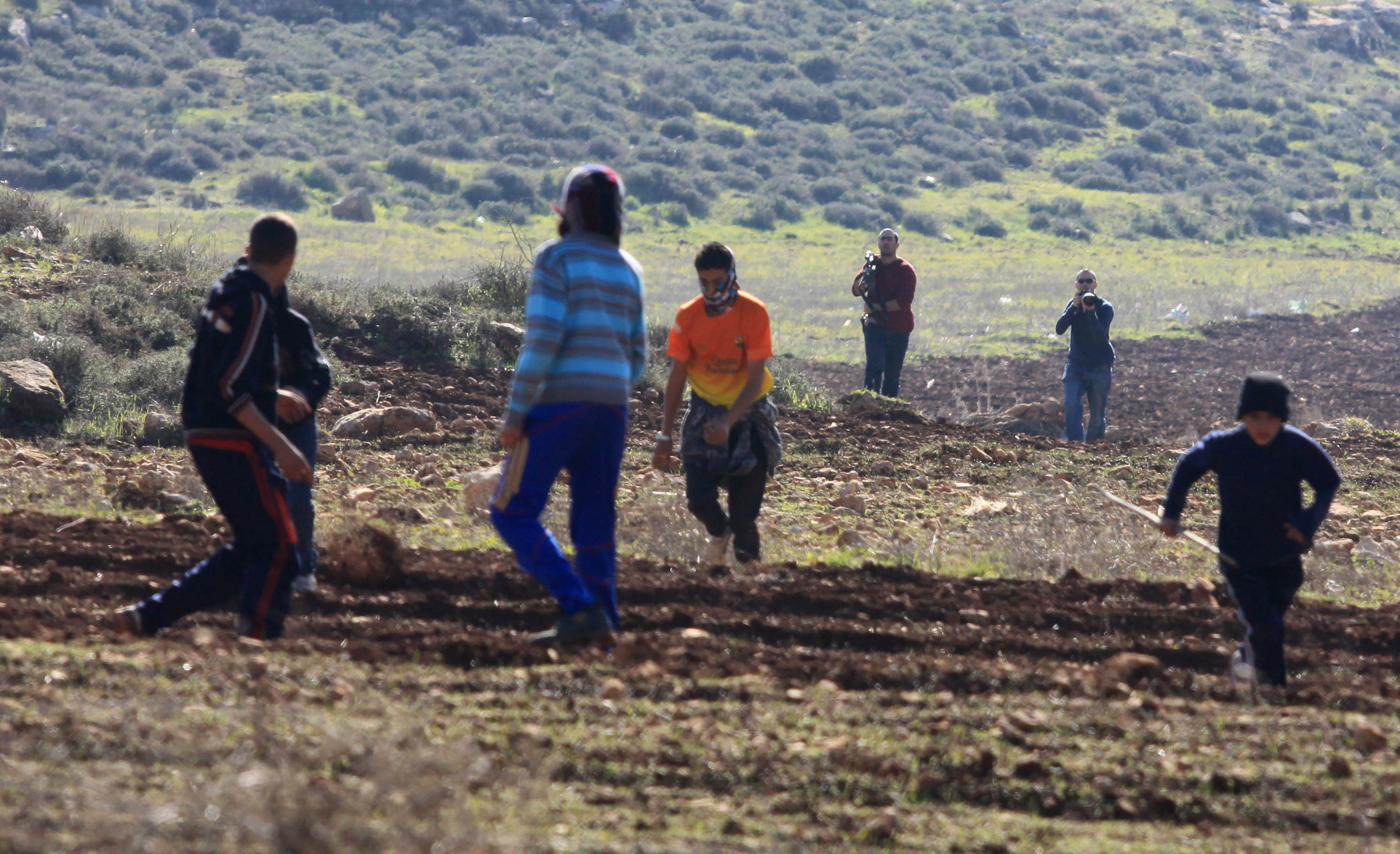
QALQILIYA, August 3, 2026 (WAFA) – Far’ata village, located east of Qalqiliya Governorate, has witnessed a significant escalation in colonists’ attacks since the beginning of the year, with ongoing assaults targeting Palestinian residents, their lands, and property in an attempt to impose a new reality and push them to leave their lands.
Speaking to WAFA, resident Mohammed Shana’a said he had purchased a plot of land in the eastern part of the village with the intention of building on it. However, the escalation of colonist attacks prevented him from doing so, forcing him to put the land up for sale after accessing it became increasingly dangerous due to ongoing colonists’ attacks targeting anyone present in the area.
The attacks are not limited to landowners seeking to build on their plots but also extend to farmers who rely on their lands as a primary source of livelihood.
Farmer Abdul Muati Rizq described his suffering as a result of colonist attacks, explaining that his two-dunum plot of land was a primary source of livelihood for his family through vegetable cultivation. However, the escalation of attacks and fear of being targeted while accessing the land or harvesting crops forced him to significantly scale back his agricultural activity there.
Resident Hijazi Yameen said residents’ homes have also become direct targets of colonist attacks, noting that his house has repeatedly been subjected to stone-throwing and waste dumping, causing fear and anxiety among his family members, calling for protection for residents and an end to these attacks.
Member of Far’ata village council Rula Abdel Aziz told WAFA that attacks by colonists from the Havat Gilad and Yitzhar colonies, illegally built on residents’ lands east of the village, have seen an unprecedented escalation since the beginning of the year. She explained that the close proximity of the two colonies to the village, located only 200 to 300 meters away, leaves residents under constant threat.
She added that around 400 attacks were carried out against the village since the beginning of the year, with July witnessing the highest number at 40 attacks, compared with around 30 attacks in June.
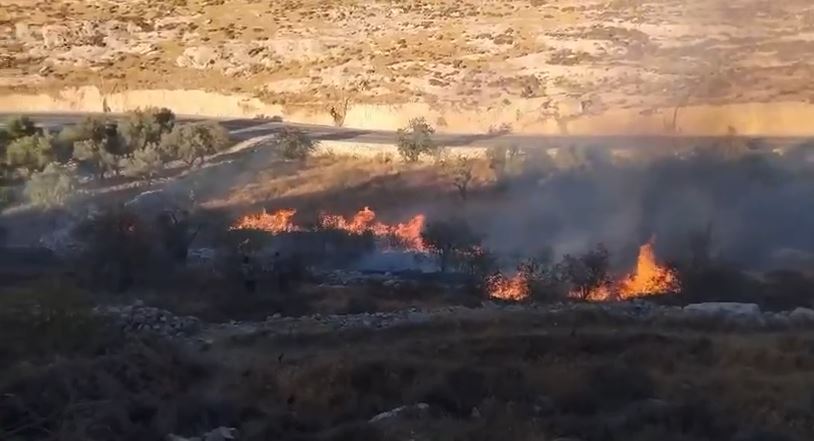
She said the attacks resulted in the seizure of around 300 dunums of village land by colonists, the bulldozing or burning of another 150 dunums, most of which were planted with olive trees, the burning of 20 vehicles, damage to around 50 homes and facilities, and 40 direct attacks against residents, including stone-throwing and gunfire.
Far’ata village council member Rula Abdel Aziz said the attacks have concentrated on the eastern and southern areas of the village, where the Abu al-Joud shrine is located, noting that colonists claim ownership of the site and regularly perform religious rituals there. She added that colonists have installed caravans, sheds, and livestock pens in the area, while also erecting colonial tents in the southern part of the village, preventing around 35 families from accessing and cultivating their lands.
She added that colonists have employed a range of intimidation tactics against residents, including placing dead pigs outside homes and stealing electricity from the village's power network to provide electricity to the lands they have seized.
She further explained that colonists recently brought in concrete blocks as part of preparations to install an agricultural gate, a move that would impose further restrictions on residents' access to their lands.
Abdel Aziz stressed that the attacks are no longer aimed solely at damaging property, but at forcing Palestinian residents off their land by preventing them from cultivating their fields and grazing their livestock, thereby paving the way for its seizure and the expansion of colonial activity. She added that the newly established colonial outposts form part of the Havat Gilad colony's ongoing expansion policy.
Far’ata village lies east of Qalqiliya Governorate, bordered by the villages of Immatin to the north, Jit to the south, and Awarta and Osarin, in Nablus Governorate, to the southeast.
Home to around 1,200 residents, the village spans approximately 1,760 dunums. Its proximity to several colonial outposts has left it increasingly vulnerable to escalating attacks by colonists.
T.R.