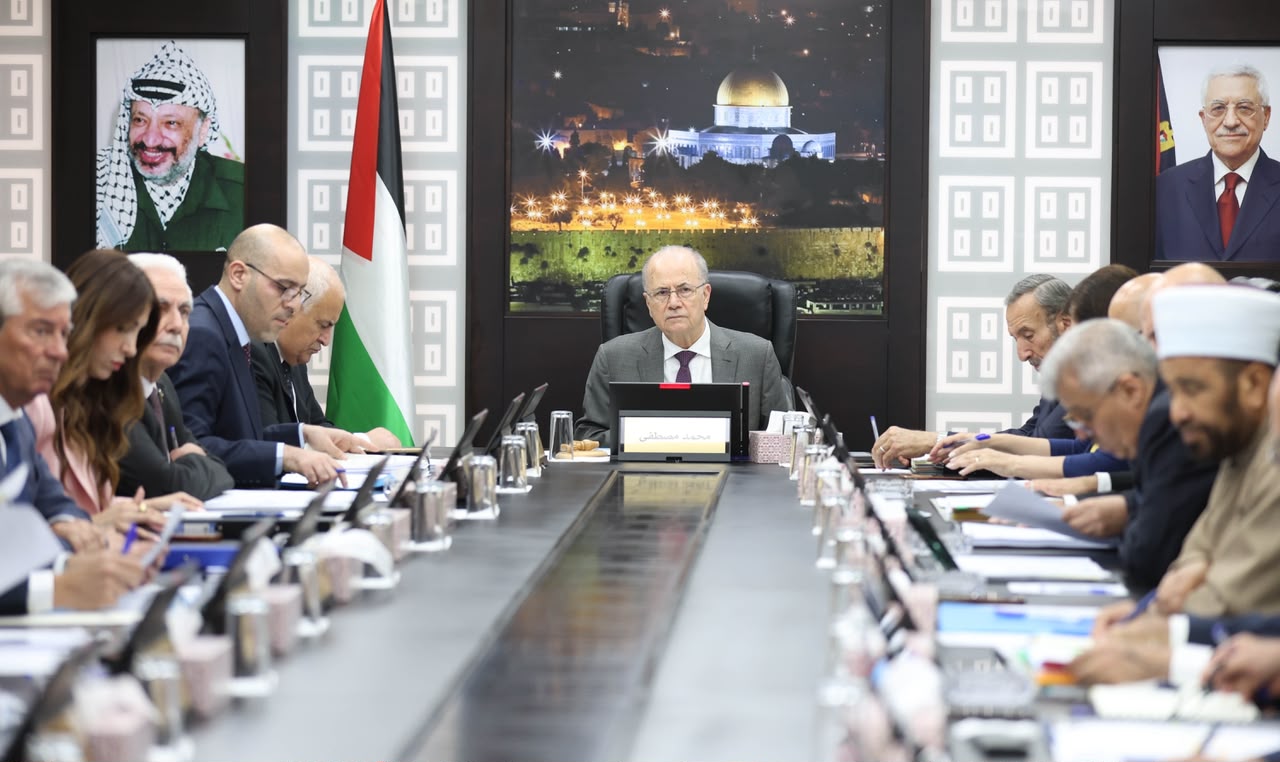
RAMALLAH, September 22, 2026 (WAFA) - Prime Minister Mohammad Mustafa opened the Cabinet’s weekly meeting today, Tuesday, briefing ministers on the intensive political engagement with international partners on the sidelines of the United Nations General Assembly meetings. This included President Mahmoud Abbas’s participation through a recorded address to the General Assembly, as well as the Prime Minister’s participation via video conference in two important meetings aimed at advancing efforts to realize the State of Palestine through the meetings of the Global Alliance, as well as a dedicated meeting on recovery and reconstruction in Gaza, to be attended by more than 20 countries and co-chaired by Egypt, Germany, France and the European Union, in addition to ministerial participation in other international meetings.
In light of the severe suffering and extreme poverty faced by the people of the Gaza Strip, with unemployment exceeding 85%, the Cabinet warned of the declining activities of a number of relief organizations, which attributed the decline to funding shortages and obstacles imposed by the Israeli occupation. The Cabinet renewed its support for a UN recommendation to adopt a comprehensive recovery plan for the Gaza Strip based on coordinating international assistance, thereby contributing to economic recovery and improving living conditions.
As the Palestinian government launches the new school year in the Gaza Strip, the Cabinet called for greater international pressure on the Israeli occupation to lift restrictions on the entry of textbooks, stationery, school desks and other educational supplies. This comes as 98% of school buildings have been partially or completely damaged as a result of Israeli attacks. In the West Bank including Jerusalem, attacks by Israeli occupation forces and settlers, movement restrictions, school closures and the financial crisis continue to disrupt the regular delivery of education.
Meanwhile, the Cabinet received a briefing from the Minister of Finance on the mounting financial difficulties resulting from the continued withholding by the Israeli occupation of clearance revenues for the 17th consecutive month. At the same time, the government, through the Ministry of Finance, continues to examine all possible measures and steps to improve the conditions of public employees and provide whatever financial resources are available to ensure the delivery of services to the Palestinian people and maintain the resilience of our national institutions.
The Cabinet also approved increasing the quantities procured of medicines used for kidney transplants, chronic diseases, blood disorders and thalassemia, as well as a biological medicine for rheumatism and another for neurological conditions.
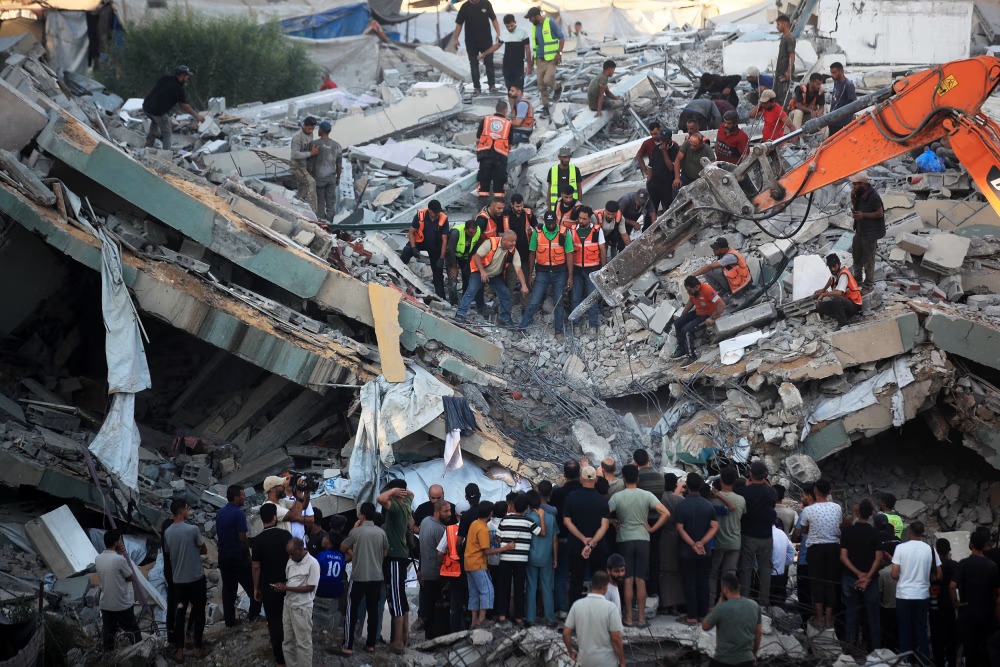
In another development, the Minister of Public Works and Housing briefed the Cabinet on efforts to address the risk posed by buildings at risk of collapse in the Gaza Strip. He noted that approximately 1,000 buildings require urgent evacuation, while more than 5,000 buildings have been affected to varying degrees. Some require complete or partial demolition, while others require structural reinforcement or support.
He explained that the Ministry is working in coordination with a number of partners to consolidate and verify data, determine intervention priorities, and take the necessary measures concerning buildings that pose a risk to citizens. These measures include evacuations, securing shelter solutions, removing dangerous buildings and the resulting debris, particularly as winter approaches, despite Israeli occupation restrictions, limited resources, and shortages of personnel, machinery, equipment and fuel.
The Cabinet also adopted the National Policy for the Protection of Children in the Digital Environment and formed a committee to prepare and draft a proposed regulation in coordination with all relevant partners, particularly in light of the growing risks associated with the digital environment, including blackmail, bullying, sexual and financial exploitation, unsafe communication with strangers and other risks that require greater awareness and effective protection mechanisms.
The Cabinet also approved the renewal of the maintenance contract for the biometric passport system, while expanding the countries covered by making the service available to Palestinian citizens in Kuwait and the United Arab Emirates. This will facilitate travel and enable citizens to pass through smart electronic gates at airports and international crossings without lengthy waits in traditional inspection lines, while also providing enhanced security and helping prevent forgery and tampering.
The Cabinet further approved a joint declaration between Palestine, Lithuania and the German development agency to strengthen international cooperation in supporting Palestine’s digital transformation through the establishment of a GovTech Lab. The lab will serve as a platform for public-sector innovation and contribute to developing the digital capacities of Palestinian public institutions, promoting co-creation methodologies and cooperation among the government, private sector and civil society to develop practical solutions that support the delivery of digital public services centered on citizens’ needs.
The Cabinet also adopted the Third Nationally Determined Contribution Report under the United Nations Framework Convention on Climate Change and approved the recommendations of the National Team for Leading and Coordinating National Efforts to Implement the 2030 Sustainable Development Agenda.
T.R.