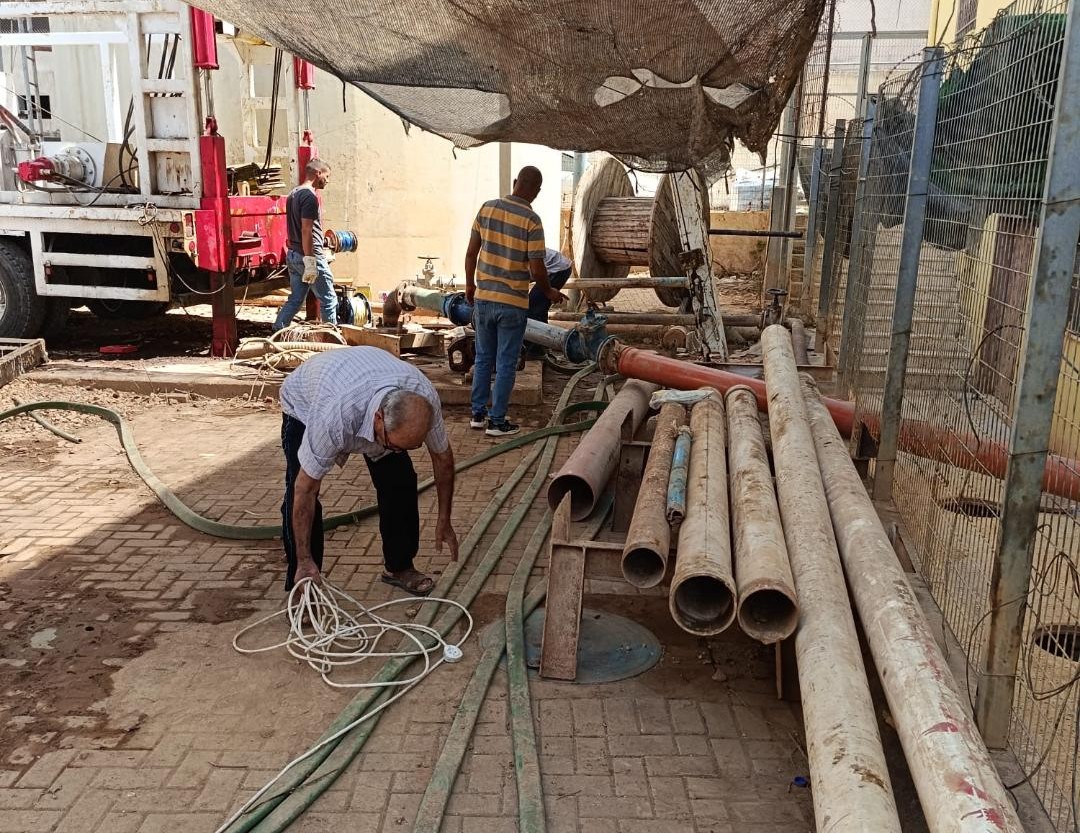
RAMALLAH, September 17, 2026 (WAFA) – Efforts are underway to restore operations at the Sheikh Ajleen wastewater treatment plant in Gaza City, in coordination with relevant parties and international partners, as part of the emergency response and early recovery efforts for the wastewater system, which has sustained extensive damage, the Water Authority said.
In a statement issued today, Thursday, the Water Authority stated that the rehabilitation of the plant comes amid the shutdown of the main treatment plants and damage to pumping stations and networks. This has resulted in the discharge of large quantities of untreated wastewater into the sea and its leakage into the environment, increasing health and environmental risks for citizens.
It noted that the Sheikh Ajleen plant has a design capacity of approximately 75,000 cubic meters per day. Prior to the Israeli aggression, it received wastewater from Gaza City and treated most of it, while approximately 20,000 to 25,000 cubic meters per day were diverted to the main treatment plant east of Al-Bureij.
The Water Authority stated that following the plant's shutdown and extensive damage to parts of the system, the amount of wastewater currently generated in Gaza City is estimated at approximately 12,000 cubic meters per day. This wastewater is being discharged untreated amid difficult humanitarian conditions and a high concentration of residents and displaced people.
The authority is currently implementing the first phase of a partial rehabilitation program, funded with approximately $2 million from the International Committee of the Red Cross (ICRC). This initial phase targets the restoration of essential components to recover a treatment capacity of roughly 22,000 cubic meters per day.
In parallel, coordination is underway with UNICEF to secure €15 million in funding from the German Development Bank (KfW) for a second phase. This phase aims to gradually scale up operations until the plant reaches its full capacity.
The rehabilitation of the Sheikh Ejleen plant is part of a broader effort by the Water Authority to restore Gaza's wastewater system. This involves identifying priority facilities and advancing their rehabilitation in coordination with the Coastal Municipalities Water Utility, international partners, and implementing agencies.
These efforts focus on reducing the discharge of untreated wastewater, mitigating health and environmental risks, and gradually restoring wastewater services to better protect citizens and the environment.
T.R.