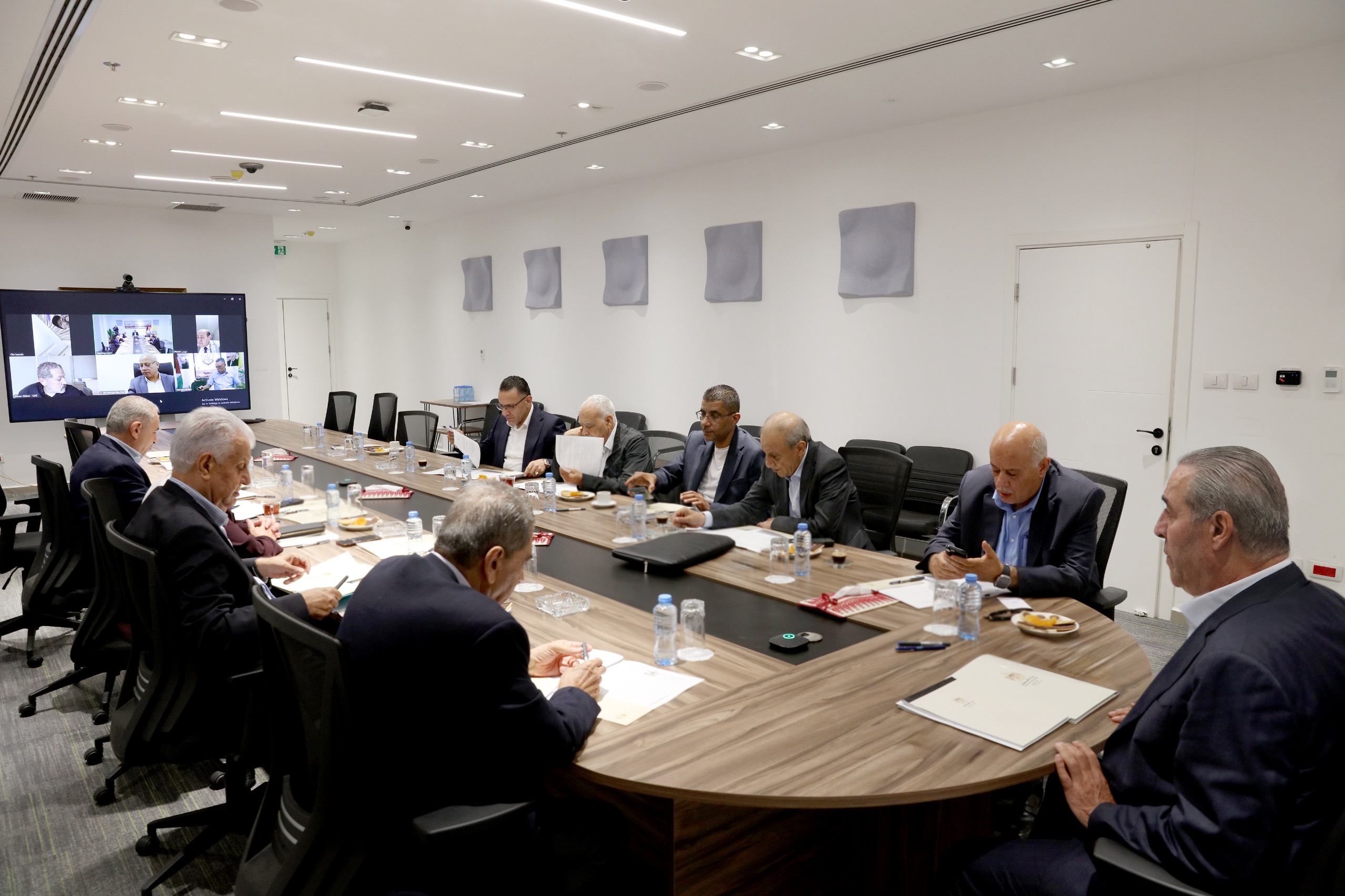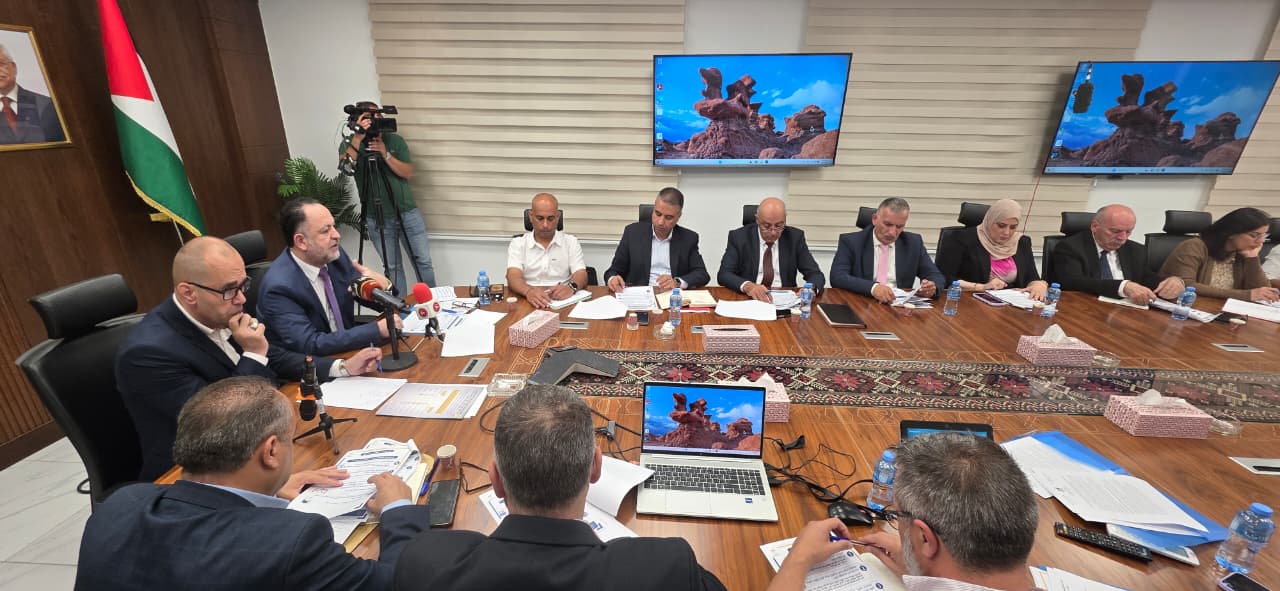
RAMALLAH, September 15, 2026 (WAFA) — The Palestinian Water Authority, in cooperation with the Government Communication Center, today held a workshop at the General Secretariat of the Council of Ministers entitled “The Water Sector: Two Years of Serious Work in the Face of Severe Challenges.” The workshop reviewed major strategic projects and interventions implemented during 2024–2026 and their impacts on developing water resources, strengthening the reliability of water supply, improving wastewater services, tackling illegal connections and water losses, as well as the emergency response in the Gaza Strip and preparations for recovery and reconstruction. The event brought together government institutions, local partners, water-sector organizations and media representatives.
Minister of Water Ziad Al-Mimi stressed that the achievements of the past two years must be assessed against the exceptional circumstances in which the water sector has operated. He explained that the PWA has pursued two parallel tracks: keeping water and wastewater services running through crises and emergencies, while continuing strategic projects, developing water resources and improving service efficiency.
Achievements Measured Against Exceptional Circumstances
Al-Mimi said that achievement during this period cannot be measured solely by the number of new projects delivered. It also lies in keeping water and wastewater services functioning under conditions that placed them at risk of collapse—particularly in the southern governorates and in the areas of greatest need in the northern governorates.
He noted that more than 89% of water and wastewater facilities in the southern governorates were destroyed, while per-capita water availability fell at the outset of the crisis to approximately 3–5 liters per person per day. This forced the sector to shift its immediate priority to securing a minimum level of water supply, reducing the risk of thirst, protecting lives, and keeping as many wastewater facilities operational as possible to contain public-health and environmental risks.
In the northern governorates, available water supplies stand at approximately 135 million cubic meters against demand exceeding 185 million cubic meters—a deficit of nearly 50 million cubic meters—compounded by high water losses and the challenges resulting from incursions, the displacement of refugee camps, and settler attacks targeting water infrastructure.
Nearly 19 Million Cubic Meters of Additional Water will Supply Annually from Bulk Water Supply Projects
Al-Mimi said the PWA has prioritized communities with the greatest water needs, advancing major projects to develop water resources and strengthen bulk water supplies. These include the Ramallah Bulk Water Supply Project – Aboud Connection Point, which will provide 9.3 million cubic meters annually to approximately 90,000 people across 14 villages, and the Jenin Bulk Water Supply System, with an annual capacity of 7 million cubic meters, benefiting around 120,000 people in Jenin, Qabatiya, Bruqin, and communities across northern and eastern Jenin. In Bethlehem, the main transmission pipeline serving the new water supply connection point has been completed and commissioned and is already delivering up to 7,000 m³ of water per day to communities served by the Bethlehem Water Supply and Sewerage Authority.
Together, these projects will provide nearly 19 million cubic meters of additional water annually to approximately a quarter of a million people, with total investment approaching US$100 million.
Well Development and Rehabilitation Projects to Add 12.5 Million Cubic Meters Annually
In the area of water-resource development, Al-Mimi said the rehabilitation of seven wells in Jenin, Bethlehem and Hebron has been completed, adding approximately 5 million cubic meters annually, while the rehabilitation of three additional wells is underway and is expected to provide a further 4.4 million cubic meters annually.
Strategic wells are also being prepared, including the Janzour Well, with a capacity of approximately 1.5 million cubic meters annually to serve more than 50,000 people in Jenin; the Al-Samu Well, with approximately 1 million cubic meters annually for areas south of Hebron; and the rehabilitation of Anabta Well No. 5, with approximately 600,000 cubic meters annually. Once completed, these projects will provide approximately 12.5 million cubic meters of additional water annually.
Wastewater: Protecting the Environment and Maximizing the Use of Treated Water
In the wastewater sector, Al-Mimi confirmed the continued completion of ongoing projects and the development of new ones. He noted that the Hebron Waste Water Program has exceeded 93% completion. The project will improve services for more than 200,000 people, reduce losses associated with Israeli deductions estimated at approximately NIS 80 million annually, and make around 22,500 cubic meters of treated, non-conventional water available each day for agricultural use. Temporary solutions have overcome the slurry problem that had been obstructing the project, and work has begun on permanent solutions.
Implementation is also continuing on the Northeast Ramallah Wastewater Project, at a cost of US$58.5 million, serving 14 communities that have suffered worsening wastewater problems for years. Progress is also being made on the transmission line from the Nablus West Treatment Plant toward western Tulkarm, alongside a comprehensive assessment of the wastewater sector in the West Bank.
Gaza: From Securing Minimum Water Supply to Preparing for Recovery and Reconstruction
Al-Mimi affirmed that the PWA, together with its partners, has continued responding to Gaza’s water needs despite the scale of destruction and restrictions on the entry of fuel and equipment. Approximately 60 million cubic meters of water have been supplied and distributed from multiple resources, including groundwater wells, Mekorot supplies, seawater desalination and groundwater desalination.
These interventions increased per-capita water availability from approximately 3–5 liters per day at the beginning of 2024 to around 25 liters per day by mid-2026. However, this remains below the minimum required level. The PWA also covered the cost of water supplied by Mekorot, amounting to approximately NIS 80.5 million, in addition to the cost of electricity supplied to the Southern Desalination Plant.
The emergency response also included the provision of approximately 14 million liters of fuel to operate critical facilities. This helped keep around 240 vital facilities operational and enabled the transport and distribution of approximately 4.2 million cubic meters of water by tanker trucks to shelters and residential areas. The interventions reached around 2,800 residential communities and shelters and served approximately 1.5 million people, while supporting 21 critical wastewater points and repairing around 800 points across wastewater networks.
Al-Mimi added that work in Gaza has also included documenting and assessing damage; preparing and adopting a recovery and reconstruction plan; adopting an 18-month early recovery framework; and identifying priority projects for implementation. These measures are intended to ensure readiness to move into recovery, rehabilitation and reconstruction as soon as conditions permit and the necessary financing, equipment and materials can enter Gaza.
More Than 270 Illegal Connections Shut Down, Recovering 16,500 Cubic Meters of Water Daily
As part of efforts to improve sector efficiency and strengthen governance, Al-Mimi highlighted the activation of the National Water Company, amendments to the licensing system for drilling and rehabilitating wells and extracting groundwater, the activation of the Marj Ibn Amer Regional Water utility, the adoption of a new organizational structure for the PWA, and the activation of the General Directorate for Monitoring.
As part of the PWA’s campaign to combat illegal water connections and protect the integrity of the water network, more than 270 illegal connections along the main Deir Sha’ar transmission lines have been identified and shut down. These measures have restored approximately 16,500 cubic meters of water to the system every day. The PWA is also advancing the concrete encasement of the Deir Sha’ar transmission line to safeguard the infrastructure and recover additional water supplies.
Higher Revenue Collection and 30,000 Prepaid Meters Installed
Al-Mimi said collections against outstanding debts owed by service providers reached NIS 494.3 million in 2025, compared with NIS 119 million in 2024. Collections during the first half of 2026 reached NIS 263.5 million.
Approximately 30,000 prepaid meters have also been installed for 18 service providers, at a cost of NIS 17.5 million. In addition, the installation of solar energy systems has begun at 24 water facilities, with a combined capacity of up to 3 megawatts and annual generation exceeding 5.15 gigawatt-hours, delivering an estimated financial return of approximately NIS 1.5 million annually.
Next Phase: Completing Projects and Strengthening the Sector’s Resilience
Al-Mimi emphasized that the next phase will focus on completing well-development, bulk water supply projects, transmission-line and wastewater projects; securing the financing required for projects with outstanding needs; continuing institutional and financial reform; advancing digital transformation; reducing water losses; combating illegal connections; and expanding the use of solar energy.
In Gaza, priorities include rehabilitating and restoring critical water and wastewater facilities, preparing priority implementation projects, strengthening decentralized solutions, and completing the early recovery framework—ensuring readiness to move into recovery, rehabilitation and reconstruction as soon as the necessary conditions and support are in place.
In this context, Al-Mimi expressed his appreciation for the support of all local and international partners. He also welcomed the recognition shown by citizens for the efforts and achievements in the water sector, particularly under the extraordinary circumstances and severe challenges in which the sector has been operating. He stressed that this public appreciation, together with citizens’ cooperation and the support of sector partners, is an important source of motivation to continue the work, strengthen services, respond to water needs across all governorates, and protect and build on the gains achieved in the next phase.
K.T